The Silver Tide: Unlocking the Business Potential of the Barracuda Trade
By. Wiwik Rasmini - 24 Apr 2026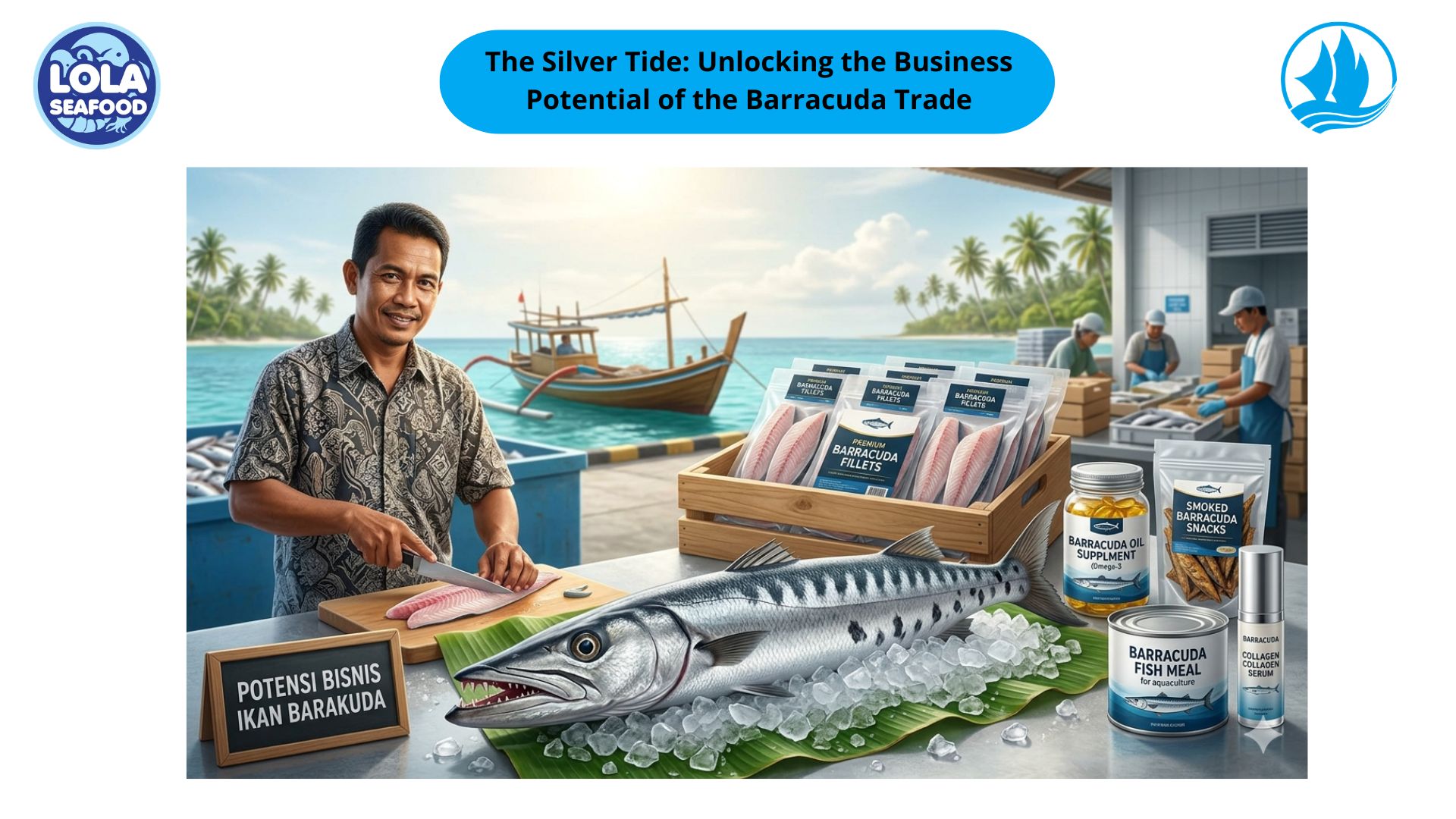
kelolalaut.com In the vast landscape of global seafood commerce, certain species dominate the headlines—tuna, salmon, and shrimp are the household names of the industry. However, savvy entrepreneurs and fisheries are increasingly looking toward the "Silver Tide": the Barracuda. Long relegated to the status of a "bycatch" or a local specialty, the Barracuda is emerging as a high-potential asset in the blue economy.
From its nutritional profile to its versatility in industrial applications, the benefits of venturing into the Barracuda business are multi-faceted. Here is an exploration of why this sleek predator is becoming a prize for the modern seafood entrepreneur.
1. High Nutritional Value and Market Demand
The primary driver of any food-based business is the quality of the product. Barracuda meat is renowned for being firm, lean, and flavorful. It offers a unique culinary profile that sits comfortably between the meatiness of a swordfish and the flakes of a whitefish.
- Protein Powerhouse: Barracuda is an excellent source of high-quality protein, essential for muscle growth and repair.
- Rich in Micronutrients: It contains significant levels of Vitamin B12, selenium, and magnesium.
- Omega-3 Fatty Acids: While leaner than mackerel, it still provides the heart-healthy fats that modern, health-conscious consumers demand.
As global consumers move away from red meat, the demand for "super-seafood" is skyrocketing. Barracuda fits this niche perfectly, especially in emerging markets where affordable yet high-quality protein is a priority.
2. Versatility in Processing and Product Diversification
One of the greatest strengths of the Barracuda business is the fish's physical structure. Their long, cylindrical bodies result in high fillet yields with minimal waste. This anatomical advantage allows businesses to diversify their product lines easily:
- Fresh and Frozen Fillets: The staple of the export market.
- Smoked and Dried Barracuda: In many Southeast Asian and West African cultures, smoked Barracuda is a delicacy with a long shelf life, making it ideal for inland distribution where cold chain logistics are challenging.
- Fish Meal and Silage: Smaller specimens or processing offcuts are rich in nutrients, making them perfect for the aquaculture and livestock feed industries.
3. Cost-Effective Sourcing and High Profit Margins
Compared to "trophy" fish like Bluefin Tuna, the operational costs of sourcing Barracuda are significantly lower. They are prolific breeders and are found in abundance across tropical and subtropical waters.
Because they are often categorized as a "secondary" species in many regions, the initial acquisition cost (purchasing from local artisanal fishers) is relatively low. However, once processed, packaged, and branded correctly for international markets, the value-add can result in impressive profit margins.
4. Supporting Local Economies and Sustainability
The Barracuda trade is often rooted in artisanal and small-scale fisheries. By formalizing the Barracuda supply chain, businesses can play a pivotal role in community development.
Entrepreneurial Tip: Investing in local cold-storage facilities and providing training for fishers on "Grade A" handling techniques doesn't just improve your product—it stabilizes the local economy and ensures a consistent supply chain.
Furthermore, because Barracuda are top predators with fast growth rates, they are often more resilient to fishing pressure than slower-growing deep-sea species. This allows for a more sustainable business model that aligns with global "Green and Blue" investment trends.
5. Pharmaceutical and Cosmetic Potential
The benefits of the Barracuda business extend beyond the dinner plate. The byproduct industry—specifically scales and skin—is gaining traction in the biomedical field.
- Collagen Extraction: Fish collagen is highly sought after in the cosmetic industry for anti-aging products. Barracuda skin is a rich source of Type I collagen.
- Medical Grade Gelatin: Research into the use of fish-derived gelatin for pharmaceutical capsules is growing, providing a lucrative secondary revenue stream for large-scale processors.
6. Navigating the Challenges: A Note on Safety
An honest look at the Barracuda business must mention Ciguatera. In certain tropical reefs, larger, older Barracuda can accumulate toxins. However, for a professional business, this is a manageable risk rather than a dealbreaker.
Successful Barracuda enterprises mitigate this by:
- Sourcing from "Clean" Zones: Identifying specific geographic areas where Ciguatera is non-existent.
- Size Regulation: Focusing on medium-sized "School Barracuda," which are generally safe and have better texture.
- Rigorous Testing: Implementing modern toxicity screening as part of the Quality Assurance protocol.
If youre interested in our Whiting Fish Whole Round,Barramundi Fillet Skin On,Catfish Fillet Skinless,Cobia Fillet Skinless,Coral Trout Fillet Skin On,Barramundi Whole Round / Whole Gilled Gutted Scaled,Corvina / Croaker / Jew Fish Whole Round / Whole Gilled Gutted Scaled,Black Pomfret Whole Round,Red / Scarlet Snapper Fillet Portion,Parrotfish Fillet Skinless,Baby Octopus Flower please do not hesitate to contact us through email and/or Whatsapp

 Standards in Modern Seafood Processing.jpg)