The Art of Precision: Defining High-Quality Repacking in Fish Processing Plants
By. Nugroho Luhur - 20 Apr 2026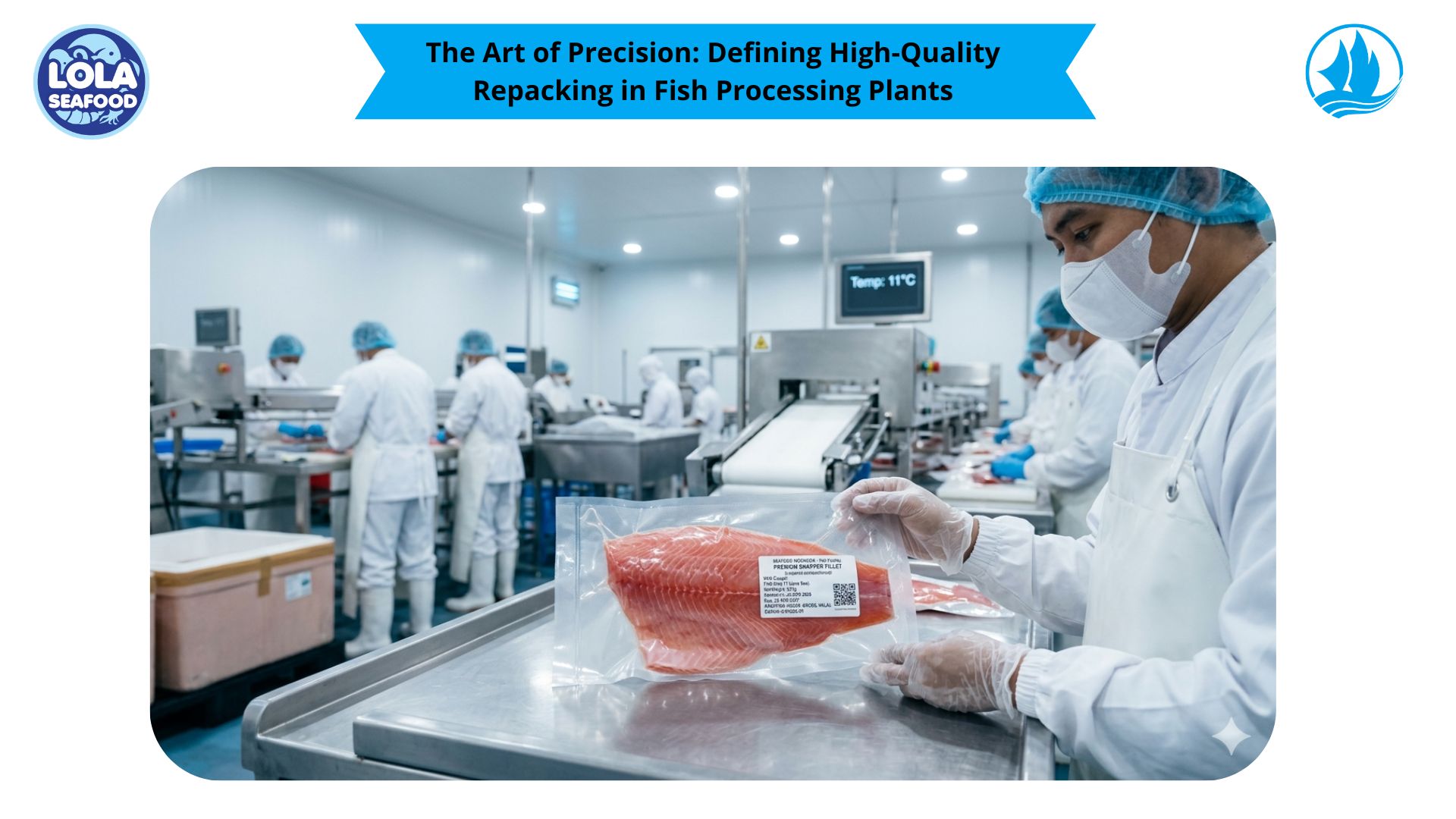
kelolalaut.com In the global seafood industry, the journey from the ocean to the consumer's plate is a race against time and biological degradation. While the initial processing—gutting, cleaning, and freezing—is vital, the final stage of repacking is where the product’s market value is truly secured. A "good" repack is not merely about putting fish into a smaller bag; it is a sophisticated process that balances thermodynamics, microbiology, and premium presentation.
For a fish processing plant, achieving an elite standard of repacking is the ultimate hallmark of quality control. Here is an in-depth look at what defines a superior repack result.
1. Thermal Integrity: The "Cold Chain" Discipline
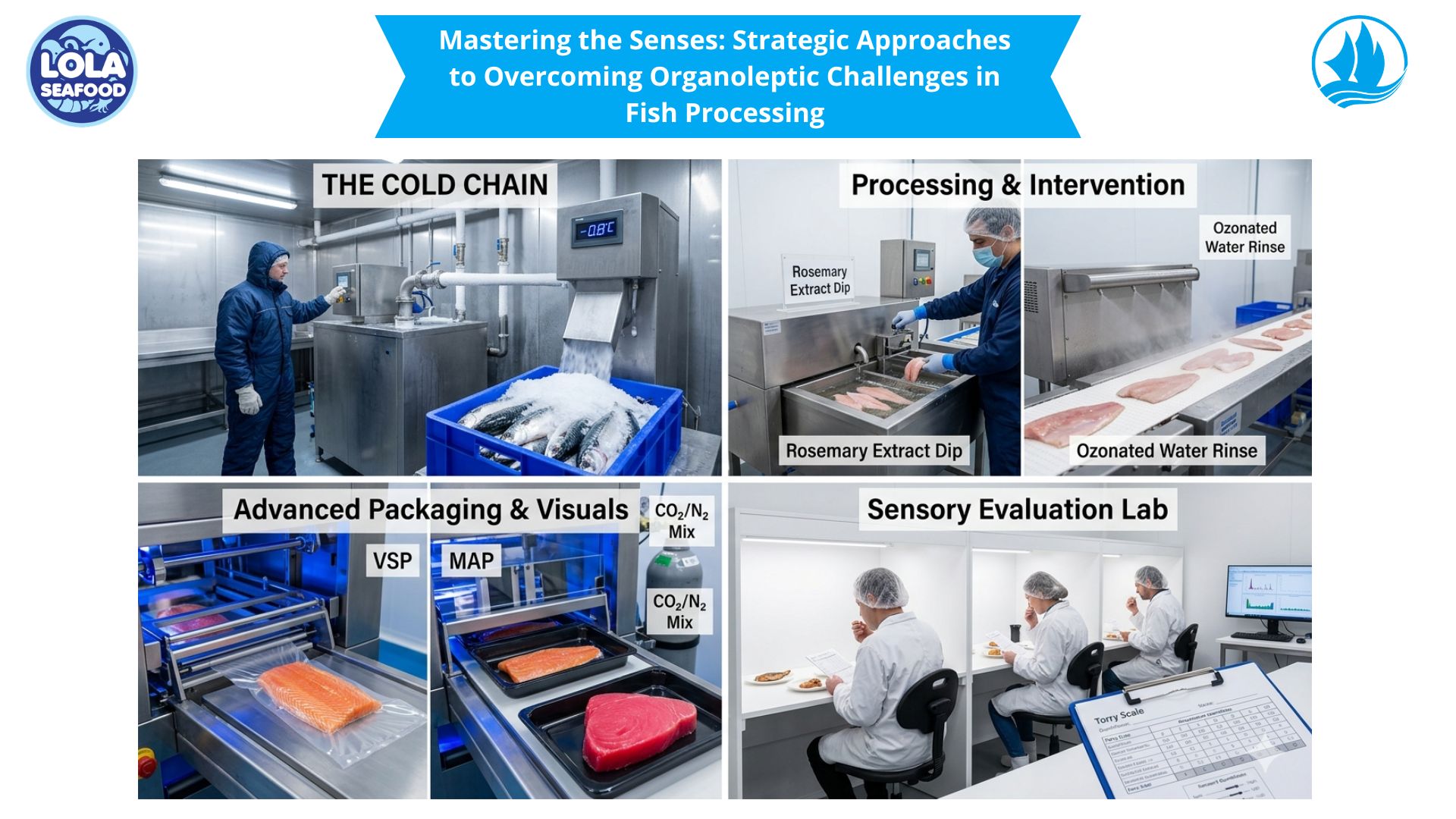
The most critical indicator of a professional repack is the maintenance of the deep-freeze state. In a high-standard facility, the repacking room is a strictly controlled environment, typically kept between 10°C and 12°C.
A quality repack ensures that the fish never reaches a "sweating" point. If the surface of the fish thaws even slightly during the transfer from bulk containers to retail pouches, it creates two major problems:
- Microbial Growth: Even a brief temperature spike can awaken dormant bacteria.
- Refreezing Damage: When a partially thawed fish is put back into the freezer, it forms large ice crystals that puncture cell membranes, leading to a "mushy" texture upon final defrosting.
A superior repack result is characterized by a product that remains rock-solid throughout the process, preserving the cellular integrity of the protein.
2. Vacuum Excellence and Oxygen Barriers
Oxygen is the enemy of seafood. It leads to lipid oxidation, which causes that "fishy" rancid smell and yellow discoloration in fatty fish like salmon or mackerel.
A high-quality repack utilizes High-Barrier Vacuum Packaging. The hallmarks of a good vacuum seal include:
- Contour Adhesion: The plastic should hug every curve of the fish like a second skin, leaving zero air pockets where frost can build up.
- Seal Integrity: The heat-sealed edges must be wide, consistent, and free of moisture or fish protein trapped in the seal, which could cause "leakers" during transit.
- Skin Pack Technology: For premium fillets, many top-tier plants now use VSP (Vacuum Skin Packaging), which offers an invisible look, making the fish appear as if it is not even in a bag while providing maximum protection.
3. The Aesthetics of "Glazing" and Clarity
In the industry, glazing (a thin layer of ice applied to the fish) acts as a natural protective shield against freezer burn. However, there is a fine line between protective glazing and deceptive glazing.
A good repack result features a clear, uniform glaze. It should look like a transparent varnish, not a thick, cloudy crust of ice. Cloudy ice often indicates that the water used was not properly filtered or that the fish has undergone temperature fluctuations. Furthermore, a reputable plant ensures the "net weight" is accurate, meaning the consumer is paying for fish, not the weight of the ice.
4. Precision Portioning and Physical Presentation
Consumers and chefs buy with their eyes first. A hallmark of factory-level precision is uniformity. If a package is labeled as "200g - 220g Fillets," every piece in that batch should look identical in terms of trim and cut.
- Clean Cuts: There should be no ragged edges or "fringe" on the fillets.
- Bloodline Removal: A high-quality repack ensures that the dark lateral line (the bloodline) is trimmed according to the specific grade (e.g., "Deep Skinned").
- Color Consistency: In a single pack, the color of the meat should be consistent, indicating that the fish were processed from the same catch and batch.
5. Advanced Labeling and Traceability
In 2026, a "good repack" is inseparable from its data. Each individual pack must be a carrier of information. Superior factory packing includes clear, smudge-proof labels that provide:
- The DNA of the Product: Species name (Latin and common), catch zone (FAO area), and method of catch (trawl, longline, etc.).
- QR Code Traceability: High-end plants now include QR codes that allow consumers to trace the fish back to the specific vessel or farm.
- Compliance Stamps: Clearly visible certifications such as HACCP, BRCGS, or MSC, which reassure the buyer of ethical and sanitary standards.
6. Structural Packaging Durability
Finally, the material used for repacking must be "food-grade" and "puncture-resistant." Fish bones, particularly in species like sea bass or snapper, can be sharp. A high-quality repack uses multi-layered films (often a mix of PE and Nylon) that can withstand the rigors of shipping and handling without losing vacuum pressure.
If youre interested in our Whiting Fish Whole Round,Barramundi Fillet Skin On,Catfish Fillet Skinless,Cobia Fillet Skinless,Coral Trout Fillet Skin On,Barramundi Whole Round / Whole Gilled Gutted Scaled,Corvina / Croaker / Jew Fish Whole Round / Whole Gilled Gutted Scaled,Black Pomfret Whole Round,Red / Scarlet Snapper Fillet Portion,Parrotfish Fillet Skinless,Baby Octopus Flower please do not hesitate to contact us through email and/or Whatsapp
.jpg)


.jpg)