Mastering the Senses: Strategic Approaches to Overcoming Organoleptic Challenges in Fish Processing
By. Lutfi - 08 Apr 2026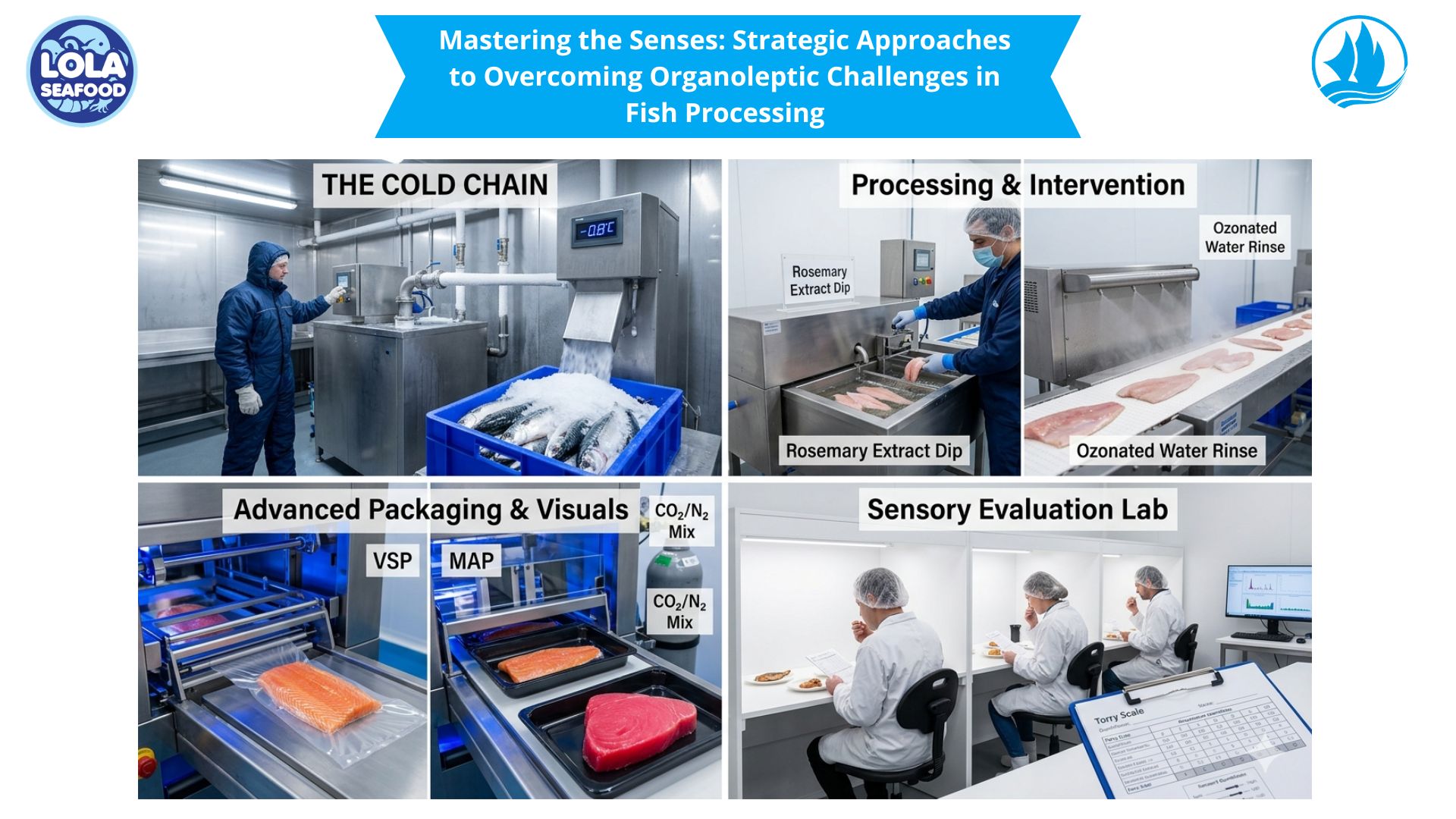
kelolalaut.com In the global food industry, the "organoleptic" profile of a product—its taste, smell, sight, and touch—is the ultimate judge of quality. For the fish processing sector, these sensory attributes are particularly volatile. Fish is one of the most perishable commodities on earth, prone to rapid biochemical changes that can turn a premium fillet into a rejected product in a matter of hours.
Mastering organoleptic control isn't just about food safety; it is about brand integrity and consumer trust. Here is a comprehensive guide on how to identify, manage, and overcome organoleptic hurdles in fish processing.
1. Understanding the Organoleptic Breakdown
Before we can solve the problem, we must understand the enemy. In fish, organoleptic degradation typically follows three paths:
- Oxidation: Specifically lipid oxidation, which leads to a "rancid" smell and yellowing of the flesh.
- Enzymatic Activity: Natural enzymes in fish (autolysis) begin softening the texture immediately after death.
- Microbial Growth: Bacteria produce metabolic byproducts like Trimethylamine (TMA), which creates the notorious "fishy" odor.
2. The Cold Chain: The Non-Negotiable Foundation
The most effective way to "overcome" poor organoleptic results is to prevent them through rigorous temperature control. The relationship between temperature and spoilage is exponential.
- Super-chilling: Maintaining fish at temperatures between -1°C and 0°C significantly slows down microbial multiplication compared to standard refrigeration (4°C).
- Slurry Ice Systems: Using pumpable ice (a mixture of ice crystals and seawater) provides faster cooling rates than block ice and reduces physical bruising, preserving the visual "sheen" of the fish skin.
3. Advanced Processing Techniques
When raw material arrives, the processing stage offers several intervention points to enhance sensory appeal.
A. The Role of Antioxidants
For fatty fish like salmon or mackerel, oxidation is the primary threat to flavor. Using natural antioxidants during the dipping or glazing stage can shield the product.
- Rosemary Extract and Tocopherols: These are clean-label alternatives to synthetic chemicals that prevent the development of "off-flavors."
- Citric Acid: Acting as a pH regulator, it can neutralize alkaline compounds that cause unpleasant odors.
B. Texture Modification
If the fish texture is too soft (gaping), processors often use Polyphosphates. These additives help the protein fibers retain water, resulting in a firmer, juicier mouthfeel after cooking. However, the modern trend is moving toward Functional Proteins or starches to achieve similar results without the "chemical" aftertaste.
4. Overcoming Odor Issues: The "TMA" Factor
The smell is the first thing a consumer notices. If a product has a slight odor but is still safe to eat, processors use several "neutralization" strategies:
- Vacuum Skin Packaging (VSP): By removing all oxygen, VSP prevents the volatilization of odors, ensuring that when the consumer opens the pack, the scent is fresh.
- Ozonated Water: Using ozone (O3) during the washing phase is a powerful way to kill surface bacteria and neutralize odor-causing molecules without leaving chemical residues.
5. Enhancing Visual Appeal
We eat with our eyes first. In fish processing, color fading is a major organoleptic failure.
- Carbon Monoxide (CO) Treatment: While controversial and regulated differently across borders, "Tasteless Smoke" (CO) is used in tuna processing to maintain a bright red color.
- Modified Atmosphere Packaging (MAP): Adjusting the gas mixture (typically high CO2 and N2) inside the tray helps maintain the natural pigments of the fish flesh.
6. The Human Element: Sensory Evaluation Labs
Despite all the technology, the human nose and tongue remain the most sensitive instruments. Modern processing plants should implement a Sensory Panel.
- Training: Staff should be trained to distinguish between "fresh seaweed" scents (good) and "sour/ammonia" scents (bad).
- The Torry Scale: Using standardized scoring systems like the Torry Scale allows processors to quantify organoleptic data, making it easier to identify which batch of raw material requires immediate processing or a different preservation method.
7. Innovative Masking and Value-Adding
If the organoleptic quality of a species is naturally "strong" (like sardines or some pelagic fish), "overcoming" it often means transforming the product.
- Marination: Using acidic bases (vinegar, citrus) and aromatics (garlic, herbs) can mask stronger oils.
- Smoking: Cold or hot smoking introduces phenols that act as both a preservative and a powerful flavor enhancer, completely redefining the organoleptic profile.
If youre interested in our Whiting Fish Whole Round,Barramundi Fillet Skin On,Catfish Fillet Skinless,Cobia Fillet Skinless,Coral Trout Fillet Skin On,Barramundi Whole Round / Whole Gilled Gutted Scaled,Corvina / Croaker / Jew Fish Whole Round / Whole Gilled Gutted Scaled,Black Pomfret Whole Round,Red / Scarlet Snapper Fillet Portion,Parrotfish Fillet Skinless please do not hesitate to contact us through email and/or Whatsapp


.jpg)
.jpg)
.jpg)

.jpg)
.jpg)
.jpg)