The Golden Opportunity of Red Snapper Processing: Quality, Safety, and Sustainability
By. Wiwik Rasmini - 09 Mar 2026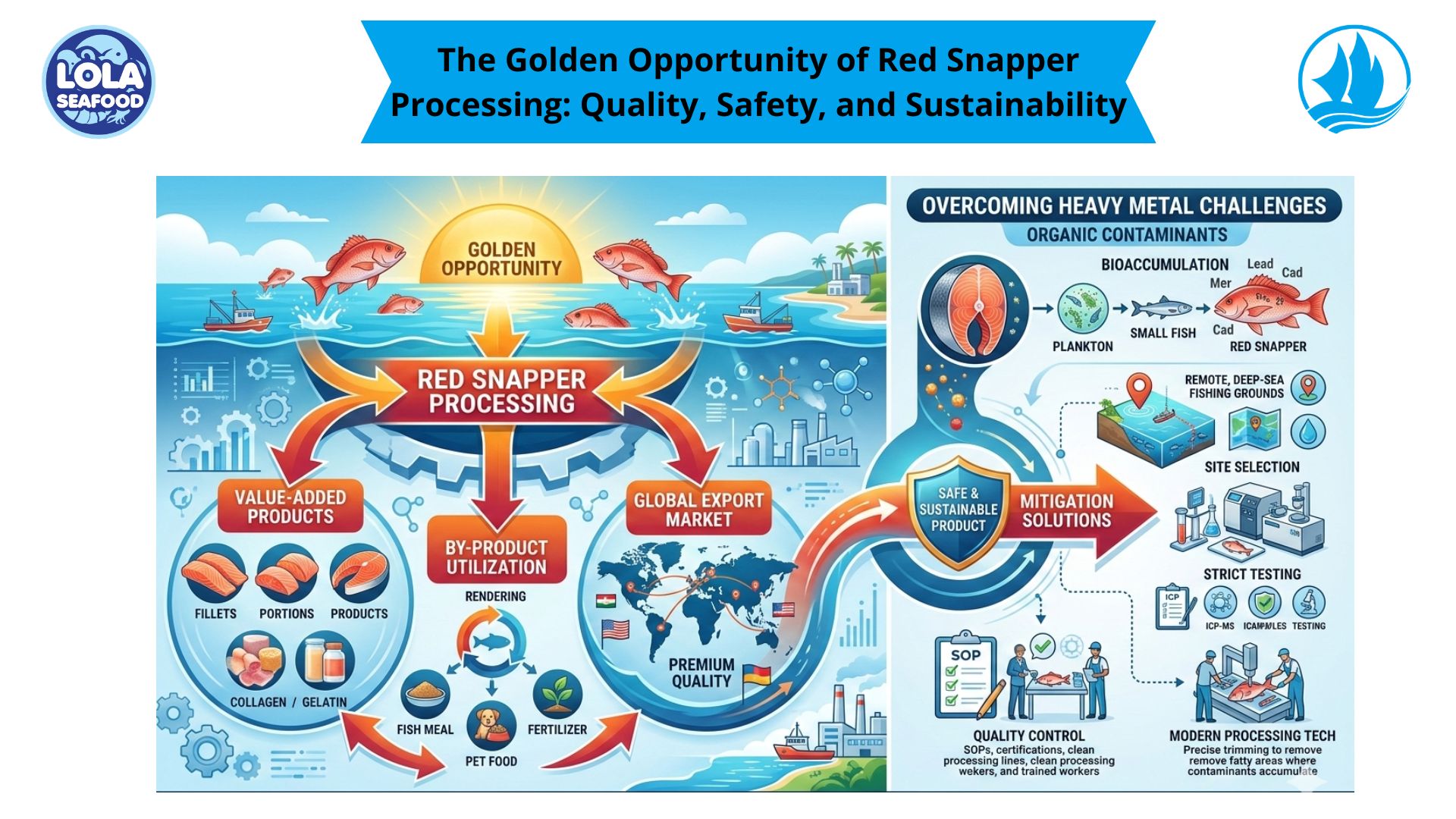
kelolalaut.com The global seafood market is experiencing a paradigm shift. As consumers become more health-conscious and demanding regarding food provenance, the Red Snapper (Lutjanus campechanus) has emerged as a premium "white gold" of the ocean. Known for its firm texture and sweet, nutty flavor, red snapper is not just a culinary favorite but a cornerstone of a multi-billion dollar processing industry. However, seizing this "golden opportunity" requires more than just high catch volumes; it demands sophisticated processing techniques and a rigorous approach to mitigating environmental contaminants like heavy metals.
The Economic Allure of Red Snapper
Red snapper occupies a unique niche in the export market. Unlike mass-market tilapia or pangasius, snapper is positioned as a premium product. The opportunities in processing are vast, ranging from:
- Value-Added Products: Moving beyond whole-chilled fish to skinless fillets, portion-controlled loins, and ready-to-cook marinated sets.
- By-product Utilization: Using scales for collagen extraction and bones for high-protein fish meal, ensuring a zero-waste circular economy.
- Traceability Certification: Implementing blockchain or digital tracking to command a 15–20% price premium in European and North American markets.
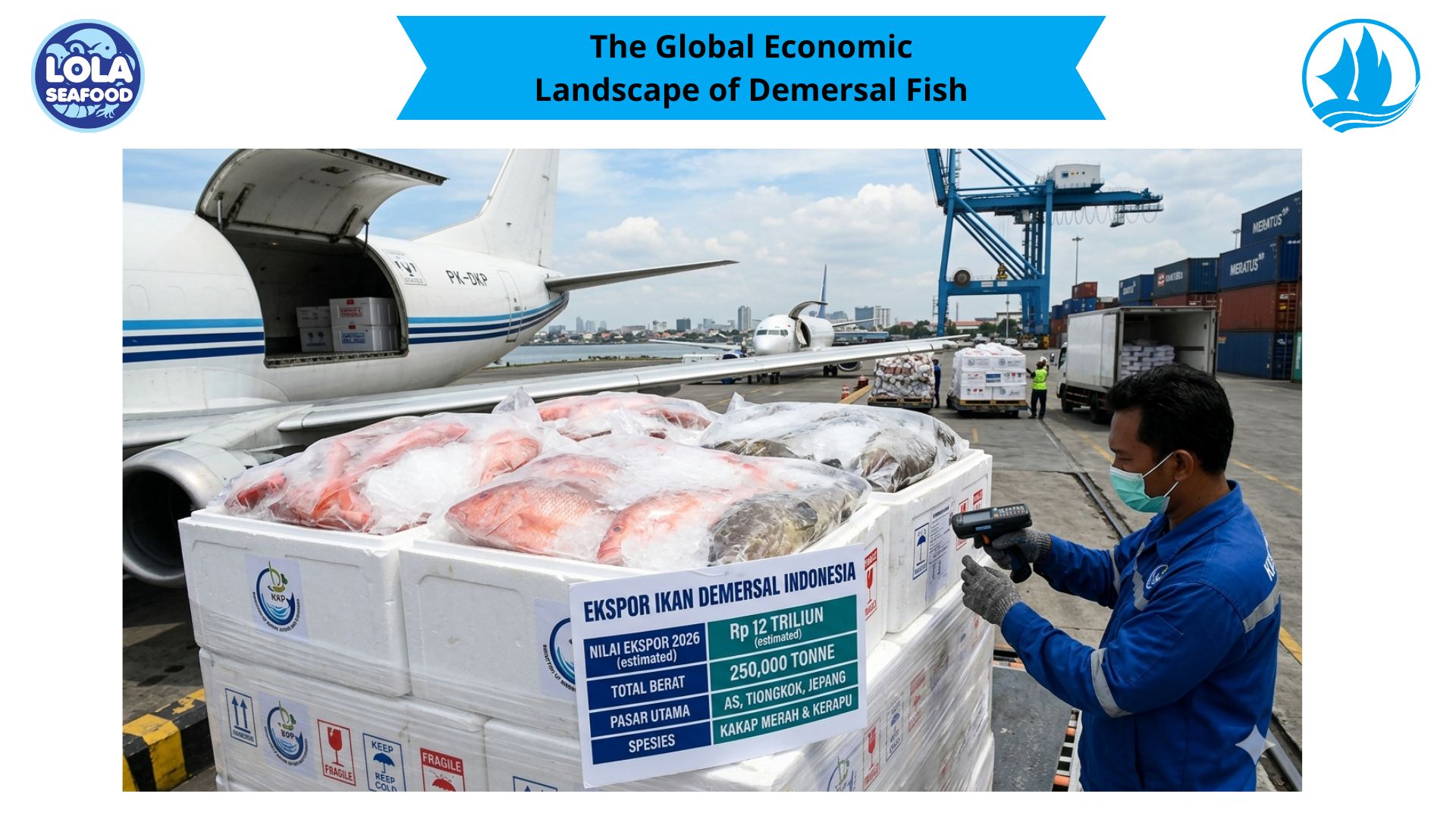
For developing coastal nations, investing in cold-chain infrastructure and modern processing plants is the key to transforming a raw commodity into a high-value export.
The Silent Threat: Heavy Metals and Contaminants
The golden potential of the snapper industry faces a significant hurdle: bioaccumulation. As long-lived predators, red snappers are susceptible to accumulating heavy metals, most notably Mercury (Hg), Lead (Pb), and Cadmium (Cd), alongside microplastics and organic pollutants.
How Contamination Occurs
Heavy metals enter the marine ecosystem through industrial runoff, mining, and atmospheric deposition. Once in the water, they enter the food chain via plankton and small crustaceans.
Through biomagnification, the concentration of these toxins increases as they move up the trophic levels. For the consumer, high levels of methylmercury can lead to neurological issues, making stringent quality control a non-negotiable requirement for international trade.
Strategies for Mitigation and Quality Assurance
To protect both the consumer and the industry's reputation, processors must adopt a multi-layered strategy to manage and reduce contaminants.
1. Site Selection and Sourcing
The first line of defense is source mapping. Processors should prioritize fish caught in "clean zones"—deep-sea areas far from industrial estuaries. Seasonal monitoring of fishing grounds helps identify periods when runoff may increase metal concentrations.
2. Advanced Processing Techniques
While heavy metals cannot be "cooked out," certain processing steps can reduce overall exposure:
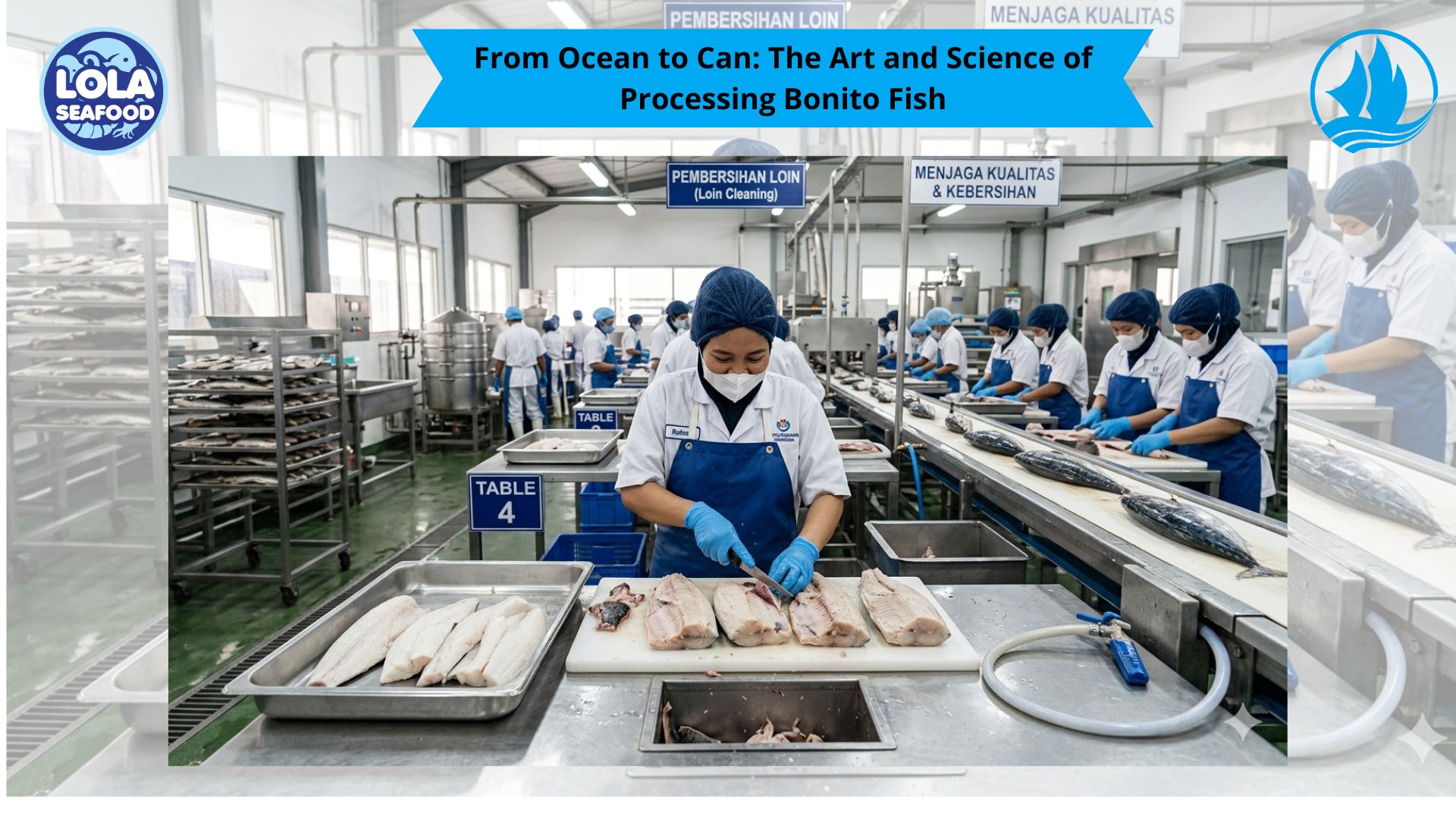
- Precision Trimming: Many toxins accumulate in the fatty tissues, skin, and dark muscle (bloodline). Modern automated filleting machines can be calibrated to remove these specific areas with minimal yield loss.
- Chelation and Washing: Some experimental food-grade washes using organic acids (like citric acid) have shown potential in reducing surface-level contaminants.
3. Laboratory Rigor
Every major processing facility must employ Inductively Coupled Plasma Mass Spectrometry (ICP-MS) or similar high-precision technology to test batches before shipment. Adhering to the Maximum Levels (MLs) set by the Codex Alimentarius ensures that the product meets the safety standards of the US FDA or the European Food Safety Authority (EFSA).
|
Contaminant |
Typical Regulatory Limit (mg/kg) |
Impact of Exceeding |
|
Methylmercury |
0.5 - 1.0 |
Neurotoxicity |
|
Lead |
0.3 |
Kidney damage/Developmental issues |
|
Cadmium |
0.05 - 0.1 |
Bone fragility/Respiratory issues |
The Path Forward: Technology and Sustainability
The future of red snapper processing lies in the marriage of biotechnology and data. We are seeing the rise of "Smart Processing," where AI-driven sensors detect freshness and chemical composition in real-time. Furthermore, promoting "Small-Scale Sustainable Fisheries" (SSF) ensures that fish are caught using methods that don't disturb contaminated seabed sediments.
By addressing the "dark side" of marine pollution with transparency and scientific rigor, the industry can ensure that the red snapper remains a safe, healthy, and lucrative "golden" resource for generations to come.
If youre interested in our Red / Scarlet Snapper Fillet Portion,Red / Scarlet Snapper Fillet Skin On, https://www.kelolalaut.com/products/96/red--scarlet-snapper-fillet-skin-on, Red / Scarlet Snapper Saddle Tailed Seaperch Whole Round / Whole Gilled Gutted Scaled please do not hesitate to contact us through email and/or Whatsapp
.jpg)
.jpg)