From Ocean to Plate: The Comprehensive Guide to Processing Grouper
By. Lutfi - 29 Jan 2026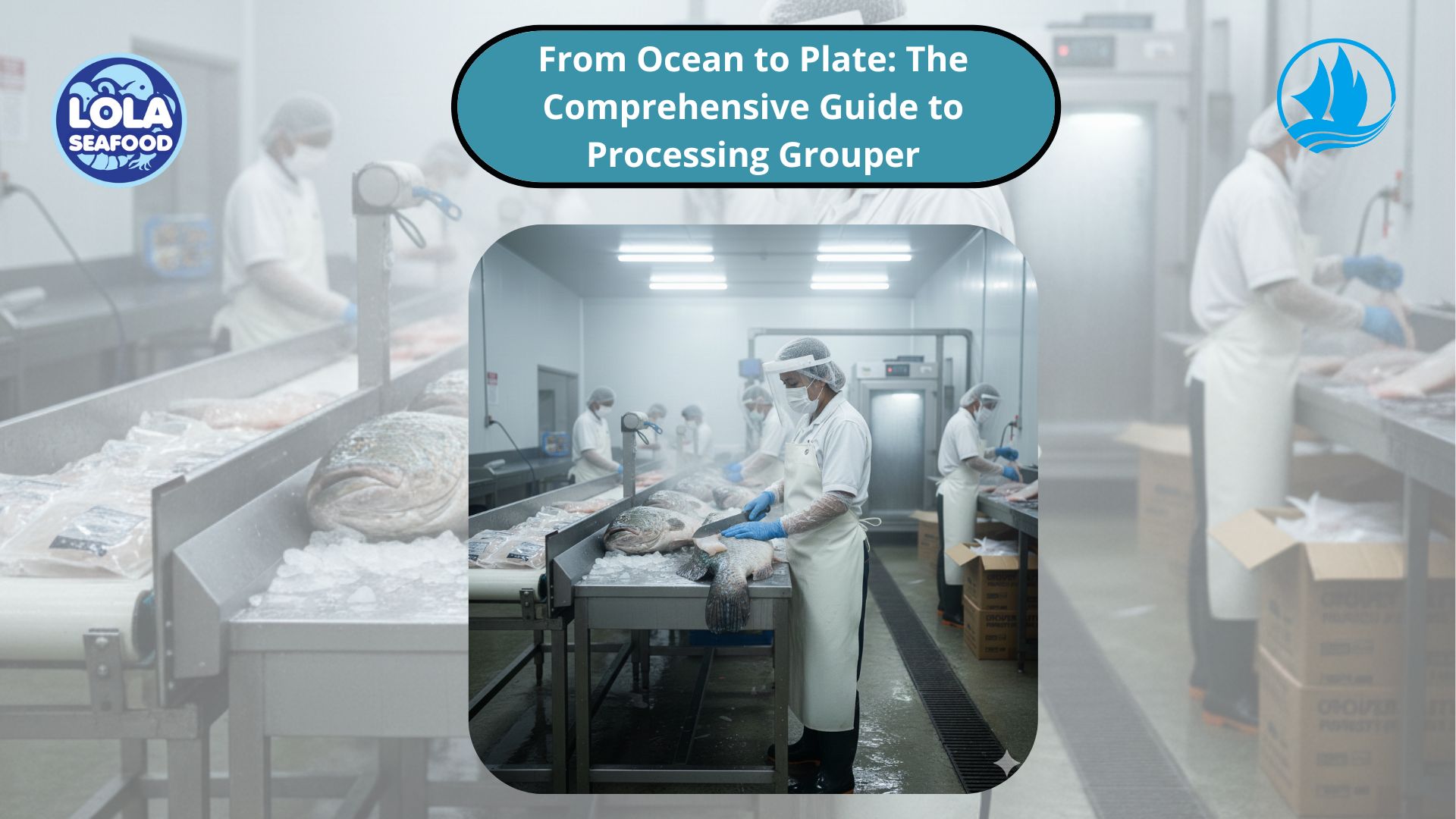
kelolalaut.com Grouper (Epinephelinae) is widely regarded as one of the "crown jewels" of the seafood world. Known for its lean, firm white flesh and a mild, subtly sweet flavor profile, it is a staple in high-end culinary circles and local coastal markets alike. However, the journey from the deep-sea reefs to a perfectly seared fillet involves a meticulous processing chain. Proper handling is the difference between a premium dining experience and a mediocre meal.
1. Pre-Processing: The Importance of Immediate Cold Chain
The quality of grouper is determined the moment it leaves the water. Because grouper are often caught in tropical or subtropical waters, the "cold chain" must begin immediately.
- Bleeding: To ensure the whitest possible fillets and remove the "fishy" iron taste, professional fishers often bleed the fish immediately upon harvest.
- Icing: The fish should be buried in a slurry of crushed ice and seawater. This lowers the core temperature rapidly, slowing down enzymatic activity and bacterial growth that causes spoilage.
2. Primary Processing: Cleaning and Preparation
Once the grouper reaches the processing facility or the kitchen, the primary processing begins. This stage is about efficiency and yield optimization.
- Scaling: Grouper scales are tough and deeply embedded. Using a specialized scaler or the back of a knife, processors remove scales from tail to head.
- Gutting and Cleaning: The abdominal cavity is opened to remove viscera. It is crucial to ensure the gall bladder is not ruptured during this process, as the bile can stain the meat and impart a bitter flavor.
- The "H&G" Method: In many commercial settings, grouper is processed into "Headed and Gutted" (H&G) form before shipping to wholesalers.
3. Advanced Processing: Filleting and Skinning
The most common way grouper is sold is as skin-on or skin-off fillets. Because grouper have a large head and a sturdy skeletal structure, the filleting process requires precision.
The Steps of Filleting:
- The Initial Cut: A diagonal cut is made behind the pectoral fin down to the backbone.
- The Spine Run: The knife is run along the dorsal fin, following the ribs to separate the loin from the bone.
- Trimming: "V-cuts" are often used to remove the pin bones located along the midline of the fillet.
Pro Tip: Grouper skin is thick and edible, but it can be tough if not cooked properly. For frying or grilling, the skin is often left on to hold the delicate flesh together. For poaching or steaming, it is usually removed.
4. Preservation Techniques: Keeping it Fresh
Not all grouper is consumed immediately. To maintain quality over long distances, several preservation methods are employed:
|
Method |
Description |
Best For |
|
Blast Freezing |
Rapidly freezing fish at $-30$°C or lower to prevent ice crystal formation. |
International export. |
|
Vacuum Sealing |
Removing oxygen to prevent oxidative rancidity and freezer burn. |
Long-term home storage. |
|
MAP (Modified Atmosphere Packaging) |
Replacing oxygen with a gas mix (like $CO_2$ and $N_2$) to inhibit bacteria. |
Retail supermarket displays. |
5. Culinary Processing: Unleashing the Flavor
The final "processing" happens in the kitchen. Because grouper is so lean, it is prone to overcooking.
- Steaming (Cantonese Style): This is perhaps the most iconic way to process whole grouper. By steaming with ginger and scallions and finishing with hot oil, the gelatinous texture of the skin and the flake of the meat are preserved perfectly.
- Searing: High-heat searing creates a Maillard reaction on the surface, providing a savory crust that contrasts with the moist interior.
- Ceviche: Due to its firm texture, grouper is excellent for "cold cooking" in citrus acids. The acid denatures the proteins without the use of heat.
6. Sustainability and By-product Utilization
Modern processing also focuses on waste reduction. The "frames" (bones and heads) of the grouper are rich in collagen and flavor, making them the gold standard for seafood stocks and fumets. In some cultures, grouper cheeks and throats are harvested as "delicacy cuts," ensuring that as much of the animal as possible is utilized.
.jpg)

.jpg)
.jpg)
.jpg)
.jpg)