The Science and Craft of Value-Added Jewfish Processing
By. Nugroho Luhur - 10 Mar 2026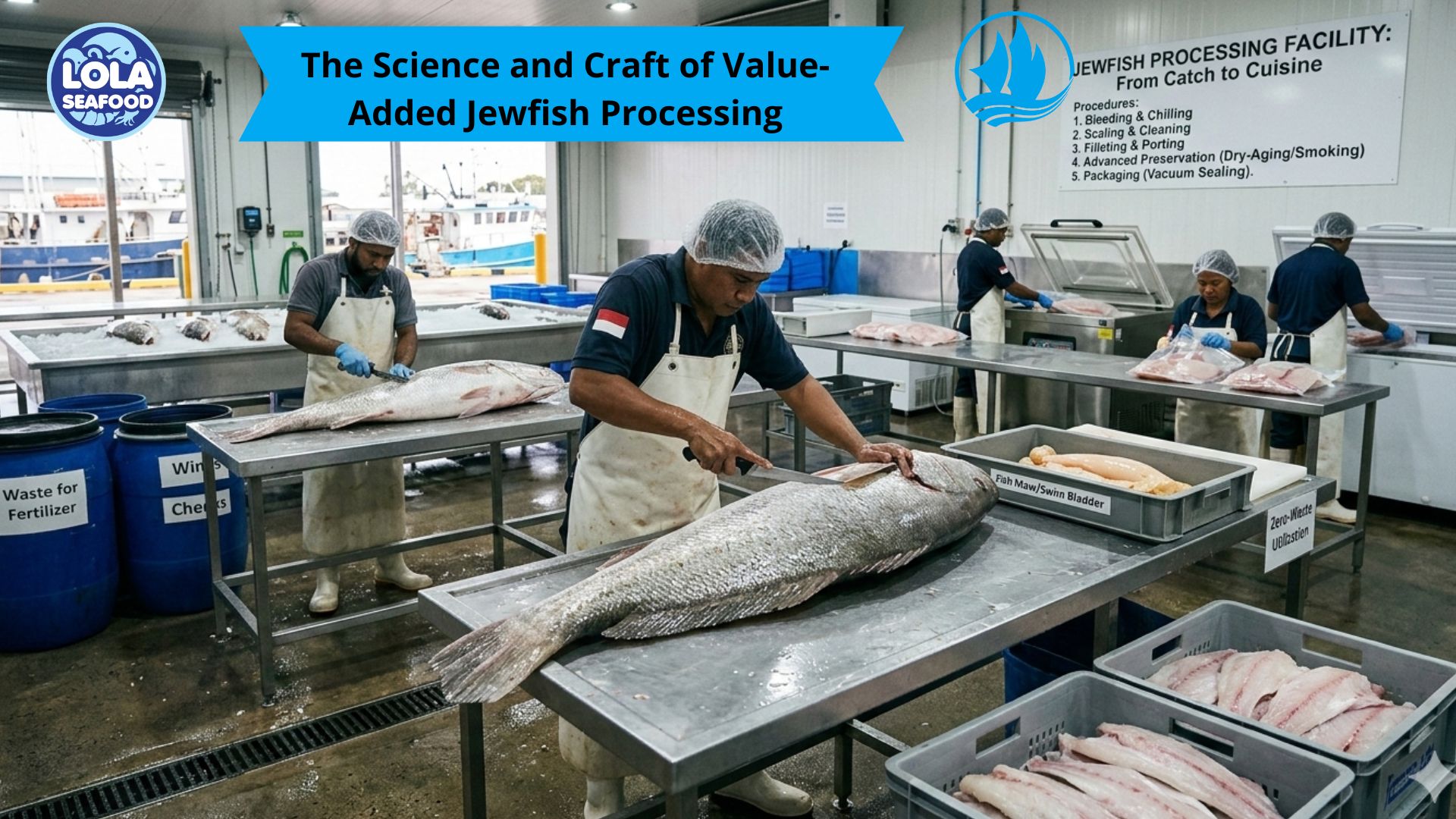
kelolalaut.com The Jewfish, a term traditionally used to describe heavyweights like the Mulloway or the Black Drum, represents one of the most significant harvests for both recreational and commercial fishers. While catching one is a feat of strength, processing it is a feat of precision. In the modern culinary landscape, processing has evolved beyond simple filleting; it now encompasses biological stabilization, waste reduction, and artisanal preservation techniques that turn a raw carcass into a high-value commodity.
To truly master the processing of a Jewfish, one must understand the intersection of chemistry, anatomy, and culinary art.
1. The Biochemistry of Quality: Stabilization
The moment a Jewfish is boated, a biological countdown begins. Large predatory fish have high concentrations of white muscle designed for explosive bursts of speed. This muscle is fueled by glycogen, which converts to lactic acid upon death.
If a Jewfish is allowed to thrash on a hot deck, its pH levels drop rapidly, leading to a condition known as Gaping. This is where the connective tissues break down, causing the fillet to fall apart. Professional processors prevent this through Rapid Thermal Reduction. By utilizing a brine of 0°C (32°F), the fish’s metabolism is halted, locking the moisture into the cells. This step is the difference between a fillet that tastes like "fish" and one that tastes like "the ocean."
2. The Anatomy of Yield: Advanced Butchery
Processing a 15kg to 30kg Jewfish requires a departure from standard small-fish butchery. The skeletal structure is dense, and the rib cage is anchored by thick, calcified bones.
- The Collar (The 'Ham' of the Sea): One of the most significant advancements in modern fish processing is the extraction of the collar or wing. Located just behind the gills, this cut contains a bone shaped like a "7" surrounded by the fattiest meat on the fish. In high-end Japanese cuisine (where it is known as Kama), this is the most expensive cut.
- The Swim Bladder: In many species of Jewfish, the swim bladder is unusually large and thick-walled. While Western markets often discard this, in Asian markets, it is processed into "Fish Maw." This involves cleaning the bladder, sun-drying it until it is translucent, and then deep-frying or braising it. It is a high-protein delicacy that can fetch a higher price per kilogram than the fillets themselves.
3. Artisan Preservation: Beyond the Freezer
While freezing is the standard, artisanal processing techniques can elevate the Jewfish to a gourmet level.
The Dry-Aging Revolution
Inspired by the beef industry, "Dry-Aged Fish" is becoming a global trend. To process Jewfish this way, the fish is scaled, gutted, and the "blood line" (the kidney along the spine) is meticulously scrubbed away with a toothbrush and salt water. The fish is then hung by the tail in a specialized refrigerator with a humidity level of 75-85%. Over 7 to 14 days, enzymes break down complex proteins into savory amino acids (glutamates), resulting in a "umami-bomb" flavor and a texture that is buttery and firm.
Salt-Curing and Smoking
Because the Jewfish has a robust flake, it handles salt-curing exceptionally well.
- Cold Smoking: Processing involves a 24-hour brine in salt and brown sugar, followed by a 12-hour "pellet" drying phase to form a sticky skin (pellicle). It is then smoked at temperatures below 30°C.
- Hot Smoking: This actually cooks the fish while flavoring it, making it perfect for "Jewfish Flakes" used in high-end salads or pates.
4. Sustainability: The "Head to Tail" Philosophy
In an era of environmental consciousness, processing is also about ethics. A standard fillet yield for a Jewfish is only about 35-45% of its total body weight. That leaves 55% as "waste." Modern processing seeks to reclaim that:
- The Cheeks and Tongue: These are the "scallops" of the fish world—sweet, tender, and incredibly lean.
- The Bone Marrow: When the heavy spine is roasted, the marrow can be extracted to enrich sauces, providing a deep, oceanic fat profile.
- The Skin: Jewfish skin is thick and rich in collagen. When dehydrated and flash-fried, it turns into "Fish Chicharrón"—a crunchy, high-protein snack that is replacing potato chips in many coastal bistros.
5. Packaging for the Modern Market
Finally, the way the fish is packaged determines its shelf life. Modified Atmosphere Packaging (MAP) is often used commercially, replacing oxygen with nitrogen to prevent the oxidation of fats. For the home processor, Vacuum Sealing remains the gold standard. By removing the air, you prevent aerobic bacteria from blooming, ensuring that even after six months, the Jewfish maintains its pearlescent white color.
If youre interested in our Corvina / Croaker / Jew Fish Whole Round / Whole Gilled Gutted Scaled,Corvina / Croaker / Jewfish Fillet Skin On,Corvina Fillet Skin Patch please do not hesitate to contact us through email and/or Whatsapp
.jpg)
.jpg)