Export-Driven Revenue Models in Seafood Processing Business
By. Sofie Thoriq - 26 Jan 2026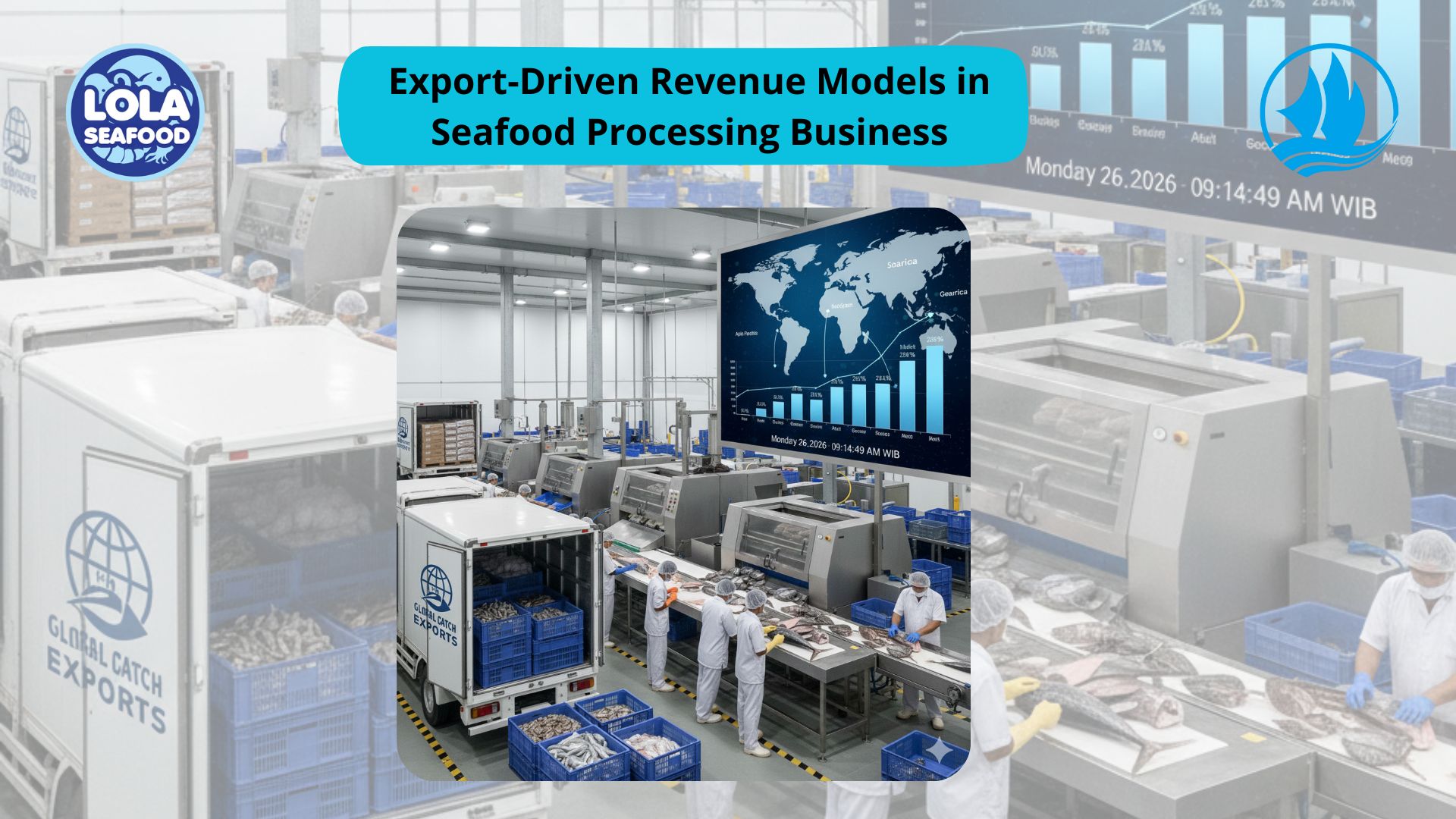
kelolalaut.com The global seafood industry is no longer a localized trade; it is a sophisticated, multi-billion dollar international network. For seafood processors, transitioning from domestic sales to an export-driven revenue model is often the primary catalyst for scaling operations. With the global population rising and a growing middle class demanding high-quality protein, international markets offer higher margins and more stable demand.
However, success in seafood exports requires more than just shipping products across borders. It demands a strategic alignment of supply chain management, regulatory compliance, and value-added processing.
1. The Shift from Commodity to Value-Added Exports
Historically, seafood processors focused on "volume over value," exporting raw or minimally processed products like whole frozen fish. While this generates revenue, it leaves processors vulnerable to price fluctuations in the global commodity market.
Modern export-driven models prioritize Value-Added Processing (VAP). This includes:
- Ready-to-Eat (RTE) and Ready-to-Cook (RTC): Pre-marinated fillets, breaded shrimp, or vacuum-sealed meal kits.
- Precision Portioning: Cutting fillets to exact weight specifications for international restaurant chains.
- Specialty Processing: Utilizing by-products (heads, bones, skins) to create fish oils, collagen, or animal feed, turning waste into a secondary revenue stream.
By shifting to value-added goods, processors can command premium prices, often fetching 20% to 50% higher margins compared to raw exports.
2. Diversification of Market Channels
A robust revenue model avoids over-reliance on a single country or buyer. Export-driven businesses typically divide their revenue streams into three main channels:
- Direct-to-Retail: Partnering with international supermarket chains (e.g., Costco, Carrefour, or Aeon). This requires high-volume consistency and strict private-label packaging capabilities.
- Foodservice and Hospitality: Supplying high-end hotels and restaurant groups. This channel often demands premium "sashimi-grade" or "organic" certifications.
- E-commerce and Cold Chain Logistics: The rise of cross-border B2B platforms allows processors to bypass traditional wholesalers and sell directly to smaller distributors or high-end boutiques, capturing a larger share of the retail price.
3. Quality Standards as a Competitive Advantage
In the export business, compliance is the currency. Without meeting international standards, market access is impossible. Successful models integrate these costs into their pricing strategy, viewing them as investments rather than expenses.
Key certifications that drive revenue include:
- HACCP & ISO 22000: The baseline for food safety.
- MSC (Marine Stewardship Council) & ASC (Aquaculture Stewardship Council): These "eco-labels" are essential for entering Western European and North American markets, where consumers are willing to pay a premium for sustainably sourced seafood.
- Traceability Systems: Implementing blockchain or digital tracking allows processors to prove the origin of their catch, reducing the risk of "Illegal, Unreported, and Unregulated" (IUU) fishing labels which can lead to costly import bans.
4. Navigating Economic and Logistical Challenges
An export-driven model is not without risks. Processors must manage Currency Fluctuations, where a strengthening local currency can suddenly make their exports more expensive and less competitive. Hedging strategies and diversifying the "basket" of export currencies (e.g., USD, EUR, JPY) are common financial tactics.
Furthermore, Cold Chain Integrity is the backbone of the revenue model. Seafood is highly perishable; a single break in the temperature-controlled supply chain can result in a total loss of cargo. Top-tier processors invest in "Smart Containers" equipped with IoT sensors that monitor temperature and humidity in real-time, ensuring the product arrives in "A-grade" condition to maximize its sale price.
5. The Role of Technology and Automation
To remain competitive against low-cost labor markets, many export-driven processors are turning to automation. AI-driven sorting machines can grade fish by size, fat content, and color with far greater accuracy than human workers. This level of standardization is vital for export markets where buyers expect every box to be identical in quality.
Additionally, data analytics help processors predict seasonal demand spikes (such as Lunar New Year in Asia or Lent in Western countries), allowing them to optimize inventory and maximize revenue during peak pricing windows.
.jpg)

.jpg)
.jpg)
.jpg)
.jpg)