The Blue Revolution: Elevating Premium Frozen Seafood for Global Markets
By. Wiwik Rasmini - 15 Jan 2026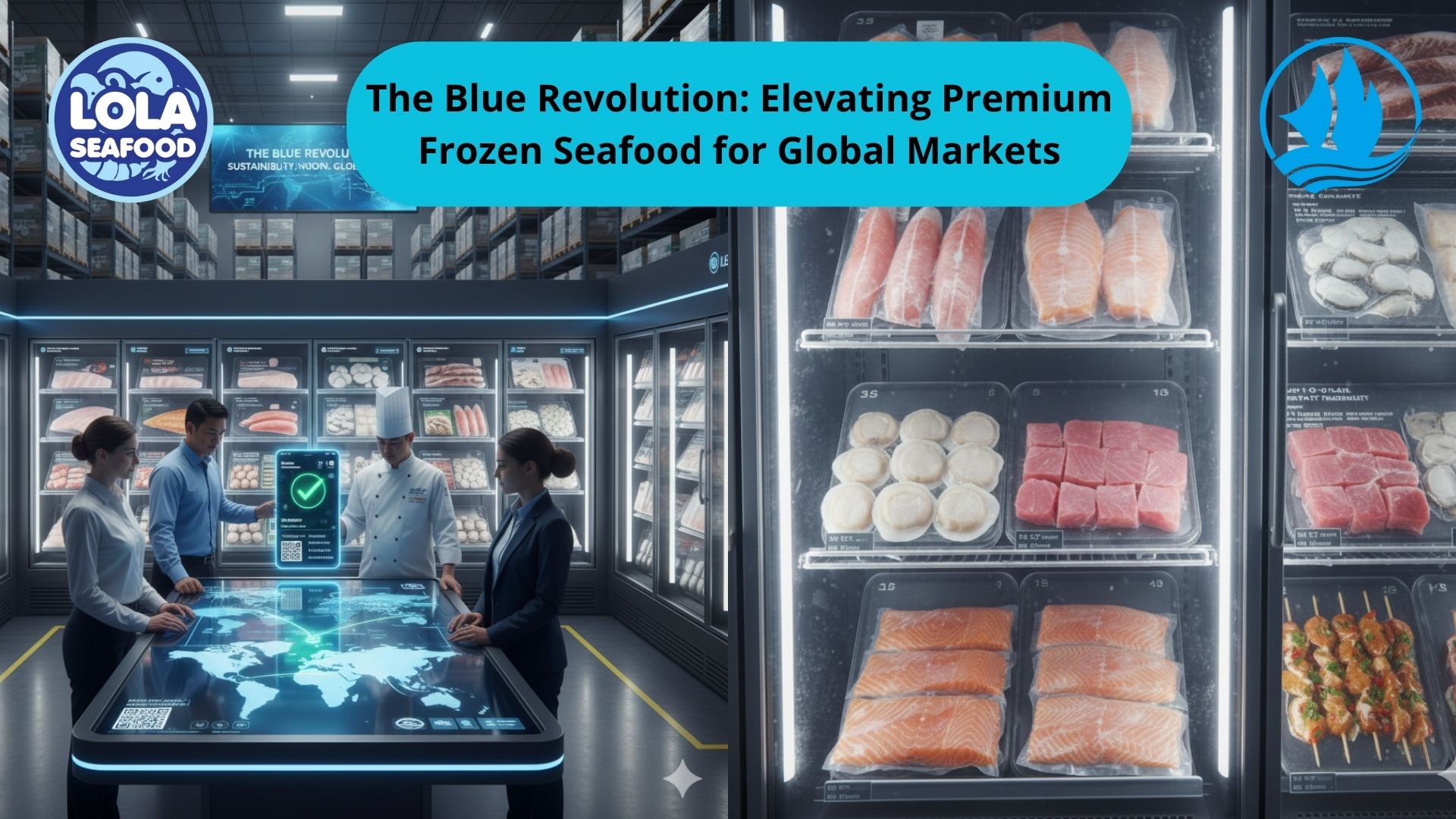
kelolalaut.com In the landscape of international trade, few sectors have undergone a transformation as profound as the seafood industry. Long gone are the days when "frozen" was synonymous with "second-rate." As we move through 2026, the global market for premium frozen seafood is witnessing a golden age, driven by a convergence of cutting-edge freezing technology, a global shift toward protein-rich diets, and an uncompromising demand for sustainability.
From the pristine waters of the North Atlantic to the high-tech aquaculture farms of Southeast Asia, the journey of premium seafood is now a masterpiece of cold-chain logistics. Today, the frozen seafood market is no longer just a convenience; it is a $160 billion global powerhouse that bridges the gap between remote oceans and the sophisticated palates of urban consumers.
The Technology of "Freshness Frozen in Time"
The primary catalyst behind the rise of premium frozen seafood is the advancement of Individual Quick Freezing (IQF) and cryogenic technologies. Unlike traditional slow-freezing methods that allow large ice crystals to form and damage the delicate cellular structure of fish, IQF flashes-freezes each piece within minutes. This process locks in the natural moisture, texture, and nutrient profile of the catch at its absolute peak.
For the global market, this means that a consumer in a landlocked city can enjoy a Chilean Sea Bass or a Maldivian Yellowfin Tuna that possesses the same "ocean-bright" flavor as if it were pulled from the water that morning. This technological leap has effectively neutralized the seasonal and geographical barriers that once limited the seafood trade.
Sustainability: The New Global Currency
In 2026, quality is no longer measured solely by taste and texture; it is measured by traceability. Premium global markets, particularly in Europe and North America, now demand rigorous proof of ethical sourcing. Labels from the Marine Stewardship Council (MSC) and the Aquaculture Stewardship Council (ASC) have become essential "passports" for products entering the high-end retail and hospitality sectors.
The industry is responding with "Blue Transformation" initiatives. Modern seafood processors are utilizing blockchain technology to provide a transparent "bait-to-plate" story. By scanning a QR code on a pack of frozen scallops, a buyer in Tokyo can see exactly which vessel caught the product and the specific coordinates of the harvest. This level of transparency doesn't just satisfy regulatory requirements; it builds a brand of trust that justifies a premium price point.
Shifting Consumer Paradigms
The demographic driving this growth is the "health-conscious epicurean." As global awareness regarding the benefits of Omega-3 fatty acids and lean proteins rises, seafood has emerged as the protein of choice for weight management and heart health. However, the modern consumer is also time-poor.
This has birthed a massive market for value-added premium products. We are seeing a surge in demand for:
- Portion-controlled fillets: Perfectly weighed cuts that reduce kitchen waste.
- Ready-to-cook gourmet ranges: Seafood pre-marinated in artisanal sauces, vacuum-sealed and frozen.
- Sashimi-grade frozen blocks: Enabling home chefs to prepare restaurant-quality raw dishes with safety and ease.
Challenges and the Future of the Cold Chain
Despite the optimistic outlook, the industry faces significant hurdles. The "last mile" of the cold chain remains the most vulnerable link. Maintaining a consistent temperature of -18°C across continents requires massive energy investment. To combat this, 2026 is seeing a shift toward "smart logistics"—the use of IoT (Internet of Things) sensors that monitor temperatures in real-time, alerting logistics managers the moment a fluctuation occurs.
Furthermore, the industry is pivoting toward eco-friendly packaging. The reliance on expanded polystyrene (styrofoam) is being phased out in favor of biodegradable, moisture-resistant plant-based fibers and recyclable high-barrier films. These innovations ensure that the "premium" label extends to the environmental footprint of the packaging itself.
.jpg)

.jpg)
.jpg)
.jpg)
.jpg)