The Rainbow Reef Architects: Understanding the WGGS of Parrotfish
By. Nugroho Luhur - 02 Mar 2026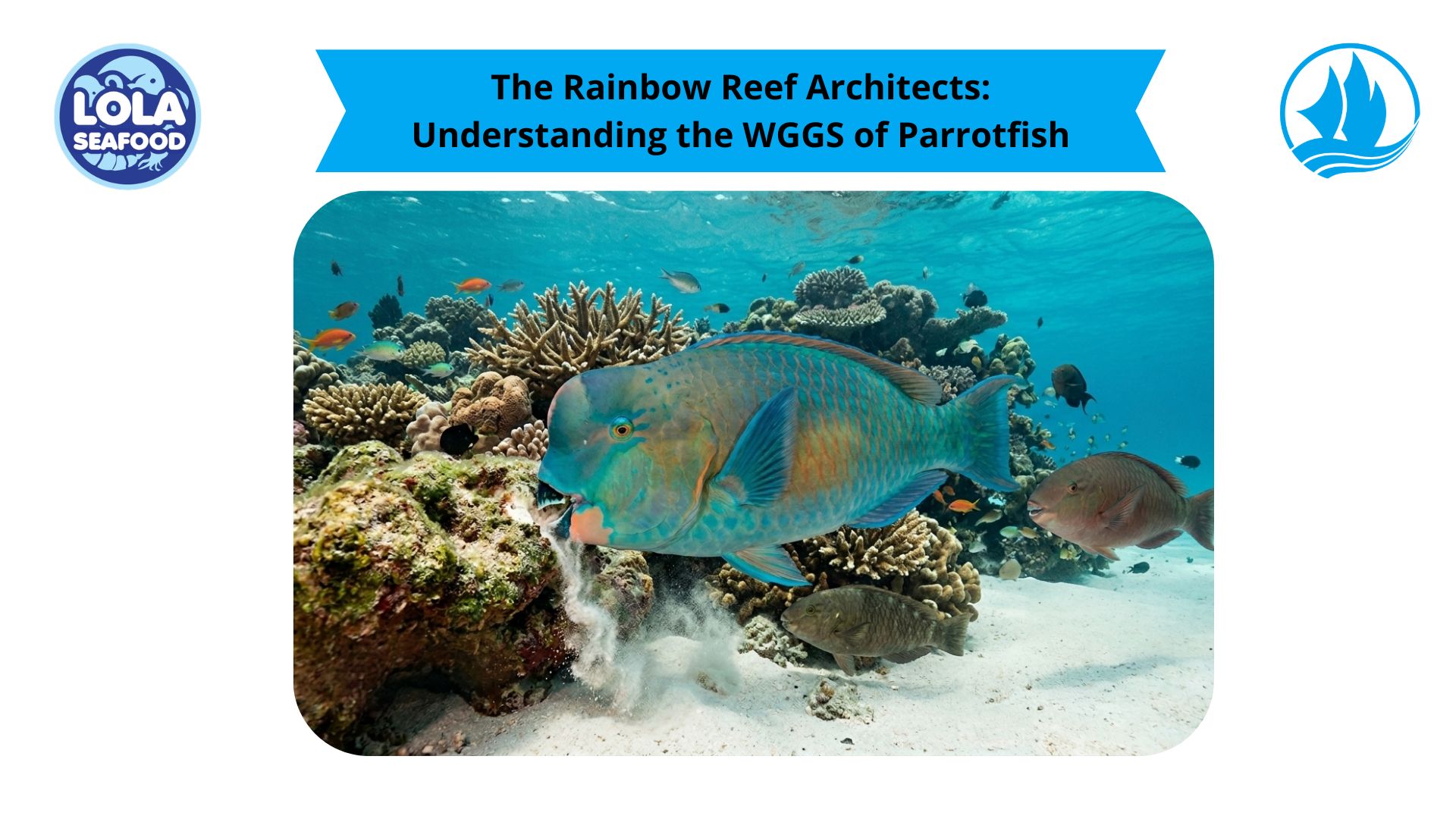
kelolalaut.com The ocean’s coral reefs are often described as underwater rainforests, teeming with vibrant life and intricate ecological relationships. Among the most flamboyant and essential residents of these ecosystems is the Parrotfish (family Scaridae). While many admire them for their neon scales and bird-like beaks, marine biologists focus on a more technical framework to understand their life cycle and impact: the WGGS, or the Weight, Growth, Gender-shifting, and Survival patterns of the species.
Understanding these four pillars reveals why the parrotfish isn't just a pretty face—it is a biological powerhouse that keeps coral reefs from collapsing.
1. Weight and Physical Stature
Parrotfish vary significantly in size, from the small Mediterranean parrotfish to the massive Green Humphead Parrotfish (Bolbometopon muricatum), which can tip the scales at 45 kg (100 lbs) and reach lengths of over a meter.
Their weight is more than just a measurement; it is a direct indicator of their "bio-eroding" capacity. A single large parrotfish can produce up to 320 kg (700 lbs) of white sand in a single year. They achieve this by using their fused, beak-like teeth to scrape algae off coral rocks. In the process, they ingest calcium carbonate (coral skeleton), grind it up in their pharyngeal mill (a second set of teeth in their throat), and excrete it as fine, white sand. When you walk on a pristine tropical beach, there is a high probability you are walking on parrotfish "contributions."
2. Growth and Development
The growth rate of parrotfish is heavily influenced by water temperature and the availability of nutrients. As herbivores, their primary job is to graze. By consuming the macroalgae that competes with coral for sunlight and space, parrotfish facilitate the growth of new coral polyps.
Interestingly, their growth isn't just physical; it’s aesthetic. Parrotfish go through distinct "phases":
- Juvenile Phase: Often drab or camouflaged to hide from predators.
- Initial Phase (IP): Reaching sexual maturity with modest coloration.
- Terminal Phase (TP): The final growth stage where they display the brilliant greens, blues, and pinks they are famous for.
3. Gender-shifting: The Protogynous Hermaphrodite
Perhaps the most fascinating aspect of parrotfish biology is their sequential hermaphroditism. Most parrotfish species are protogynous, meaning they begin their lives as females and can later transition into males.
This gender-shifting is usually triggered by social cues. Parrotfish often live in harems led by a single, large "Supermale" (Terminal Phase male). If that male dies or is removed from the reef, the largest, most dominant female in the group undergoes a hormonal shift. Within weeks, her internal organs change, her behavior becomes more aggressive, and her scales transform into the vibrant palette of a male. This strategy ensures that the colony always has a protector and a breeder, maximizing the survival of their genetic line.
4. Survival and the "Sleeping Bag"
Survival in the predator-heavy environment of a coral reef requires more than just a hard beak. Parrotfish have developed one of the most unique defense mechanisms in the animal kingdom: the mucus cocoon.
Before settling down for the night in a reef crevice, some species of parrotfish secrete a transparent, jelly-like bubble from an organ in their head. This "sleeping bag" serves two purposes:
- Scent Masking: It hides the fish’s scent from nocturnal predators like moray eels and sharks.
- Early Warning System: If a parasite or predator touches the membrane, the fish feels the vibration and can dart away instantly.
The Ecological Crisis
Despite their importance, parrotfish populations are under threat. Overfishing has led to a "top-down" ecological collapse in many regions, particularly in the Caribbean. Without parrotfish to graze, algae quickly smothers the coral, leading to "phase shifts" where a once-vibrant reef becomes an underwater wasteland of slime and seaweed.
Conservationists now emphasize that protecting parrotfish is the most effective way to save coral reefs from the effects of climate change. By maintaining a healthy WGGS balance, we ensure that these "gardeners of the sea" can continue their vital work.
If youre interested in our Parrotfish Fillet Skin On , Parrotfish Fillet Skinless please do not hesitate to contact us through email and/or Whatsapp




.jpg)