Sustainable Blue Industry: Advanced Strategies for Wastewater Mitigation in Fish Processing
By. Ely Kusniawati - 07 May 2026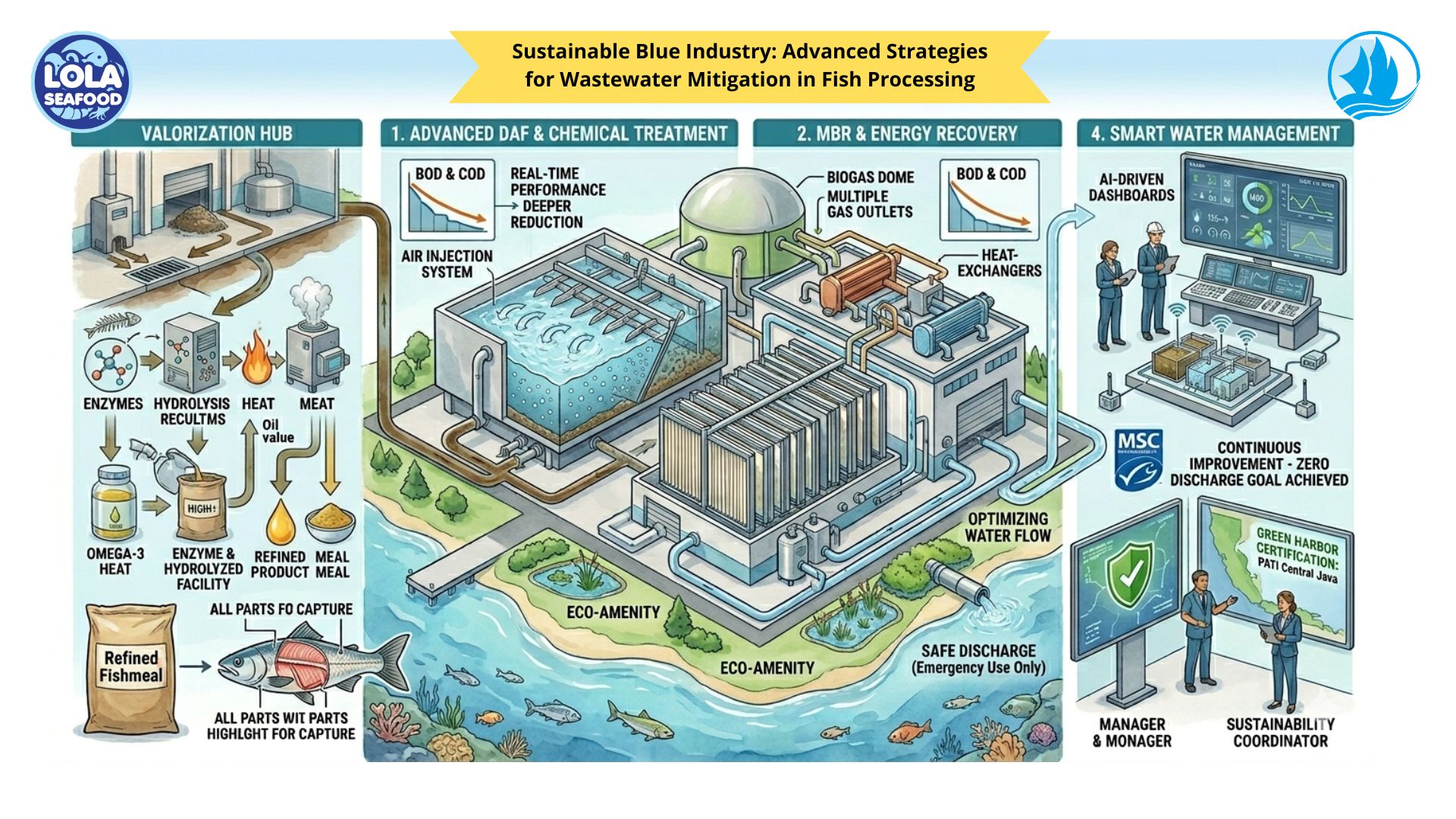
kelolalaut.com The fish processing industry is a cornerstone of the global blue economy, providing essential protein to billions and supporting millions of livelihoods. However, the environmental "water footprint" of this sector is substantial. Processing a single ton of fish can require up to 20 cubic meters of water, resulting in a complex effluent stream that poses a significant threat to aquatic ecosystems if not managed with precision.
To transition from a traditional industrial model to a "Sustainable Blue Industry," processing plants must adopt a multi-layered approach to wastewater mitigation. This involves not only cleaning the water at the "end of the pipe" but reimagining the entire production lifecycle.
The Chemical Composition of Fish Processing Waste
Before addressing mitigation, it is crucial to understand the enemy. Fish processing wastewater is characterized by high levels of:
- Organic Loading: High Biological Oxygen Demand (BOD) and Chemical Oxygen Demand (COD) from blood, tissue, and proteins.
- Fats, Oils, and Grease (FOG): Lipids that can coat the gills of fish and block sunlight in natural water bodies.
- Nutrients: High nitrogen and phosphorus levels that lead to eutrophication (algal blooms).
- Salinity: Particularly in brining operations, which can disrupt the osmotic balance of freshwater rivers.
Phase 1: Technological Innovation in Treatment
Modern mitigation relies on a sequence of physical, chemical, and biological barriers.
1. Advanced Physical Separation
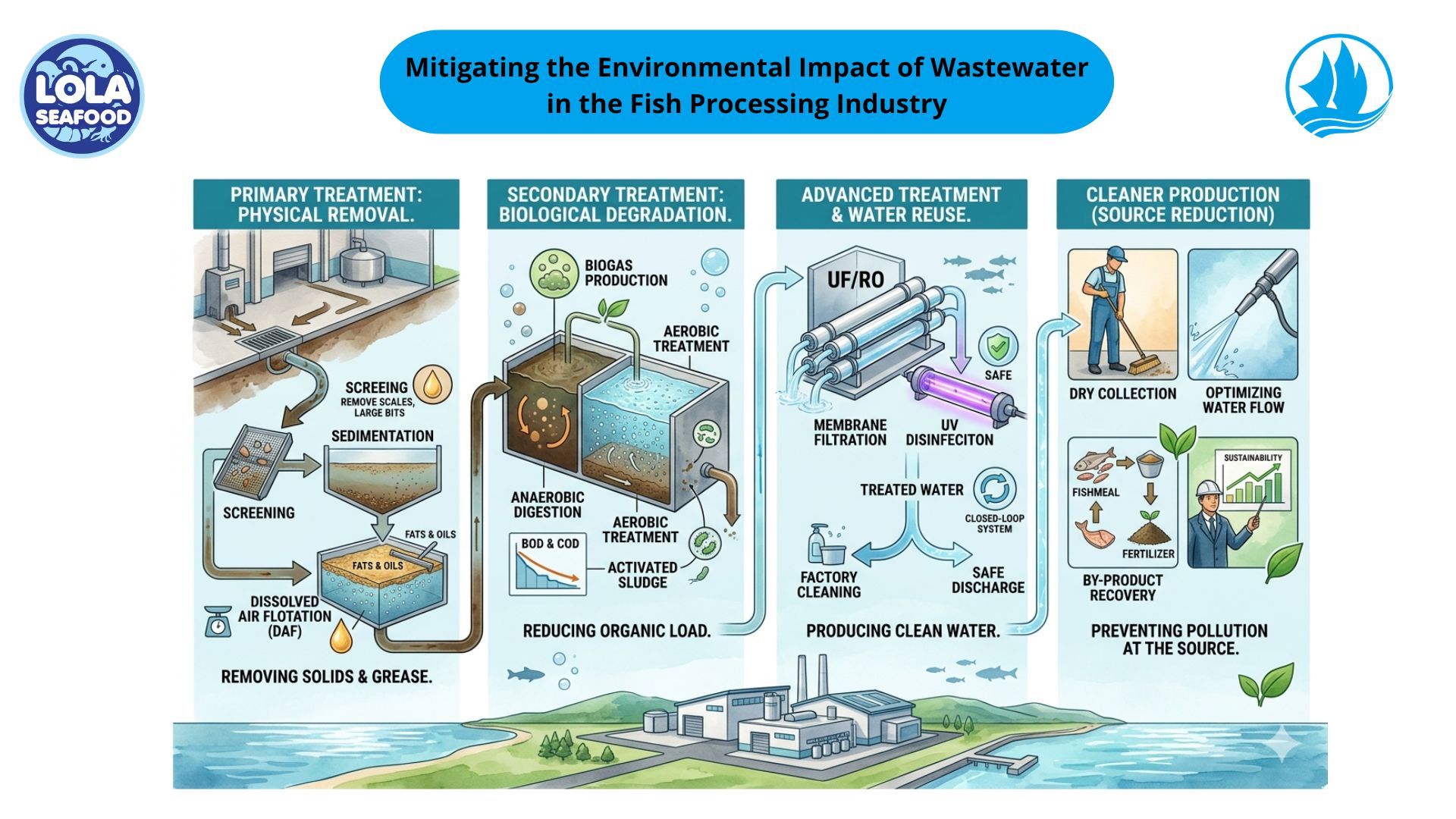
The first step is moving beyond simple screens. Dissolved Air Flotation (DAF) systems have become the industry standard. By injecting micro-bubbles into the wastewater, suspended solids and fats are lifted to the surface. When combined with Coagulation and Flocculation—where specific chemicals are added to clump small particles together—DAF can remove up to 90% of suspended solids before the water even reaches the biological stage.
2. The Power of Microorganisms (Biological Treatment)
Biological treatment mimics nature’s way of cleaning water but at an accelerated pace.
- Anaerobic Reactors: For high-strength waste, anaerobic digestion is highly effective. It breaks down complex organics in the absence of oxygen, producing biogas (methane). This methane can be captured and burned to provide heat for the factory’s boilers, turning a waste problem into an energy solution.
- Membrane Bioreactors (MBR): An MBR combines biological treatment with membrane filtration. This results in an exceptionally high-quality effluent that is often cleaner than the "raw" water originally taken from the environment.
Phase 2: The Circular Economy and By-product Valorization
The most effective way to mitigate pollution is to ensure that "waste" never reaches the water in the first place. This is known as Valorization.
In a traditional plant, fish heads, guts, and frames are often washed into the floor drains. In a sustainable plant, these materials are collected "dry." Through a process of rendering or enzymatic hydrolysis, these scraps are converted into high-value products:
- Fish Oil: For pharmaceutical or nutraceutical (Omega-3) use.
- Fishmeal: For high-protein animal feed.
- Collagen: Extracted from skins for the cosmetic industry.
By diverting these solids from the wastewater stream, the organic load (BOD/COD) is reduced by as much as 50% before treatment even begins.
Phase 3: Smart Water Management and Digitalization
The future of water mitigation lies in Industry 4.0. Many factories are now installing smart sensors and IoT (Internet of Things) devices to monitor water usage in real-time.
- Precision Cleaning: Instead of continuous-flow hoses, automated Clean-In-Place (CIP) systems use targeted high-pressure jets to clean equipment, reducing water consumption by 30-40%.
- Automated Dosing: Sensors detect the "strength" of the wastewater and adjust chemical dosing automatically, ensuring that no excess chemicals are released into the environment.
Phase 4: Policy, Regulation, and Corporate Responsibility
Technological solutions are only as effective as the regulations that enforce them. Governments worldwide are tightening discharge limits, forcing industries to innovate. However, leading companies are going beyond compliance through Corporate Social Responsibility (CSR).
Obtaining certifications like the Marine Stewardship Council (MSC) or following ISO 14001 environmental management standards has become a competitive advantage. Consumers are increasingly demanding transparency; they want to know that the fish on their plate didn't result in a dead zone in a local river.
Toward a Zero-Liquid Discharge (ZLD) Future
The ultimate goal for the fish processing industry is Zero-Liquid Discharge (ZLD). In a ZLD system, every drop of wastewater is treated, purified, and reused within the facility. While the initial investment in such technology is high, the long-term benefits—lower water bills, energy recovery from biogas, and a pristine brand reputation—are undeniable.
Protecting our water resources is not just an environmental necessity; it is an economic imperative. By integrating advanced treatment, by-product recovery, and smart technology, the fish processing industry can ensure that it continues to feed the world without thirsty-ing the planet.
If youre interested in our Whiting Fish Whole Round,Barramundi Fillet Skin On,Catfish Fillet Skinless,Cobia Fillet Skinless,Coral Trout Fillet Skin On,Barramundi Whole Round / Whole Gilled Gutted Scaled,Corvina / Croaker / Jew Fish Whole Round / Whole Gilled Gutted Scaled,Black Pomfret Whole Round,Red / Scarlet Snapper Fillet Portion,Parrotfish Fillet Skinless,Baby Octopus Flower please do not hesitate to contact us through email and/or Whatsapp
.jpg)
.jpg)