Maintaining the Cold Chain: The Critical Role of Container Temperature HACCP in Fish Processing
By. Nugroho Luhur - 13 Mar 2026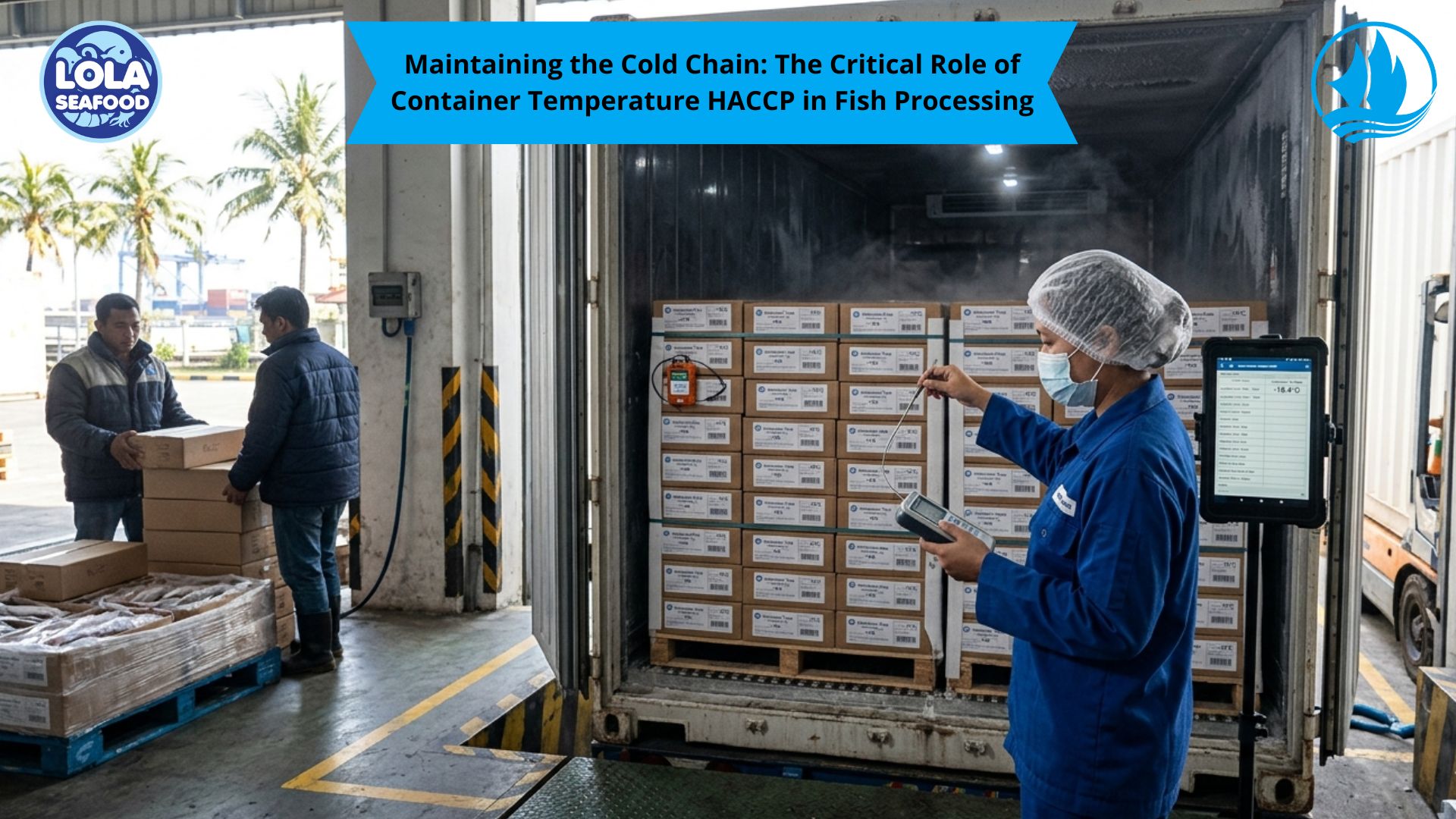
kelolalaut.com In the global seafood industry, the journey from the processing floor to the consumer's plate is fraught with biological risks. For fish processing plants, the stuffing stage—the moment processed goods are loaded into shipping containers—is one of the most volatile links in the supply chain. At this juncture, the Hazard Analysis and Critical Control Point (HACCP) system becomes the primary defense against foodborne illness and product spoilage.
The Science of Seafood Stability
Seafood is uniquely perishable. Unlike beef or poultry, fish tissues contain high water content and enzymes that remain active even at low temperatures. Furthermore, marine bacteria are often "psychrotrophic," meaning they can continue to grow at temperatures just above freezing.
When fish are loaded into a container, any deviation from the target temperature can trigger histamine formation (scombroid poisoning) in species like tuna and mackerel, or the growth of pathogens like Listeria monocytogenes and Clostridium botulinum. This makes temperature management during stuffing a Critical Control Point (CCP).
Step 1: Identifying Hazards During Stuffing
Before a single box is loaded, a HACCP team must identify what could go wrong. In the context of container stuffing, the primary hazards are:
- Biological: Rapid multiplication of bacteria due to "temperature abuse."
- Physical: Damage to packaging that exposes fish to the external environment.
- Chemical: Potential contamination from a poorly cleaned container or refrigerant leaks.
The most significant risk is ambient heat gain. If a container’s internal temperature is too high at the start, or if the doors remain open for too long in a tropical climate, the "surface temperature" of the fish can rise into the danger zone (above 4°C for chilled or -18°C for frozen) before the reefer unit can stabilize the environment.
Step 2: Establishing Critical Limits
A Critical Limit is a maximum or minimum value to which a biological, chemical, or physical parameter must be controlled. For fish exports, these limits are often dictated by international standards (e.g., FDA or EU regulations).
- Frozen Fish: The standard critical limit is usually -18°C (0°F) or colder.
- Chilled Fish: The limit is typically between 0°C and 4°C.
During stuffing, the HACCP plan should specify that the reefer container must be pre-cooled to the target temperature before loading begins. However, a common industry debate exists: should the reefer be running during stuffing? Most experts suggest turning the unit OFF while the doors are open to prevent the "chimney effect," which pulls warm, humid air into the container, causing frost buildup on the evaporation coils and reducing cooling efficiency.
Step 3: Monitoring and Procedure
Monitoring involves the planned sequence of observations. In a fish processing plant, this usually includes:
- Pre-loading Inspection: Checking the container for cleanliness, odors, and structural integrity.
- Temperature Verification: Using calibrated digital thermometers to record the container’s internal air temperature and the core temperature of random product samples.
- Time Logs: Recording the exact time the container doors were opened and closed.
Step 4: Corrective Actions
If a deviation occurs—for instance, if the container temperature reads -10°C instead of -18°C—the HACCP plan must dictate immediate action.
- Stop Loading: Loading must cease until the temperature is stabilized.
- Product Assessment: If the fish has been exposed to warmth, quality control must determine if it needs to be moved back to the blast freezer or if it is still safe for transit.
- Equipment Repair: If the reefer unit is malfunctioning, the container must be rejected and the shipping line notified.
Step 5: Verification and Record Keeping
"If it isn't written down, it didn't happen." This is the mantra of HACCP. Detailed logs must be maintained, including:
- Container and seal numbers.
- Calibration records for thermometers.
- Temperature logs at the start, middle, and end of stuffing.
- Data logger serial numbers (devices placed inside the cargo to monitor the entire voyage).
The stuffing stage is the "point of no return" for fish processors. Once the container is sealed and the truck leaves the bay, the processor loses direct control over the environment. By implementing a rigorous HACCP plan focused on container temperature, the industry ensures that the hard work done on the processing floor isn't undone by a few hours of heat. Protecting the cold chain isn't just about preserving profit; it's about ensuring global food safety.
If youre interested in our Whiting Fish Whole Round,Barramundi Fillet Skin On,Catfish Fillet Skinless,Cobia Fillet Skinless,Coral Trout Fillet Skin On,Barramundi Whole Round / Whole Gilled Gutted Scaled,Corvina / Croaker / Jew Fish Whole Round / Whole Gilled Gutted Scaled,Black Pomfret Whole Round,Red / Scarlet Snapper Fillet Portion,Parrotfish Fillet Skinless please do not hesitate to contact us through email and/or Whatsapp
.jpg)
.jpg)