The Secrets Behind the Economic Value of Fish Maw
By. Lutfi - 11 Mar 2026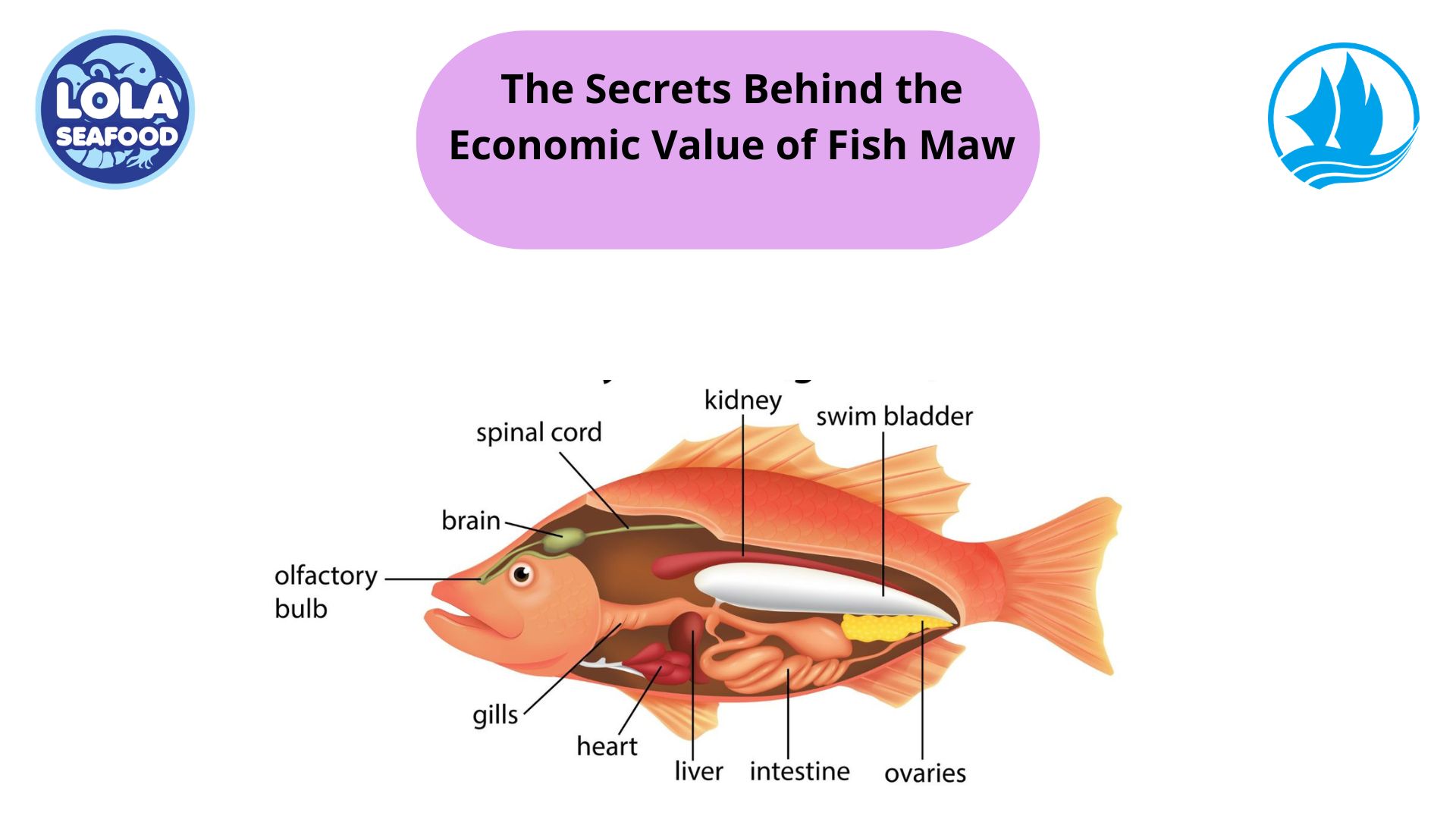
kelolalaut.com In the bustling seafood markets of Hong Kong, Guangzhou, and Southeast Asia, you might encounter dried, yellowish, sponge-like organs displayed in glass jars like precious jewels. To the uninitiated, they look like curious maritime leftovers. To the connoisseur and the savvy investor, however, these are fish maws—often referred to as "aquatic gold."
Fish maw is the commercial term for the dried swim bladder of a fish. While it may seem like a humble byproduct, its economic trajectory and cultural prestige have turned it into one of the most expensive food items on the planet.
What Exactly is Fish Maw?
The swim bladder is an internal gas-filled organ that helps a fish control its buoyancy, allowing it to stay at a specific water depth without wasting energy on swimming. Once extracted, cleaned, and sun-dried, it becomes fish maw.
Unlike other delicacies where flavor is king, fish maw is prized for its texture and its ability to absorb the flavors of the stocks it is braised in. More importantly, it is hailed in Traditional Chinese Medicine (TCM) for its high collagen content and its supposed ability to improve skin complexion, boost blood circulation, and aid kidney function.
The Hierarchy of Value: Why the Price Variance?
Not all fish maws are created equal. The market operates on a sophisticated grading system that dictates whether a piece costs $50 or $5,000 per kilogram.
- Species Rarity: The most significant driver of value is the species. The "King of Fish Maws" is the Bahaba, followed closely by the Macau Croaker. These species are so rare and protected that their maws have become speculative assets, sometimes fetching prices higher than gold by weight.
- Gender Matters: In the world of high-end maw, gender is a price determinant. Male fish maws are generally thicker, firmer, and do not dissolve as easily during long cooking processes. Female maws tend to be thinner and softer, making them slightly more affordable but less prestigious.
- Age and Size: Much like a fine wine, older is often better. Larger, thicker maws from mature fish command a massive premium because they offer a more substantial "mouthfeel" and are believed to contain more concentrated nutrients.
- Origin and Processing: The "New Territories" maws from specific regions in South America and Africa have gained traction, but the traditional "four famous maws" (including the Zhanmiao and Behead) remain the gold standard.
The Economic Engine: Beyond the Soup Bowl
The economic value of fish maw isn't just about fine dining; it's a complex ecosystem of trade, luxury branding, and, unfortunately, environmental impact.
The Luxury Gift Economy In many Asian cultures, fish maw is a "status food." It is a staple at high-end weddings, Lunar New Year feasts, and as corporate gifts. Giving a high-grade fish maw is a gesture of immense respect and financial power. This cultural demand ensures that even during economic downturns, the "prestige" tier of the market remains remarkably resilient.
Investment and Speculation Because dried fish maw can be stored for decades without spoiling—and actually improves in texture and value as it ages—it is often treated as a store of value. Families may buy high-quality maws as an heirloom, expecting the price to appreciate as the source species become scarcer.
The Environmental Cost of "Aquatic Gold"
The high economic value of fish maw has a dark side. The pursuit of the Totoaba fish in the Gulf of California for its swim bladder has led to the near-extinction of the Vaquita porpoise, which gets caught in the illegal gillnets meant for the Totoaba. This "cocaine of the sea" trade has attracted organized crime, turning a culinary tradition into a conservation crisis.
Modern consumers and regulatory bodies are now pushing for sustainable aquaculture. Farmed sturgeon and croaker maws are becoming more common, offering a way to satisfy the global demand without emptying the oceans.
The Future of the Market
As biotechnology advances, we are seeing the rise of "lab-grown collagen," but it is unlikely to replace the traditional fish maw market soon. The value lies in the authenticity and the history of the product. However, for the industry to survive another century, transparency in the supply chain and strict adherence to CITES (Convention on International Trade in Endangered Species) regulations will be essential.
Fish maw is a fascinating example of how culture, biology, and economics intersect. It transforms a functional organ into a symbol of longevity and wealth, proving that in the global market, value is often found in the most unexpected places.
If youre interested in our Whiting Fish Whole Round,Barramundi Fillet Skin On,Catfish Fillet Skinless,Cobia Fillet Skinless,Coral Trout Fillet Skin On,Barramundi Whole Round / Whole Gilled Gutted Scaled,Corvina / Croaker / Jew Fish Whole Round / Whole Gilled Gutted Scaled,Black Pomfret Whole Round,Red / Scarlet Snapper Fillet Portion,Parrotfish Fillet Skinless please do not hesitate to contact us through email and/or Whatsapp
.jpg)
.jpg)

.jpg)
.jpg)

.jpg)
.jpg)