The Financial Blueprint of Demersal Exports: Why Indonesian Grouper is a Blue-Chip Investment
By. Fajar - 07 Jan 2026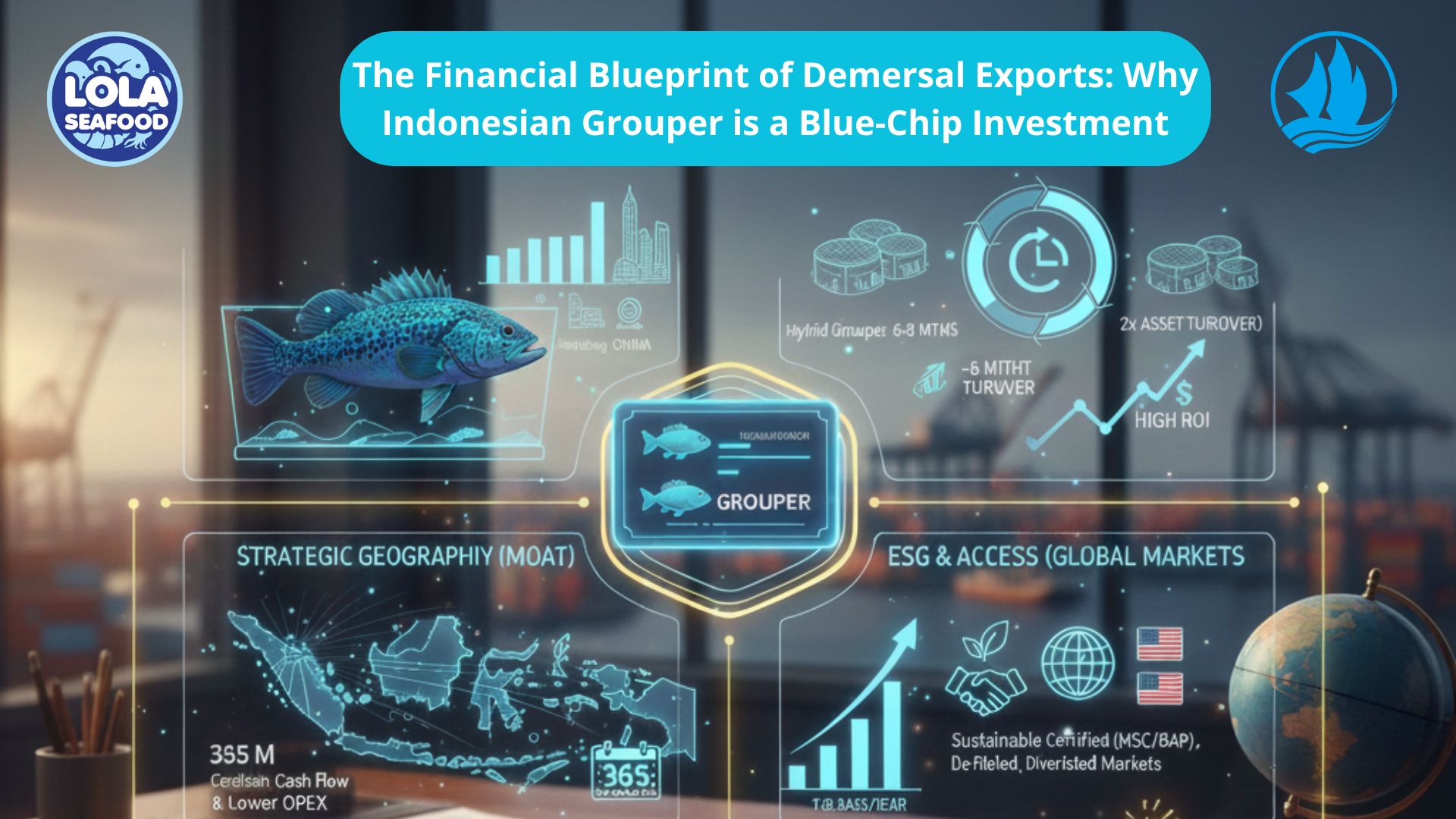
kelolalaut.com Indonesia’s maritime sector has long been touted as a "sleeping giant," but recent shifts in global seafood consumption have finally awakened its most lucrative segment: demersal fish. While pelagic species like tuna handle the volume, demersal species—specifically the Grouper (Kerapu)—are capturing the value. From a financial analysis perspective, the Indonesian Grouper industry is no longer just a traditional fishing activity; it has evolved into a high-yield, strategic investment asset within the global Blue Economy.
The Premium Valuation of Live Reef Food Fish (LRFF)
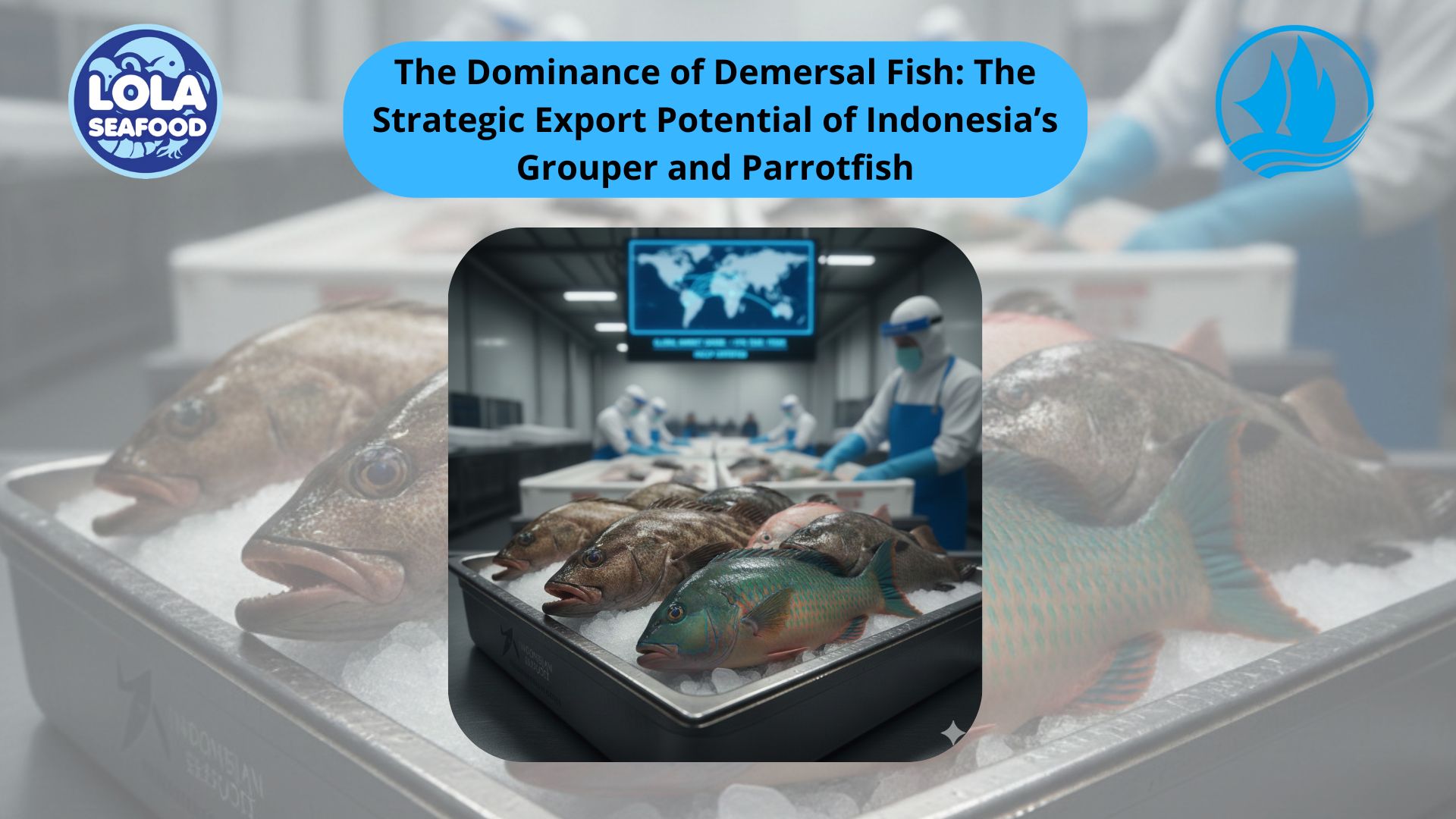
The primary financial driver behind the Grouper’s attractiveness is its unique market positioning as a Live Reef Food Fish (LRFF). Unlike the commodity-driven frozen fish market, where prices are volatile and margins are thin, the live Grouper trade operates in a luxury niche. In major hubs like Hong Kong, Guangzhou, and Singapore, a single high-quality "Cromileptes altivelis" (Barramundi Cod/Kerapu Bebek) can retail for over $100 per kilogram.
For investors, this represents a high-margin opportunity. The price elasticity for Grouper in East Asia is remarkably low; demand remains robust even during economic fluctuations because the product is tied to cultural status and celebratory dining. By exporting "life" rather than "meat," Indonesia captures a premium that accounts for the complexity of the supply chain, turning logistical challenges into a barrier to entry that protects profit margins.
Scalability Through Aquaculture Innovation
Historically, the financial risk in fisheries was tied to the unpredictability of wild catches. However, Indonesia has revolutionized the risk profile of Grouper through aquaculture hilirisasi (downstreaming). The development of hybrid species, such as the Cantang Grouper (a cross between the Tiger and Giant Grouper), has drastically improved the Return on Investment (ROI) for producers.
Hybrid Groupers offer a faster growth cycle—reaching a marketable size of 500–700 grams in just 6 to 8 months compared to the 12–14 months required for pure breeds. From a financial standpoint, this doubles the asset turnover ratio. Faster cycles mean quicker reinvestment of capital and reduced exposure to biological risks like disease or environmental shifts. Furthermore, the shift toward floating net cages (KJA) allows for scalable production models that can attract institutional capital and venture debt, moving away from fragmented, small-scale operations.
Strategic Location and Comparative Advantage
Indonesia holds a geographical monopoly that acts as a natural "moat" for its investments. Situated in the Coral Triangle, the country possesses the ideal water temperature and salinity levels for year-round production. Unlike competitors in temperate climates who face seasonal shutdowns, Indonesian farms can operate at 100% capacity 365 days a year.
This year-round productivity ensures a consistent cash flow, a critical metric for any financial analysis. When combined with lower labor costs relative to regional competitors like Taiwan or Australia, Indonesia’s Net Profit Margin on exported Grouper becomes one of the most competitive in the Asia-Pacific region.
Mitigating Risks: Sustainability as a Financial Safeguard
In modern finance, Environmental, Social, and Governance (ESG) criteria are paramount. The "wild-caught" model of the past carried significant reputational and regulatory risks, often leading to market bans. Indonesia’s current strategic focus on sustainable aquaculture and regulated "catch quotas" acts as a de-risking mechanism.
By adhering to international standards such as the Marine Stewardship Council (MSC) or Best Aquaculture Practices (BAP), Indonesian Grouper becomes eligible for entry into high-value Western markets (EU and USA) that demand traceability. For an investor, this diversification of the "buyer portfolio" reduces dependence on the Chinese market and safeguards the investment against regional geopolitical tensions.
The Role of Infrastructure and Government Incentives
The Indonesian government has identified fisheries as a priority sector for foreign direct investment (FDI). Incentives such as tax holidays for processing facilities and the development of Integrated Fishing Ports (SKPT) in Eastern Indonesia are lowering the Capital Expenditure (CAPEX) for new entrants. Improvements in cold chain logistics and direct flight routes from fish-producing regions like Natuna or Sulawesi to international hubs have significantly reduced Operating Expenses (OPEX) by lowering mortality rates during transit.
A Promising Yield
The financial analysis of the Indonesian Grouper export industry reveals a compelling narrative: it is a sector characterized by high unit value, accelerating turnover, and a widening competitive moat. As global demand for premium protein rises and wild stocks deplete, the controlled production of Grouper stands out as a stable, high-growth alternative to traditional commodities.
For the savvy investor, Indonesia’s demersal fish sector offers more than just biological wealth; it offers a sophisticated financial vehicle capable of delivering sustainable, long-term dividends in the burgeoning global Blue Economy.
.jpg)