Advanced Strategies for Pathogen Control in Seafood Processing Facilities
By. Ely Kusniawati - 01 Jun 2026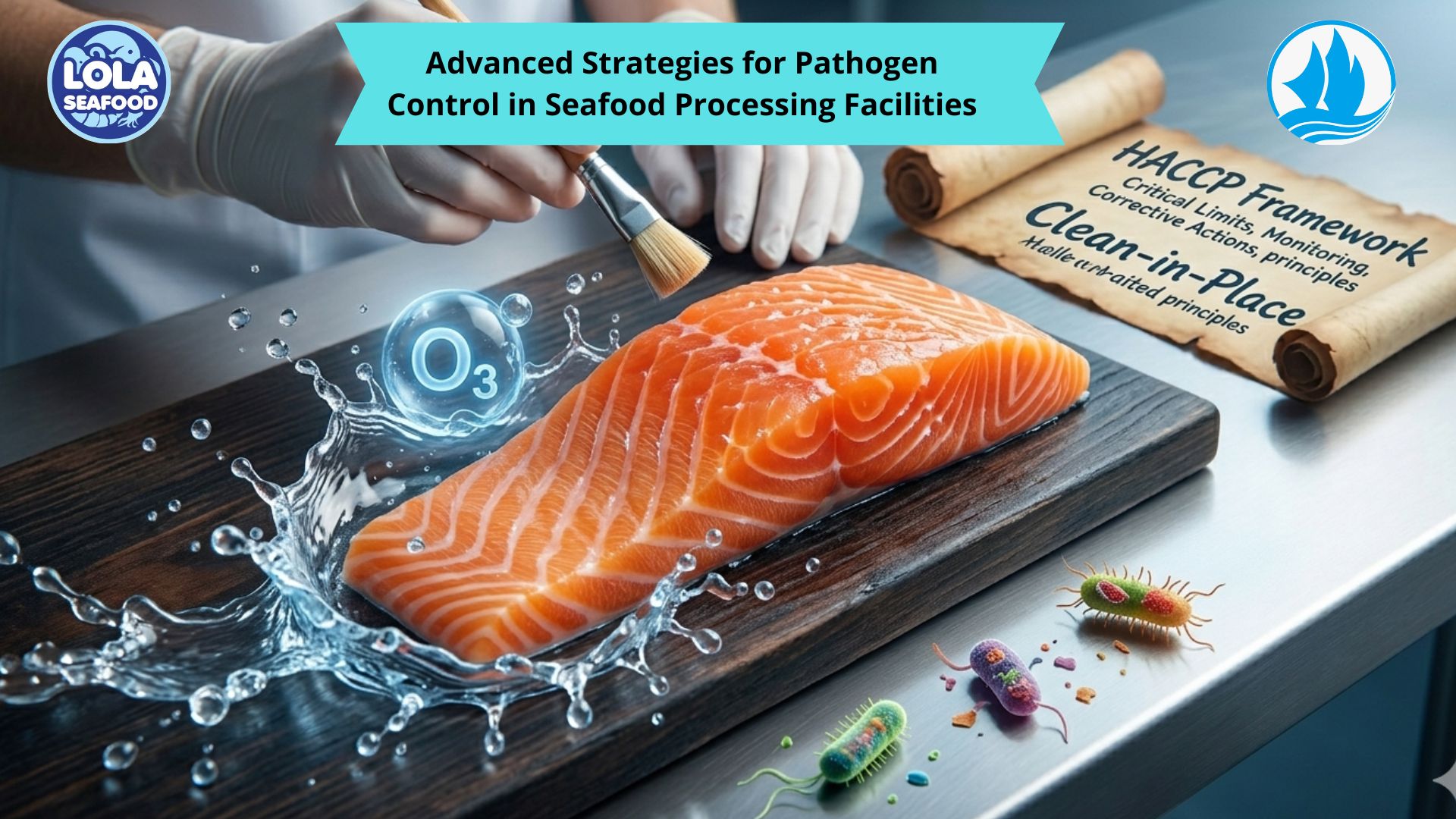
kelolalaut.com The global seafood industry operates under a microscope of stringent regulatory standards and rising consumer expectations. Because fish and shellfish are highly susceptible to microbial spoilage, ensuring safety requires more than just standard washing procedures. Pathogens like Listeria monocytogenes, Salmonella spp., and Vibrio are persistent threats that can compromise product integrity and public health. To achieve a zero-tolerance environment for these microorganisms, modern processing facilities must adopt advanced strategies that integrate hygienic engineering, biofilm eradication, and a robust food safety culture.
Sanitary Design: The First Line of Defense
Minimizing pathogens begins long before the first fish arrives at the loading dock; it starts with the physical architecture and engineering of the processing facility. Sanitary design principles are critical in eliminating areas where water can stagnate and bacteria can breed.
Factories should be constructed using non-porous, corrosion-resistant materials such as high-grade stainless steel (316L) for all food-contact surfaces. Floors must be sloped precisely toward high-capacity, easily cleanable stainless steel drains to prevent pooling water—a primary vector for Listeria colonization. Furthermore, walls and ceilings should have smooth, seamless finishes with coved junctions (rounded corners) to prevent organic debris and moisture from getting trapped in hard-to-reach crevices.
Air handling systems also play a pivotal role. Positive air pressure must be maintained in high-risk areas, such as the final packaging and ready-to-eat (RTE) zones. This ensures that when doors are opened, air flows outward, preventing airborne pathogens from low-risk, raw processing zones from infiltrating clean environments.
Breaking the Shield: Biofilm Management
One of the greatest challenges in fish processing is the formation of biofilms. When bacteria attach to a surface, they secrete a slimy matrix of extracellular polymeric substances (EPS). This matrix acts as a protective shield, making the embedded pathogens up to 1,000 times more resistant to conventional sanitizers and heat.
To dismantle biofilms, facilities must employ a rotating sanitation chemistry strategy. Relying on a single type of sanitizer allows surviving bacteria to build resistance. Processors should alternate between oxidative sanitizers (like peracetic acid or chlorine dioxide) and non-oxidative options (such as quaternary ammonium compounds).
Additionally, the integration of enzymatic cleaners has proven highly effective. These specialized enzymes specifically target and break down the EPS matrix, stripping away the protective shield and exposing the underlying pathogens to the lethal action of subsequent sanitizers.
Advanced Intervention: Ozone and Electrochemically Activated Water
While traditional chemicals remain standard, forward-thinking processors are turning to green technologies to reduce chemical residues while maximizing pathogen kill rates.
- Aqueous Ozone (O3): Generated on-site, ozonated water is a powerful antimicrobial agent. It can be sprayed directly onto whole fish, fillets, and processing equipment. Because ozone rapidly degrades into pure oxygen, it leaves absolutely no chemical residue, alters no flavors, and requires no post-treatment rinsing.
- Electrochemically Activated (ECA) Water: By passing a diluted salt solution through an electrolytic cell, facilities can produce hypochlorous acid (HOCl). ECA water is highly effective against a broad spectrum of spores and vegetative bacteria, yet it is completely non-toxic to workers and safe for direct food contact.
Cultivating a Food Safety Culture
No matter how advanced a facility's technology or design, the efficacy of pathogen control ultimately rests on human behavior. Technology is only as good as the operators managing it. Therefore, establishing a deeply ingrained "Food Safety Culture" is paramount.
This involves moving beyond basic compliance checklists to a state where every employee—from the frontline filleting worker to upper management—understands the why behind safety protocols. Continuous, interactive training programs should demonstrate the real-world consequences of cross-contamination.
For instance, workers should be trained to recognize that touching a dirty pallet and then handling a clean conveyor belt can directly introduce Salmonella into the product stream. Rewarding compliance and encouraging employees to speak up when they notice a hygiene failure creates a proactive, rather than reactive, defense mechanism.
If youre interested in our Whiting Fish Whole Round,Barramundi Fillet Skin On,Catfish Fillet Skinless,Cobia Fillet Skinless,Coral Trout Fillet Skin On,Barramundi Whole Round / Whole Gilled Gutted Scaled,Corvina / Croaker / Jew Fish Whole Round / Whole Gilled Gutted Scaled,Black Pomfret Whole Round,Red / Scarlet Snapper Fillet Portion,Parrotfish Fillet Skinless,Baby Octopus Flower,Bonito Fillet Portion Cut,Catfish Fillet Skinless,Coral Trout Fillet Skinless,Baby Octopus Flower Baby Octopus Whole Cleaned Baby Octopus Whole Round Barramundi Fillet Portion Cut Black Pomfret Portion Cut Bonito Whole Round Catfish Steak Catfish Fillet Skinless Catfish Steak Baby Octopus Whole Cleaned Catfish Fillet Skinless Barramundi Fillet Skinless Black Pomfret Portion Cut Bonito Whole Round Coral Trout Whole Round please do not hesitate to contact us through email and/or Whatsappp
.jpg)
.jpg)