From Port to Plate: Navigating the Critical Stages of Loading and International Acceptance for Processed Fish Exports
By. Lutfi - 11 May 2026.jpg)
kelolalaut.com The global seafood trade is a complex ballet of logistics, science, and strict regulatory compliance. While the processing plant is where the quality of fish products is created, the transition from the loading dock to the final acceptance in a foreign country is where that quality is either preserved or lost. For exporters, the moments of loading at the origin and arrival at the destination are the ultimate tests of their operational integrity and market reputation.
The Loading Phase: Setting the Stage for Success
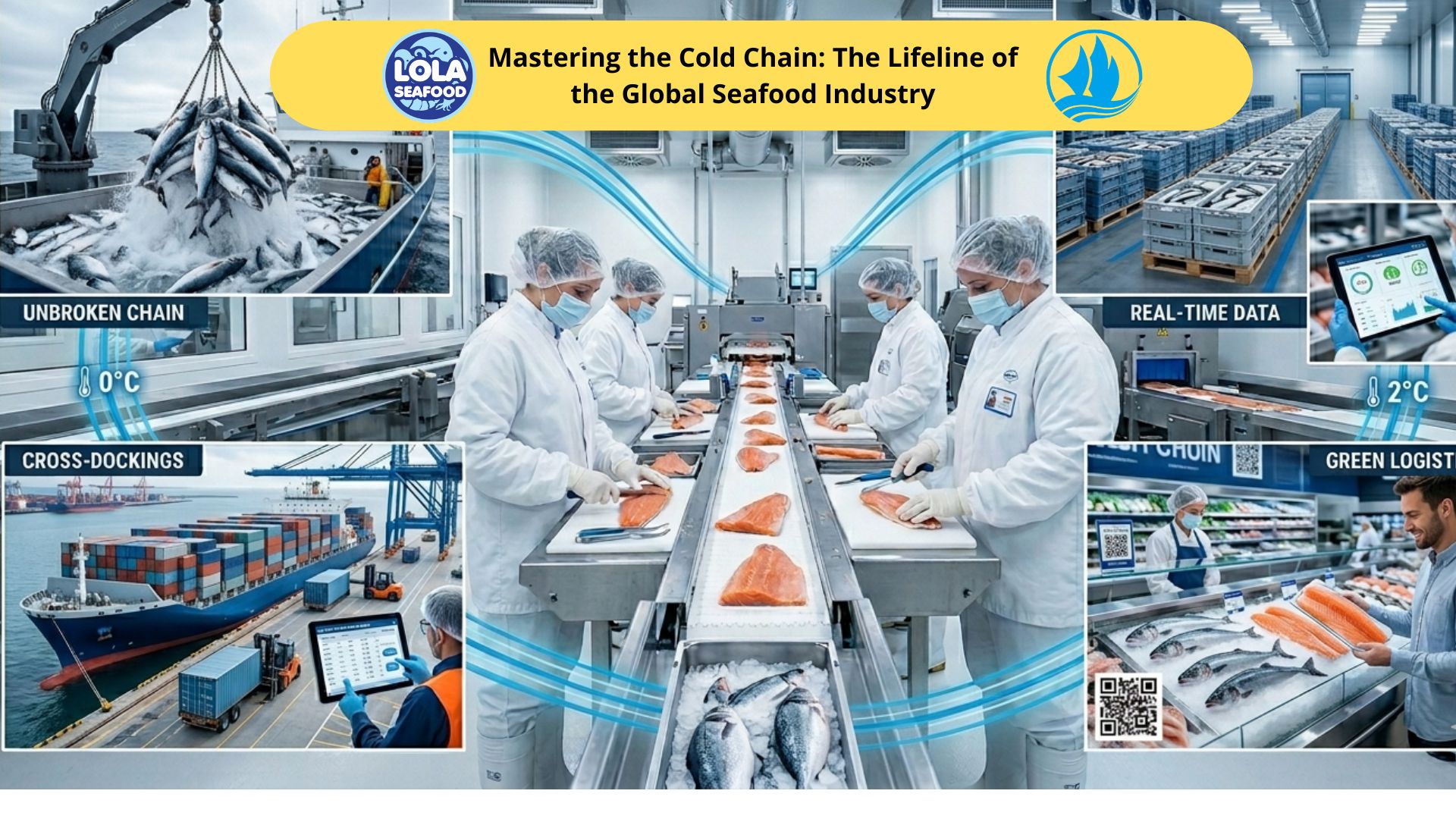
The journey begins long before the ship leaves the harbor. The loading process is the first line of defense in maintaining the "Cold Chain".
1. Pre-cooling and Container Preparation
One of the most common mistakes in seafood logistics is "hot loading"—placing frozen goods into a warm container. A reefer (refrigerated container) is designed to maintain temperature, not to bring it down quickly. Exporters must ensure the container is pre-cooled to the target temperature (typically $-18$°C for frozen products) before the doors are opened for loading. This prevents a thermal shock that can cause surface thawing and subsequent protein denaturation.
2. The Science of Airflow (Stowage)
Inside a shipping container, air is the lifeblood of preservation. Proper stowage is essential; products should never be stacked to the very ceiling or block the floor's T-bars. If airflow is obstructed, "hot spots" can develop, leading to localized spoilage even if the refrigeration unit indicates the correct temperature. This mechanical stress and poor air circulation can also lead to packaging failures, such as micro-tears in vacuum seals, which allow oxygen to enter and ruin the product.
3. Documentation and Sealing
Before the container is hoisted onto the vessel, a "paper trail" must be established. Every shipment must be officially sealed, and the seal number must match the Bill of Lading, Health Certificate, and Certificate of Origin. Discrepancies in these documents are one of the primary causes of delays at foreign customs, which can eat into the product's shelf life.
The Arrival Phase: The Gatekeepers of International Markets
When a container arrives at a major international port like Rotterdam, Tokyo, or Los Angeles, it faces a gauntlet of inspections. Acceptance is never guaranteed.
1. Sensory and Physical Inspections
Port authorities often conduct random "sampling." Inspectors look for sensory cues: the aroma, texture, and color of the fish. For example, if a frozen fillet shows excessive ice crystals, it is a tell-tale sign of "temperature abuse" during the voyage, indicating the fish was partially thawed and refrozen. Such findings can lead to immediate rejection.
2. Chemical and Microbiological Rigor
Developed nations maintain zero-tolerance policies for specific contaminants. Products are tested for pathogens like Salmonella and Listeria, as well as heavy metals such as mercury. Even a trace amount of a banned substance can result in the entire shipment being destroyed at the exporter's expense.
3. Digital Accountability (The Data Logger)
Modern buyers no longer rely on guesswork. They download data from IoT Data Loggers placed within the pallets. If the digital record shows that the temperature rose above safe limits for even a few hours, the buyer may reject the cargo based on food safety clauses, regardless of how the fish looks or smells at that moment.
The Economic Stakes of Compliance
The influence of the journey extends far beyond the physical product. A rejected shipment is a financial catastrophe. Beyond the loss of the goods, the exporter may face demurrage fees (costs for the container sitting at the port) and potential "blacklisting" by foreign regulatory bodies. Furthermore, labels must be meticulously accurate; for instance, the European Union requires specific details on FAO catch zones. Any error in labeling can halt a shipment indefinitely.
If youre interested in our Whiting Fish Whole Round,Barramundi Fillet Skin On,Catfish Fillet Skinless,Cobia Fillet Skinless,Coral Trout Fillet Skin On,Barramundi Whole Round / Whole Gilled Gutted Scaled,Corvina / Croaker / Jew Fish Whole Round / Whole Gilled Gutted Scaled,Black Pomfret Whole Round,Red / Scarlet Snapper Fillet Portion,Parrotfish Fillet Skinless,Baby Octopus Flower please do not hesitate to contact us through email and/or Whatsapp

.jpg)

.jpg)