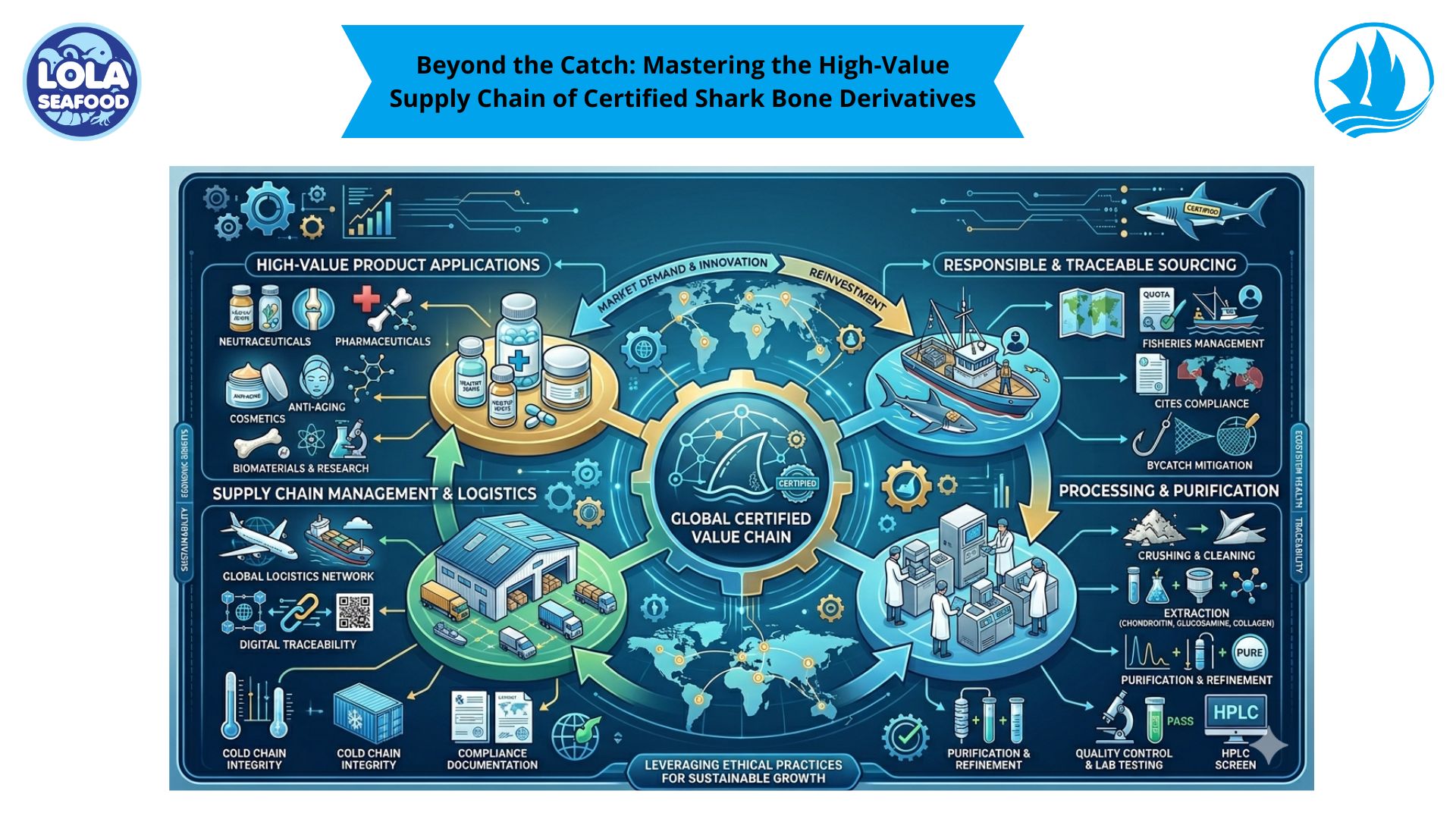
The Nutritional Profile of Shark Meat
By. Nugroho Luhur - 17 Feb 2026
kelolalaut.com Like many large marine species, shark meat is a dense source of nutrients. For those living in coastal communities where shark is a traditional staple, it provides several key dietary components that are essential for human health.
- High Protein Density: Shark meat is exceptionally lean and packed with high-quality protein. It contains all the essential amino acids required for muscle repair, immune function, and enzyme production. For those seeking low-fat protein sources, it is often compared favorably to lean poultry.
- Omega-3 Fatty Acids: While not as oily as salmon or mackerel, sharks do contain Omega-3 fatty acids like $EPA$ and $DHA$. These fats are crucial for heart health, reducing systemic inflammation, and supporting cognitive brain function.
- Mineral Rich: It is a natural source of magnesium, selenium, and potassium. Selenium, in particular, is a powerful antioxidant that helps protect cells from damage and supports thyroid function.
- Zero Carbohydrates: Being almost entirely protein and fat, shark meat has a glycemic index of zero, making it an option for specialized low-carb diets, provided it isn't breaded or fried.
Medicinal and Traditional Beliefs
In various parts of the world, shark products—particularly the liver and cartilage—are prized for their purported medicinal properties.
- Squalene: Shark liver oil is rich in squalene, a natural organic compound used extensively in high-end skincare for its moisturizing properties. In some cultures, it is consumed as a supplement to boost the immune system, though clinical evidence remains a subject of ongoing research.
- Cartilage Supplements: Shark cartilage is often marketed as a treatment for joint pain and inflammation. The logic, albeit more folk-science than clinical, suggests that because sharks have skeletons made entirely of cartilage and appear remarkably resilient to certain diseases, consuming their tissue might transfer that resilience to humans.
The Comparison: Shark vs. Sustainable Alternatives
To put the benefits of shark meat into perspective, it is helpful to compare it to other common seafood choices. While shark offers protein, its position at the top of the food chain makes it a "sponge" for heavy metals.
|
Fish Type |
Protein (per 100g) |
Mercury Levels |
Omega-3 Content |
Sustainability |
|
Shark |
~21g |
Very High |
Moderate |
Very Low |
|
Salmon (Wild) |
~20g |
Low |
Very High |
Moderate |
|
Sardines |
~25g |
Very Low |
High |
Very High |
|
Tuna (Ahi) |
~23g |
High |
Moderate |
Low |
As the table illustrates, while shark is high in protein, it carries the highest risk of mercury contamination compared to smaller, more sustainable fish like sardines or wild salmon.
The Significant Health Risks: Mercury and Toxins
The biggest "catch" when it comes to eating shark is biomagnification. As apex predators, sharks live long lives and eat thousands of smaller fish. This leads to the accumulation of dangerous substances in their flesh that can be toxic to humans.
1. High Mercury Levels
Sharks are notorious for containing high levels of methylmercury. Unlike some toxins that the body can filter out, mercury binds to the protein in the fish's muscle. For humans, excessive mercury intake can lead to neurological damage, cognitive impairment, and developmental issues in fetuses and young children.
2. BMAA Toxins
Recent studies have found traces of BMAA (beta-methylamino-L-alanine) in shark fins and meat. This neurotoxin is produced by cyanobacteria and is linked to the development of neurodegenerative diseases such as Alzheimer’s and ALS.
The Environmental and Ethical Impact
Beyond the plate, the consumption of shark meat carries a heavy environmental price. Sharks are slow-growing, late-maturing, and produce few offspring. This biological "slow lane" makes them extremely vulnerable to overfishing.
- Ecosystem Collapse: Sharks act as the "managers" of the ocean. They keep other fish populations in check and remove the sick or weak. Removing them causes a "top-down" collapse that can destroy coral reefs and deplete commercial fish stocks like tuna and snapper.
- The Issue of Shark Finning: Much of the demand for shark comes from the fin trade. "Finning"—the practice of cutting off the fins and discarding the rest of the shark back into the water—is widely condemned as inhumane and wasteful, leading to the death of millions of sharks annually.
If youre interested in our Whiting Fish Whole Round,Barramundi Fillet Skin On,Catfish Fillet Skinless,Cobia Fillet Skinless,Coral Trout Fillet Skin On,Barramundi Whole Round / Whole Gilled Gutted Scaled,Corvina / Croaker / Jew Fish Whole Round / Whole Gilled Gutted Scaled,Black Pomfret Whole Round,Red / Scarlet Snapper Fillet Portion,Parrotfish Fillet Skinless,Baby Octopus Flower please do not hesitate to contact us through email and/or Whatsapp

.jpg)