The "Dry" Standard: Why Moisture Control is the Golden Rule for Fish Exports
By. Puji Widyastuti - 13 Feb 2026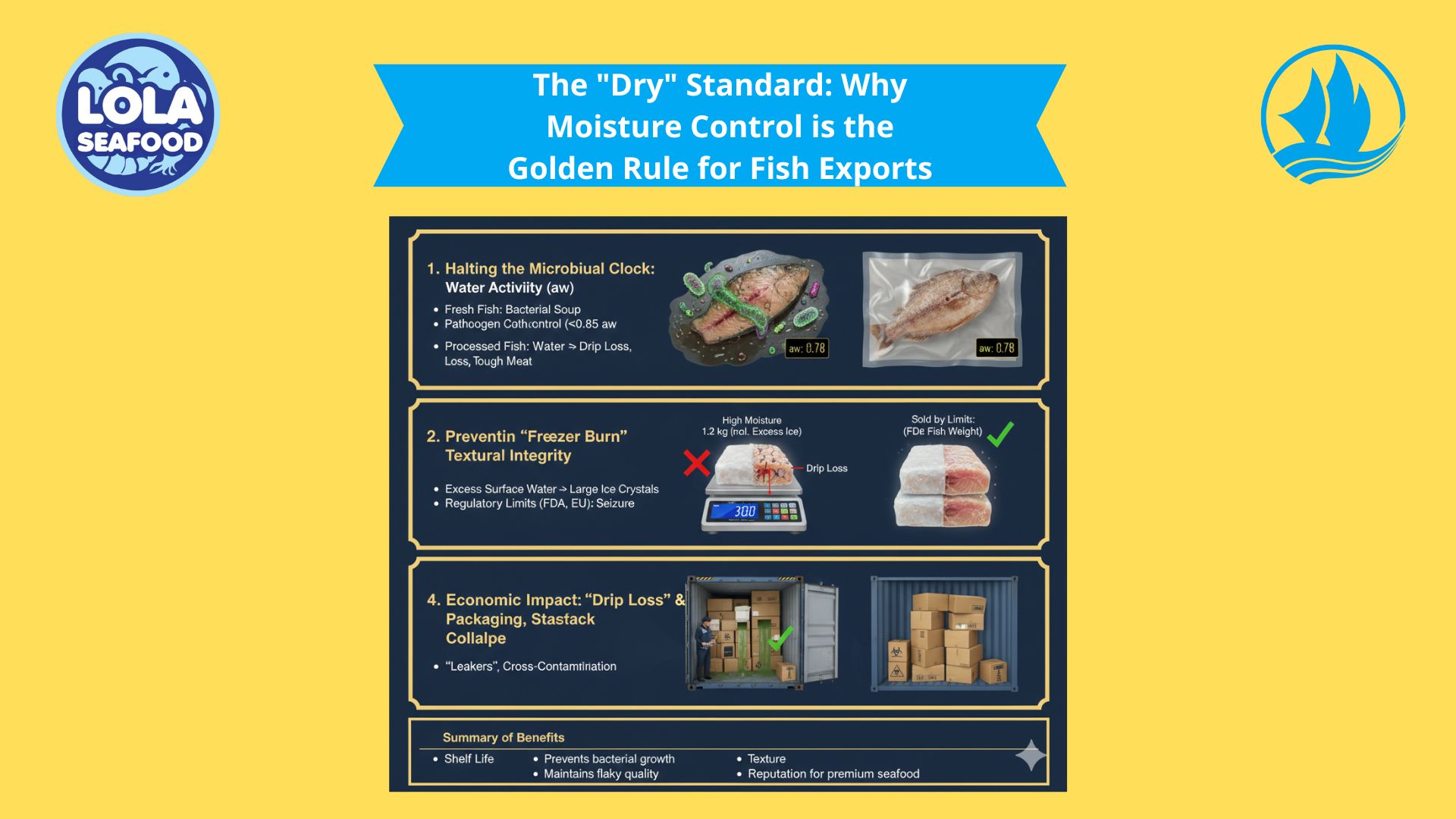
kelolalaut.com In the high-stakes world of international seafood trade, the difference between a premium shipment and a total loss often comes down to one seemingly paradoxical factor: keeping the fish "dry." While fish obviously live in water, the moment they are harvested for export, water becomes their greatest enemy. In the context of the export industry, "dryness" doesn’t just refer to the surface of the skin; it refers to the meticulous control of moisture content, water activity, and external humidity. Whether the product is frozen, dried, or fresh, managing moisture is the non-negotiable foundation of food safety and marketability.
1. Halting the Microbial Clock
The primary reason exporters obsess over moisture is microbiology. Bacteria, yeast, and molds require water to survive and multiply. In the seafood industry, we measure this through Water Activity (aw).
- Fresh Fish: If the surface of fresh fish remains "wet" with stagnant water or melted ice runoff, it creates a "bacterial soup" that accelerates spoilage.
- Processed Fish: For dried exports (like salted fish or smoked fillets), reducing moisture content below specific thresholds (usually an aw of 0.85 or lower) ensures that pathogens like Staphylococcus aureus or Salmonella cannot thrive.
By keeping the product dry and properly drained, exporters effectively "stop the clock," extending the shelf life from a few days to several months.
2. Preventing "Freezer Burn" and Textural Integrity
For the frozen fish sector, moisture control is about internal physics. If a fish is packaged with excess surface water, that water freezes into large ice crystals. These crystals puncture the cell membranes of the fish flesh.
When the end consumer thaws the fish, they experience "drip loss"—the internal juices leak out, leaving the meat tough, fibrous, and tasteless. Furthermore, excess moisture inside the packaging leads to freezer burn, where ice sublimates and leaves the fish dehydrated and discolored. To an international buyer in Europe or the US, a "wet-frozen" fish looks unprofessional and low-quality, leading to immediate price devaluations or shipment rejections.
3. The Economic Impact of "Drip Loss"
Seafood is sold by weight, and this creates a point of friction in global trade. If a shipment of frozen shrimp or fillets is packed with a high percentage of "glazing" (a protective layer of ice) or if the fish has been chemically treated to soak up water, it must be clearly labeled.
International regulators, such as the FDA or the EU Food Safety Authority, have strict limits on added moisture. If a shipment is found to have "excessive water" passed off as fish weight, it is flagged as economic fraud. Not only does this result in the destruction of the product, but it can also land the exporter on a "Red List," making future exports nearly impossible.
4. Logistics and Packaging Durability
Exporting fish involves long-distance travel, often spanning weeks in shipping containers. Moisture is the enemy of packaging.
- Integrity: Excess moisture from the fish can soften corrugated cardboard boxes, causing stacks to collapse in the refrigerated container (reefer).
- Contamination: "Leakers"—packages that drip fish-scented water—can cross-contaminate other products in the same shipment, leading to massive insurance claims.
Maintaining a dry exterior and using vacuum-sealed technology ensures that the product arrives in the same pristine condition it left the processing plant.
5. Meeting International Quality Standards (HACCP)
The most successful fish exporters adhere to HACCP (Hazard Analysis and Critical Control Points). A core pillar of this system is environmental control. High-quality processing plants use:
- Air Dehumidifiers: To keep the processing room air dry.
- Blast Freezers: To lock in moisture internally while keeping the surface crisp.
- Absorbent Pads: Placed in retail packaging to soak up any residual fluids.
Summary of Benefits
|
Feature |
Benefit of Moisture Control |
|
Shelf Life |
Prevents bacterial growth and enzymatic spoilage. |
|
Texture |
Maintains the "flaky" and succulent quality of the meat. |
|
Compliance |
Avoids "economic fraud" charges regarding weight. |
|
Brand Image |
Establishes a reputation for premium, high-standard seafood. |
If youre interested in our Whiting Fish Whole Round,Barramundi Fillet Skin On,Catfish Fillet Skinless,Cobia Fillet Skinless,Coral Trout Fillet Skin On,Barramundi Whole Round / Whole Gilled Gutted Scaled,Corvina / Croaker / Jew Fish Whole Round / Whole Gilled Gutted Scaled,Black Pomfret Whole Round,Red / Scarlet Snapper Fillet Portion,Parrotfish Fillet Skinless please do not hesitate to contact us through email and/or Whatsapp
.jpg)