The Cold Chain’s Critical Moment: The Importance of Temperature Control During Stuffing for Fish Export
By. Nugroho Luhur - 17 Feb 2026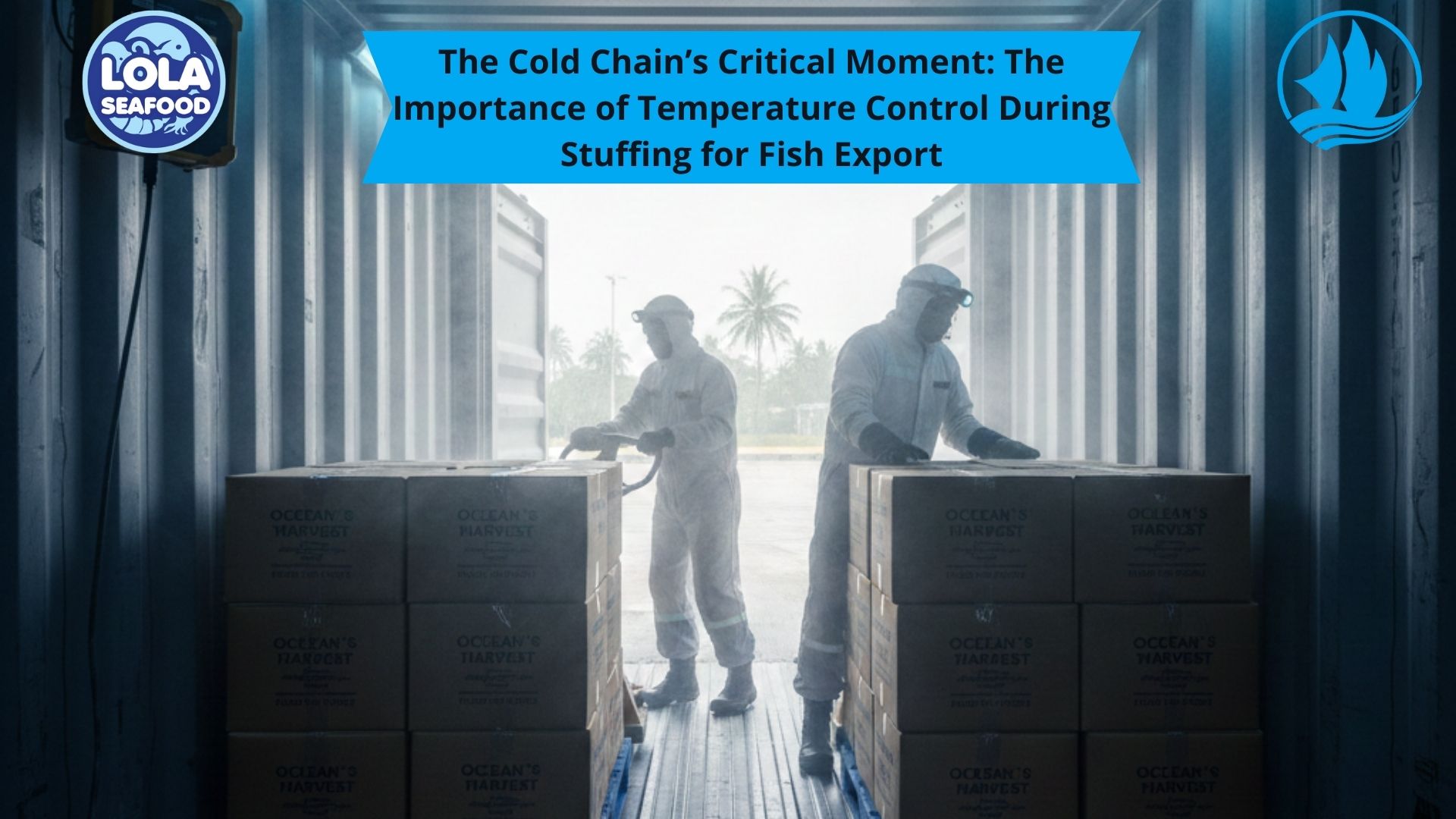
kelolalaut.com In the global seafood industry, the journey from the ocean to a consumer's plate in a distant country is a race against time and biology. For fish processing companies, the most precarious leg of this journey isn't necessarily the weeks spent on a container ship, but the few hours spent "stuffing"—the process of loading finished products into a refrigerated shipping container (reefer).
While modern logistics have mastered long-distance transport, the stuffing phase remains a high-risk window where a single oversight in temperature management can compromise food safety, ruin product quality, and lead to massive financial losses.
1. Preserving the "Gold Standard" of Quality
Fish is one of the most perishable commodities on earth. From the moment it is harvested and processed, its quality is on a downward trajectory. High-quality fish processing involves rapid freezing—often using Individual Quick Freezing (IQF) or blast freezing—to lock in texture, moisture, and flavor.
However, these efforts are futile if the temperature rises during stuffing. Even a brief exposure to ambient tropical heat (common in many export hubs) can cause:
- Surface Thawing: This leads to the formation of large ice crystals when the product re-freezes, damaging the delicate cellular structure of the fish and resulting in a "mushy" texture upon defrosting.
- Melting Glaze: Many export products are "glazed" with a thin layer of ice to prevent freezer burn. If this glaze melts during stuffing, the fish loses its protective barrier, leading to dehydration and oxidation.
2. The Stakes of Food Safety and Histamine Growth
Beyond aesthetics, temperature control is a matter of public health. For certain species like tuna, mackerel, and mahi-mahi, temperature abuse is dangerous due to histamine formation.
If the cold chain is broken during stuffing, bacteria can begin to break down the amino acid histidine into histamine. Unlike many other pathogens, histamine is heat-stable; once it forms, no amount of subsequent freezing or cooking can remove it. For exporters, a "high histamine" lab result at the destination port means an automatic rejection of the cargo, potential blacklisting by food authorities (like the FDA or EU health commissions), and a total loss of the shipment’s value.
3. Preventing the "Heat Shock" Effect
A common misconception in the industry is that the reefer container acts as a "blast freezer." It does not. A reefer is designed to maintain the temperature of the cargo, not to lower it.
If fish products are loaded at -12°C into a container set for -18°C, the container’s cooling unit will struggle to bridge that gap while fighting the warm air trapped during the loading process. This creates a "heat shock" environment where the outer layers of the cartons remain at unsafe temperatures for hours or even days, significantly shortening the product's shelf life.
Best Practices for Temperature-Managed Stuffing
To mitigate these risks, successful exporters implement a rigorous Standard Operating Procedure (SOP) for stuffing:
|
Action |
Purpose |
|
Pre-cooling the Container |
Ensures the internal walls of the reefer are at the target temperature before the first box enters. |
|
Loading via Cold Docks |
Using an enclosed, temperature-controlled loading bay prevents the product from ever touching outside air. |
|
Rapid Loading |
Minimizing the time the container doors are open reduces the intake of humidity and heat. |
|
Airflow Management |
Ensuring the "T-floor" of the reefer isn't blocked so that cold air can circulate through the entire pallet. |
4. Financial and Reputational Implications
The cost of a single 40-foot reefer container of premium fish can exceed $100,000. If the shipment arrives at a destination port—such as Tokyo, Hamburg, or Los Angeles—and the Data Logger (a device that records temperature throughout the trip) shows a spike during the stuffing hour, the buyer has every right to refuse the shipment.
Moreover, the reputation of a fish processor is built on consistency. Consistently delivering products that maintain their "fresh-frozen" integrity builds trust with international distributors. Conversely, a reputation for temperature fluctuations can lead to lower contract prices or the loss of high-end clients who demand perfection.
If youre interested in our Whiting Fish Whole Round,Barramundi Fillet Skin On,Catfish Fillet Skinless,Cobia Fillet Skinless,Coral Trout Fillet Skin On,Barramundi Whole Round / Whole Gilled Gutted Scaled,Corvina / Croaker / Jew Fish Whole Round / Whole Gilled Gutted Scaled,Black Pomfret Whole Round,Red / Scarlet Snapper Fillet Portion,Parrotfish Fillet Skinless,Baby Octopus Flower please do not hesitate to contact us through email and/or Whatsapp
.jpg)