The Legal Shark Value Chain: Identifying Critical Control Points for Cost Efficiency and Value Enhancement from Catch to Consumer
By. Sofie Thoriq - 12 Dec 2025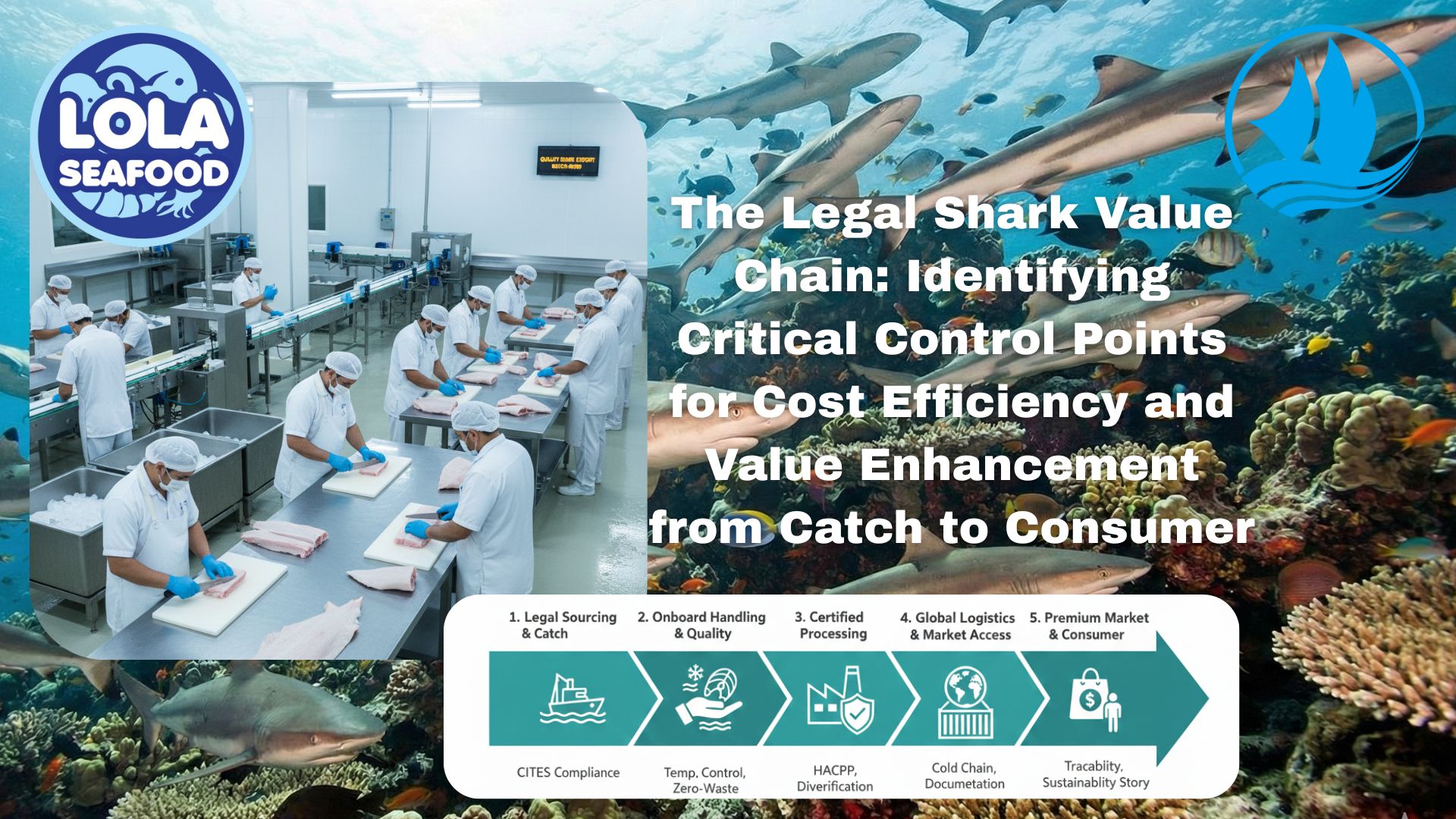
kelolalaut.com The global trade of shark products is fraught with legal complexities and ethical debates. However, within the confines of established regulations—such as those set by CITES and various national fishery laws—a legitimate, sustainable, and economically viable industry exists. Analyzing this legal framework through the lens of the Value Chain is crucial for producers aiming to maximize cost efficiency and achieve premium prices in international markets. This article dissects the legal shark value chain, highlighting critical control points (CCPs) that drive both operational savings and market value enhancement.
1. Sourcing and Capture: The Foundation of Legality
The first and most critical point in the legal shark value chain is sourcing. Unlike illegal, unreported, and unregulated (IUU) fishing, the legal value chain demands full traceability from the moment of capture.
Critical Control Point (CCP): Licensing and Species Identification.
- Cost Efficiency: Using gear and methods optimized for legal quotas minimizes time spent at sea and reduces the risk of costly fines or confiscation.
- Value Enhancement: Documentation proving the catch adheres to CITES quotas (for regulated species like oceanic whitetip or three species of hammerhead) immediately grants the product access to premium markets like the EU and US, where traceability is non-negotiable.
2. Primary Processing and Handling Onboard
Once caught, immediate and high-quality onboard handling is paramount, especially given the rapid spoilage rate of shark meat. This stage determines the physical quality and safety of the final product.
Critical Control Point (CCP): Temperature Control and Bycatch Minimization.
- Cost Efficiency: Rapid chilling and proper storage prevent deterioration, reducing waste (rejection rates) and associated disposal costs. Implementing the Finfish Policy (utilizing the whole carcass) prevents the valuable dorsal fins from being the sole focus.
- Value Enhancement: Superior handling results in "sashimi-grade" or high-quality meat cuts, which command significantly higher prices than processed or dried products. Proper handling preserves the quality of high-value byproducts, such as shark liver oil (squalene) for the cosmetics and pharmaceutical industries.
3. Secondary Processing and Certification
This stage transforms raw material into final market-ready products. For the legal trade, certification is the primary driver of value enhancement.
Critical Control Point (CCP): International Certification (HACCP/ISO) and Product Diversification.
- Cost Efficiency: Standardized processing under protocols like Hazard Analysis and Critical Control Point (HACCP) minimizes the risk of product recalls, which are financially devastating. Efficient processing also minimizes labor costs per unit of product.
- Value Enhancement: Products processed in certified facilities (HACCP, ISO 22000) are globally accepted. Furthermore, diversification into premium products—such as specialized cartilage powder, dried shark stomach, or high-end leather—maximizes the total revenue per fish. Focusing solely on fins drastically limits potential revenue; the legal value chain profits by monetizing the entire fish.
4. Logistics, Distribution, and Market Access
Moving the finished product to the international buyer requires seamless logistics and documentation.
Critical Control Point (CCP): Export Documentation and Cold Chain Management.
- Cost Efficiency: Accurate and compliant CITES export permits and customs paperwork prevent delays, demurrage charges, and the potential seizure of goods. Maintaining an unbroken cold chain (critical for frozen products) eliminates quality depreciation during transit.
- Value Enhancement: Products that arrive quickly, in perfect condition, and with comprehensive documentation build trust with international buyers, enabling producers to negotiate better long-term contracts and stable pricing.
5. Marketing and Consumer Engagement
The final stage is where the legal, ethical story of the product is leveraged to justify its premium price.
Critical Control Point (CCP): Traceability Technology and Sustainability Storytelling.
- Cost Efficiency: While implementing traceability technology (like blockchain or QR codes) has an upfront cost, it drastically reduces the burden of manual auditing and documentation during due diligence checks by buyers.
- Value Enhancement: Consumers in key markets (Europe, North America, Japan) are willing to pay a premium for ethically sourced seafood. By marketing the product with a clear narrative of legality, sustainability, and support for local coastal communities, producers elevate the shark product from a mere commodity to a premium, specialized good. This sustainability marketing acts as a competitive shield against cheaper, illegally sourced alternatives.
The legal shark value chain is a masterclass in turning regulatory compliance into competitive advantage. By meticulously controlling the five critical points—Legal Sourcing, Quality Handling, Certified Processing, Seamless Logistics, and Ethical Storytelling—producers move away from high-volume, low-margin trade typical of IUU fishing towards a high-value, low-risk business model. Success is found not just in maximizing the catch, but in maximizing the economic value, integrity, and sustainability narrative attached to every processed kilogram of legal shark product.
If youre interested in our Gummy Shark Fillet , Shark Belly , Shark Cartilage , Shark Fillet , and Shark Flake please do not hesitate to contact us through email and/or whatsapp.
.jpg)

.jpg)
.jpg)
.jpg)
.jpg)