Preserving the Catch: The Role of Air Blast Freezer (ABF) Standards in Modern Seafood Processing
By. Wiwik Rasmini - 22 Apr 2026 Standards in Modern Seafood Processing.jpg)
kelolalaut.com In the global seafood industry, the bridge between a fresh catch and a premium dinner plate is built on a single, uncompromising factor: temperature control. For fish processing companies, maintaining the "cold chain" isn't just a logistical preference—it is a legal and biological necessity. Among the various technologies available, the Air Blast Freezer (ABF) stands as the gold standard for rapid preservation.
Implementing ABF standards is critical for ensuring food safety, maintaining organoleptic qualities (texture, taste, and smell), and maximizing the economic value of seafood exports.
Understanding the ABF Mechanism
An Air Blast Freezer works by forcing high-velocity, frigid air across the surface of the fish. Unlike a conventional "cold storage" room, which is designed to keep already-frozen products cold, an ABF is an active freezing system designed to extract heat from a product as quickly as possible.
The standard operating temperature for an ABF unit typically ranges between -35°C and -45°C. The goal is to drive the internal core temperature of the fish down to -18°C or lower in the shortest time feasible.
The Science of "Quick Freezing"
Why is speed so important? It comes down to cellular integrity.
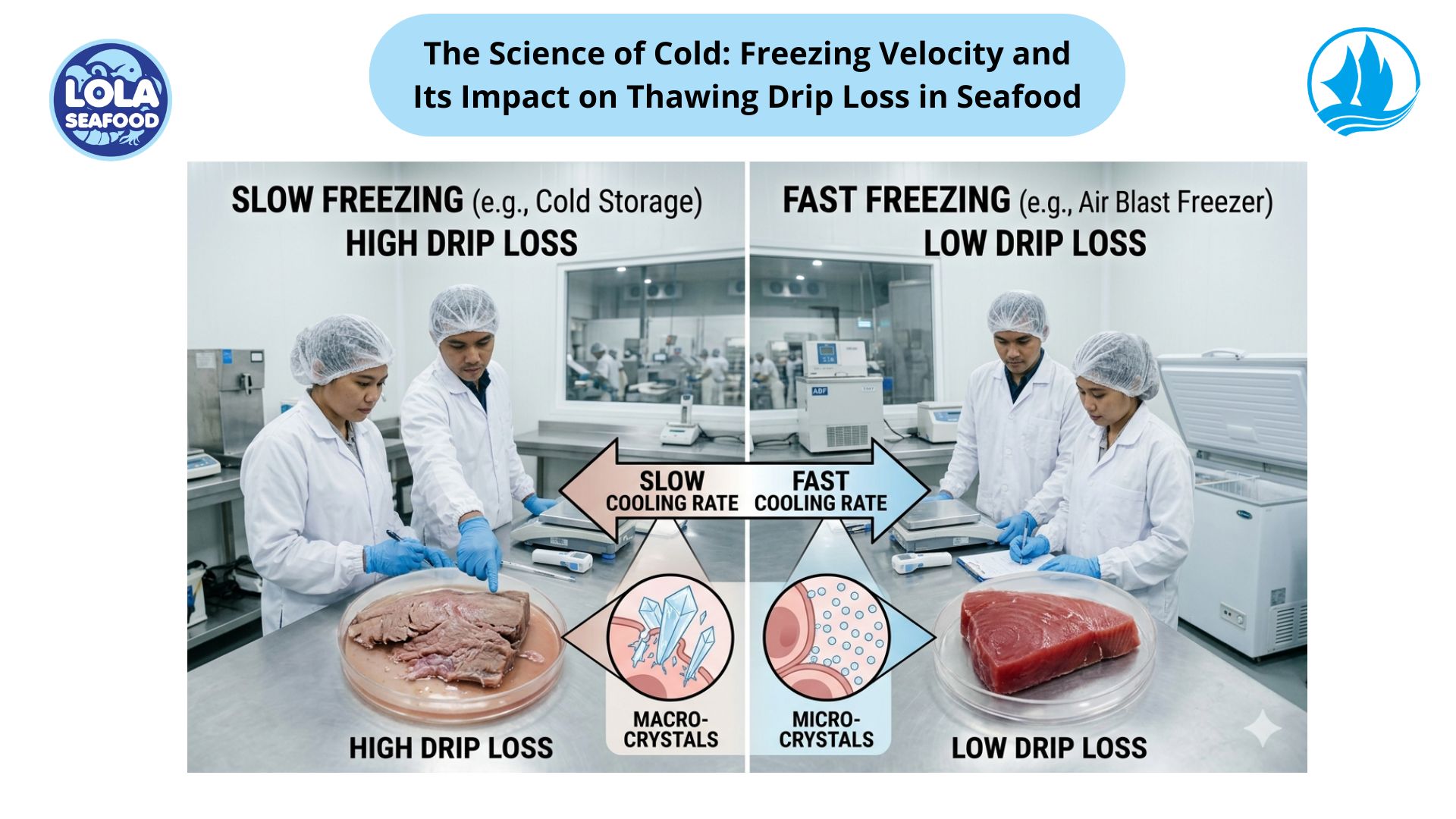
- Macro-crystalline vs. Micro-crystalline: When fish is frozen slowly, large ice crystals form within the muscle tissues. These sharp crystals puncture cell membranes. Upon thawing, the damaged cells leak fluids (known as "drip loss"), resulting in a mushy texture and a loss of nutrients.
- The Critical Zone: Between 0oC and -5oC is the "Zone of Maximum Crystallization." ABF standards require the fish to pass through this temperature range rapidly to ensure that only microscopic ice crystals form, preserving the original structure of the meat.
Core ABF Standards in Processing Plants
To achieve international export quality, such as HACCP or EU standards, processing plants must adhere to specific operational protocols:
1. Pre-Chilling and Loading
Fish should never enter an ABF at ambient room temperature if it can be avoided. Pre-chilling in slurry ice ensures the ABF isn't "overworked." Furthermore, the loading density is a strict standard. If fish are packed too tightly, the airflow is blocked, creating "hot spots" where the fish may spoil before they freeze.
2. Airflow Velocity
The standard air velocity in a high-efficiency ABF should be between 3 to 5 meters per second. This ensures that the boundary layer of relatively "warm" air surrounding the fish is constantly stripped away and replaced by sub-zero air.
3. Core Temperature Monitoring
A common mistake is assuming the fish is frozen because the skin feels hard. Standard operating procedures (SOPs) require the use of probe thermometers to verify that the thermal center (the thickest part of the fish) has reached at least -18°C.
Hygiene and Maintenance Standards
Because the ABF involves high-speed air circulation, hygiene is paramount. Any contaminants in the freezer can be "blasted" onto the product.
- Defrosting Cycles: Frost buildup on evaporator coils acts as an insulator, reducing efficiency. Standards dictate regular defrosting schedules to maintain heat exchange capabilities.
- Sanitization: The interior of the ABF must be constructed from food-grade stainless steel or high-density panels that can be sanitized with specialized low-temperature detergents.
- Air Filtration: Modern ABF units often incorporate filters to ensure that the air being circulated is free from microbial pathogens.
Economic and Quality Benefits
For a fish processing company, adhering to ABF standards is an investment that yields high returns:
- Reduced Drip Loss: By maintaining cellular structure, the weight of the fish remains consistent after thawing. This means more "sellable" weight for the company.
- Extended Shelf Life: Rapid freezing halts microbial growth and enzymatic activity more effectively than traditional methods, extending the product's lifespan to 12–24 months.
- Market Access: Many premium markets (such as Japan for sashimi-grade tuna) explicitly require blast-frozen products to ensure the highest safety and quality standards.
If youre interested in our Whiting Fish Whole Round,Barramundi Fillet Skin On,Catfish Fillet Skinless,Cobia Fillet Skinless,Coral Trout Fillet Skin On,Barramundi Whole Round / Whole Gilled Gutted Scaled,Corvina / Croaker / Jew Fish Whole Round / Whole Gilled Gutted Scaled,Black Pomfret Whole Round,Red / Scarlet Snapper Fillet Portion,Parrotfish Fillet Skinless,Baby Octopus Flower please do not hesitate to contact us through email and/or Whatsapp

.jpg)