Mitigating Anaerobic Hazards: The Hurdle Technology Approach in Fish Vacuum Packaging HACCP
By. Nugroho Luhur - 26 May 2026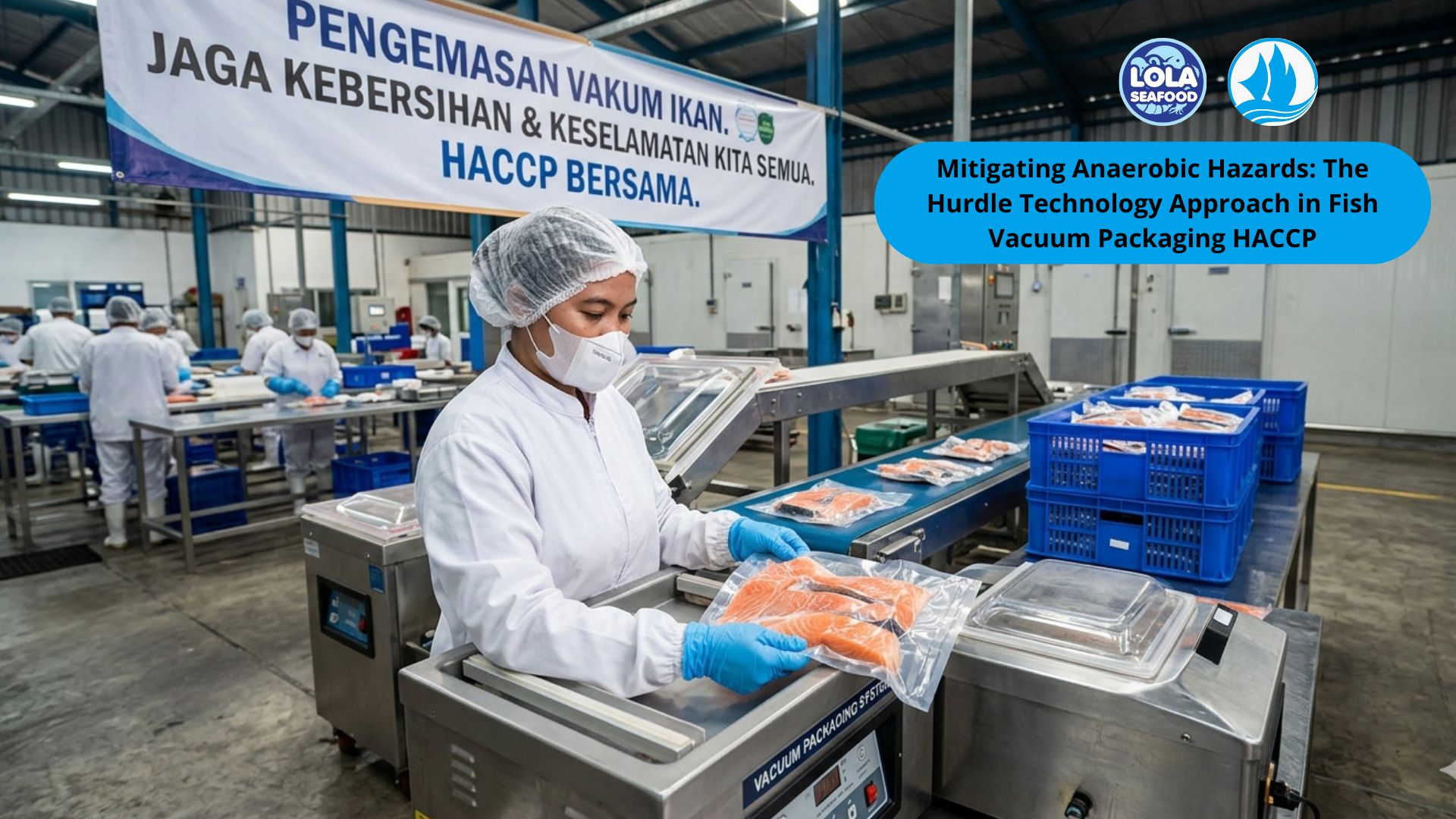
kelolalaut.com Vacuum packaging, or Reduced Oxygen Packaging (ROP), has revolutionized the seafood processing sector. By eliminating atmospheric oxygen, this technology drastically slows down the growth of common aerobic spoilage bacteria like Pseudomonas spp., curtails lipid oxidation, and maintains the sensory attributes of fish products. However, in the realm of food safety, solving one problem often unmasks another.
The elimination of oxygen creates a strict anaerobic environment inside the pouch. For the fish processing industry, this environment presents a critical biological hazard: the proliferation of Clostridium botulinum (specifically non-proteolytic Type E). Because C. botulinum spores are ubiquitous in marine environments, they are naturally present on raw fish. Under anaerobic conditions, and if temperature abuse occurs, these spores can germinate, multiply, and produce lethal neurotoxins.
To safely manage vacuum-packed fish, a modern Hazard Analysis Critical Control Point (HACCP) plan must look beyond a single control measure and instead employ Hurdle Technology—the strategic combination of multiple preservation barriers.
1. The Core Hazard: Why One Barrier is Not Enough
In traditional food processing, refrigeration is the primary barrier against bacterial growth. However, non-proteolytic C. botulinum Type E is psychrotrophic, meaning it can grow and produce toxins at temperatures as low as 3.3oC (38oF)
If a refrigeration unit fluctuates even slightly above this threshold during transit or retail display, the temperature barrier fails. Therefore, an effective HACCP plan for vacuum packaging treats oxygen removal not as a preservation method on its own, but as a step that demands strict secondary and tertiary boundaries (hurdles) to guarantee safety.
2. Establishing the HACCP Hurdles (Critical Control Points)
A comprehensive HACCP plan for vacuum-packed fish typically establishes Critical Control Points (CCPs) at three distinct stages: Formulation/Pre-treatment, Sealing Integrity, and Thermal/Cold Chain Management.
Hurdle 1: Water Phase Salt (WPS) and pH Control (CCP 1)
For smoked, salted, or dried vacuum-packed fish, the formulation stage is the first line of defense.
- Critical Limit: A minimum of 3.5% Water Phase Salt (WPS) in the loin muscle of the fish is required to inhibit C. botulinum growth if the product is held under chilled conditions. Alternatively, lowering the pH of the fish flesh to 4.6 using organic acids acts as a definitive barrier.
Hurdle 2: Vacuum Seal and Package Integrity (CCP 2)
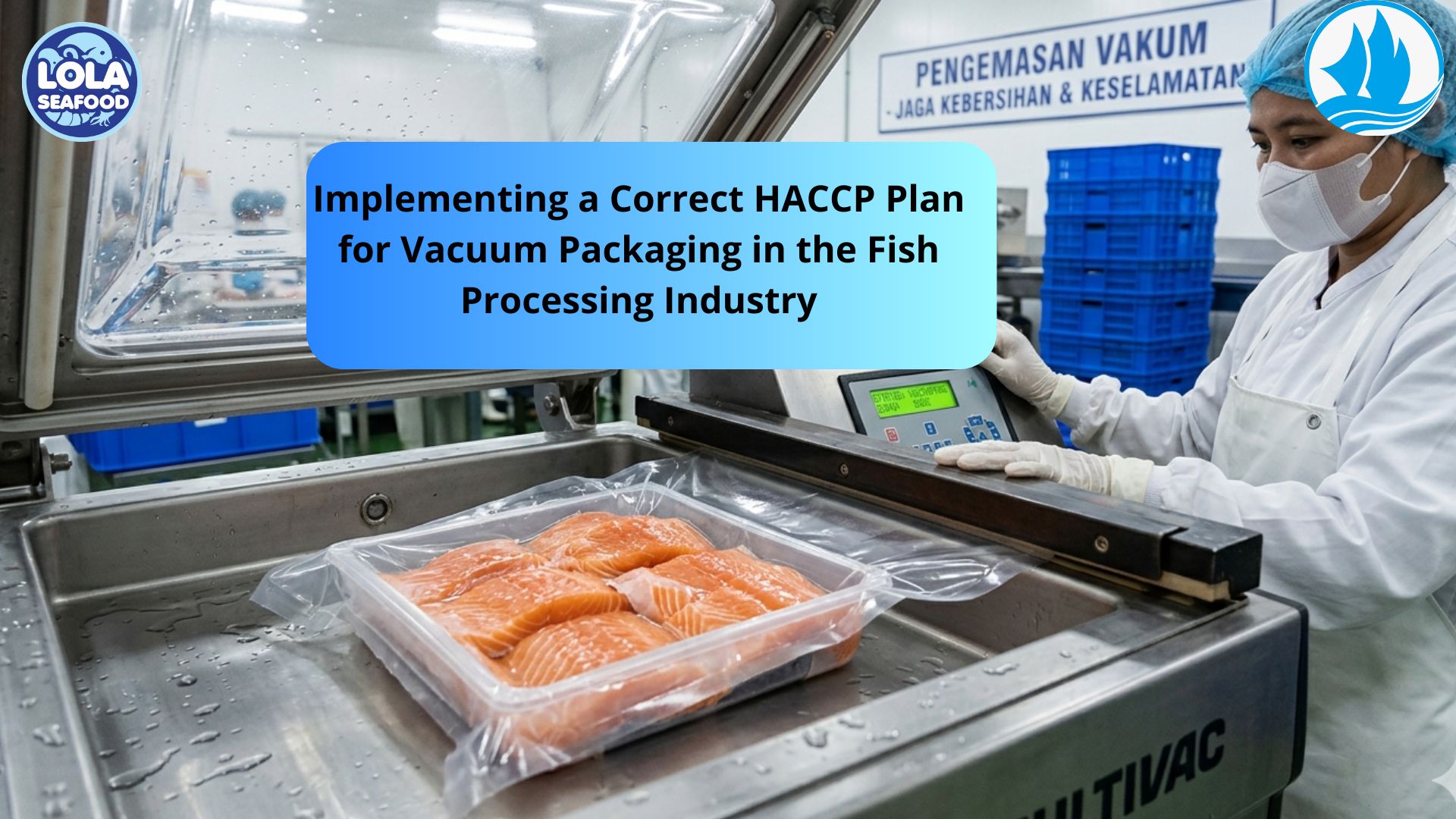
The physical packaging process must prevent any post-processing contamination while ensuring the vacuum parameters are met.
- Critical Limit: 100% airtight seal fusion. Operators must ensure that no liquid, fat, or fish fiber is trapped in the sealing zone, which could cause micro-leaks over time.
Hurdle 3: Strict Temperature and Time Parameters (CCP 3)
For fresh, un-salted vacuum-packed fish, temperature is the ultimate hurdle.
- Critical Limit: The finished product must be maintained continuously at temperatures 3.0oC (37.4oF). If the cold chain cannot be guaranteed during distribution, the product must be kept frozen at -18oC (0oF)
3. Monitoring and Corrective Actions
Monitoring these hurdles must be continuous and documented.
|
CCP |
Monitoring Method |
Corrective Action if Deviation Occurs |
|
Salt/pH Formulation |
Chemical analysis of random batch samples. |
Reject the batch or divert it to a non-vacuum, fully cooked product line. |
|
Vacuum Sealing |
Visual inspection and destructive bubble-leak testing every hour. |
Stop the line, recalibrate the sealer heating element, and repackage affected lots. |
|
Cold Storage |
Automated digital data loggers with alarm systems. |
Move fish to a blast freezer if temperatures exceed 3oC for more than 2 hours. |
4. Validation, Verification, and Time-Temperature Indicators (TTIs)
Validation requires scientific proof that the selected hurdles actually work. For vacuum packaging plants, this often involves conducting microbiological challenge studies using non-pathogenic surrogates to verify shelf life.
Furthermore, because processors lose control of the cold chain once the product leaves the facility, many modern HACCP plans incorporate Time-Temperature Indicators (TTIs) on the retail vacuum pouches. TTIs are smart labels that change color irreversibly if the package experiences temperature abuse over a period that could allow toxin formation, alerting both retailers and consumers before consumption.
If youre interested in our Whiting Fish Whole Round,Barramundi Fillet Skin On,Catfish Fillet Skinless,Cobia Fillet Skinless,Coral Trout Fillet Skin On,Barramundi Whole Round / Whole Gilled Gutted Scaled,Corvina / Croaker / Jew Fish Whole Round / Whole Gilled Gutted Scaled,Black Pomfret Whole Round,Red / Scarlet Snapper Fillet Portion,Parrotfish Fillet Skinless,Baby Octopus Flower,Bonito Fillet Portion Cut,Catfish Fillet Skinless,Coral Trout Fillet Skinless,Baby Octopus Flower Baby Octopus Whole Cleaned Baby Octopus Whole Round Barramundi Fillet Portion Cut Black Pomfret Portion Cut Bonito Whole Round Catfish Steak Catfish Fillet Skinless Catfish Steak Baby Octopus Whole Cleaned Catfish Fillet Skinless Barramundi Fillet Skinless Black Pomfret Portion Cut Bonito Whole Round please do not hesitate to contact us through email and/or Whatsappp


.jpg)
.jpg)
.jpg)