Riding the Waves: The Impact of a Rising US Dollar on the Fish Processing Industry
By. Wiwik Rasmini - 25 May 2026
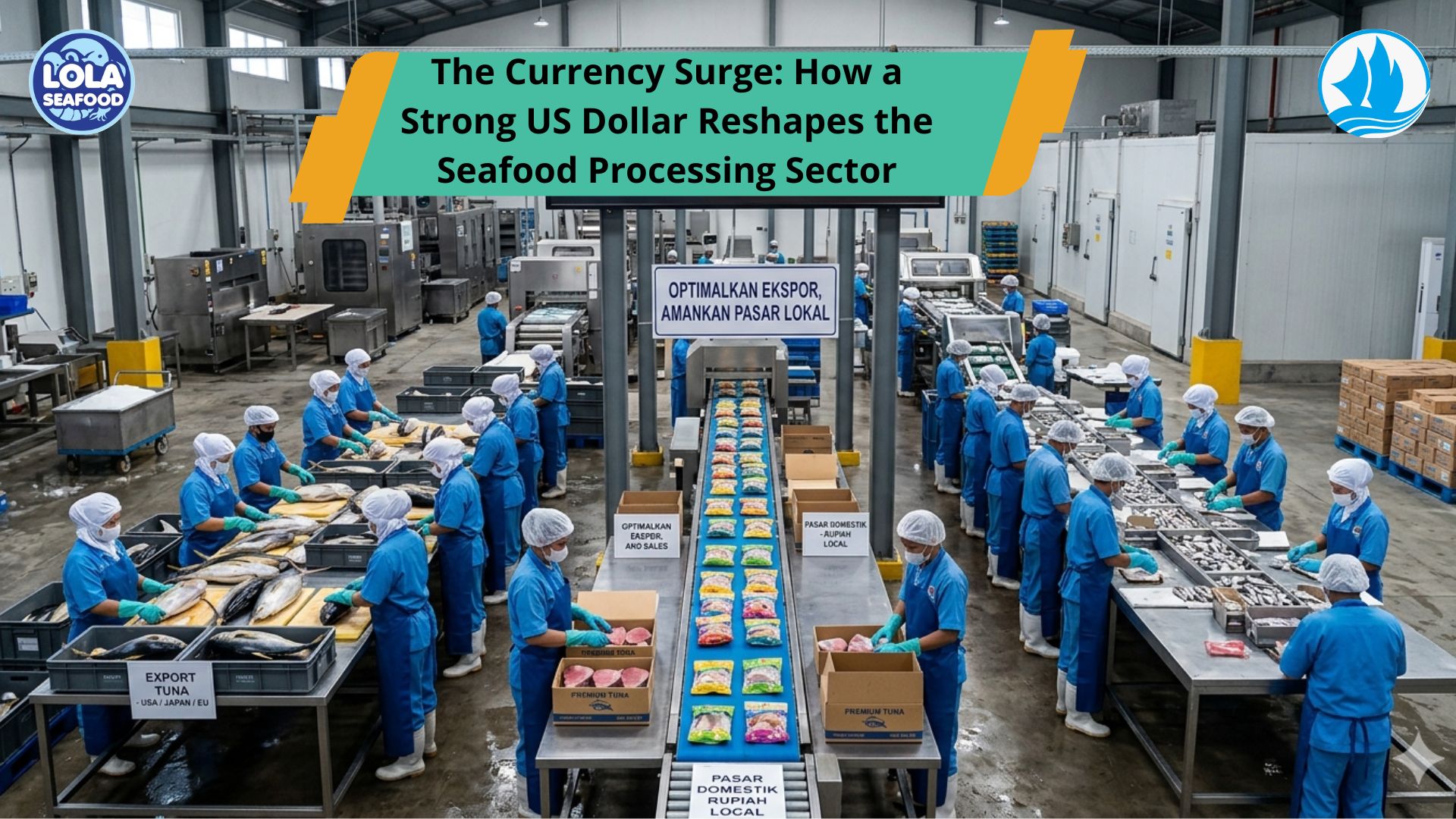
kelolalaut.com The global seafood market operates within a highly interconnected web of trade, where currency fluctuations often dictate the thin line between profit and loss. When the US Dollar (USD) strengthens against local currencies—such as the Indonesian Rupiah (IDR)—the ripples are felt immediately across coastal communities and massive industrial processing plants alike. For the fish processing sector, a rising dollar acts as a sharp, double-edged sword. While it dramatically boosts the competitiveness and revenue of export-oriented factories, it simultaneously inflicts severe financial strain on businesses tethered to imported production inputs and domestic retail markets.
The Export Windfall: Higher Margins in Global Markets
For fish processing companies heavily focused on shipping products abroad, an appreciating US Dollar is generally welcomed as a profitable tailwind. International seafood trades—including major commodities like frozen shrimp, tuna fillets, and processed crab—are overwhelmingly invoiced in USD.
When processors export their goods and receive payments in dollars, converting those funds back into weakened local currencies yields a significantly higher payout. This dynamic instantly enhances profit margins without requiring companies to increase their physical volume of production. Furthermore, it allows local exporters to price their products more competitively on the global stage. A factory can technically lower its USD asking price to attract overseas buyers while still maintaining, or even exceeding, its previous domestic revenue margins.
The Trade Reality: According to data from the Ministry of Marine Affairs and Fisheries (KKP), major international buyers like the United States account for over 30% of total seafood exports. When the dollar surges, these pre-existing export channels become highly lucrative pipelines of foreign exchange reserves.
The Imported Input Trap: Soaring Production Costs
However, the narrative shifts dramatically when examining the operational costs behind fish processing. Modern fish processing is rarely a purely local affair; it relies heavily on global supply chains for essential machinery, specialized packaging, and additives.
|
Production Element |
Reliance on USD |
Impact of Rising Dollar |
|
Imported Fish Feed & Raw Material |
High |
Drives up the baseline cost of aquaculture operations. |
|
Cold Chain & Packaging |
Moderate to High |
Plastic resins, specialized canning metals, and refrigeration spare parts become much more expensive. |
|
Logistics & Fuel |
High |
International shipping rates and fuel surcharges rise in tandem with currency depreciation. |
When the dollar strengthens, the cost of importing these crucial materials spikes instantly. Processing plants that rely on importing specific fish species to process and re-export find themselves squeezed by high upfront costs. Even if the final product is sold in dollars, the increased cost of raw inputs eats away at the anticipated currency conversion benefits, creating a complex financial balancing act.
The Squeeze on the Domestic Market
While large-scale exporters navigate these mixed blessings, small-to-medium enterprises (SMEs) catering strictly to the domestic market bear the brunt of the negative impacts. Domestic processors buy raw fish from local fishermen using local currency, but they still face inflated costs for packaging, electricity, and transportation.
Because local consumers are also dealing with inflation and reduced purchasing power caused by a weaker national currency, processors cannot easily pass these rising operational costs onto the public. Forcing a price hike on local canned sardines or frozen fish patties often leads to a sharp drop in consumer demand. Consequently, domestic processors are forced to absorb the losses, leading to reduced production, compromised profit margins, and in severe cases, operational shutdowns or layoffs.
Seeking Balance through Downstream Expansion (Hilirisasi)
To survive the volatile swings of the US Dollar, the fish processing industry must pivot toward structural resilience. The most viable long-term solution lies in aggressive downstream expansion, locally known as hilirisasi.
By focusing on creating high-value, fully processed seafood products domestically—rather than exporting raw or semi-processed fish—the industry can maximize its dollar-earning potential. Simultaneously, investing in local supply chains to substitute imported packaging materials and fish feed ingredients will help insulate factories from future currency shocks. Ultimately, a rising dollar serves as a stark reminder that true economic sustainability in the seafood sector requires a sturdy bridge between thriving local production and smart global trading.
If youre interested in our Whiting Fish Whole Round,Barramundi Fillet Skin On,Catfish Fillet Skinless,Cobia Fillet Skinless,Coral Trout Fillet Skin On,Barramundi Whole Round / Whole Gilled Gutted Scaled,Corvina / Croaker / Jew Fish Whole Round / Whole Gilled Gutted Scaled,Black Pomfret Whole Round,Red / Scarlet Snapper Fillet Portion,Parrotfish Fillet Skinless,Baby Octopus Flower,Bonito Fillet Portion Cut,Catfish Fillet Skinless,Coral Trout Fillet Skinless,Baby Octopus Flower Baby Octopus Whole Cleaned Baby Octopus Whole Round Barramundi Fillet Portion Cut Black Pomfret Portion Cut Bonito Whole Round Catfish Steak Catfish Fillet Skinless Catfish Steak Baby Octopus Whole Cleaned Catfish Fillet Skinless Barramundi Fillet Skinless please do not hesitate to contact us through email and/or Whatsappp
.jpg)
.jpg)
.jpg)

.jpg)
.jpg)
.jpg)