Maximizing the Margin: The Export Value and Profitability of FDA-Regulated Goods in Miami’s Logistics Hub
By. Wiwik Rasmini - 21 May 2026.jpg)
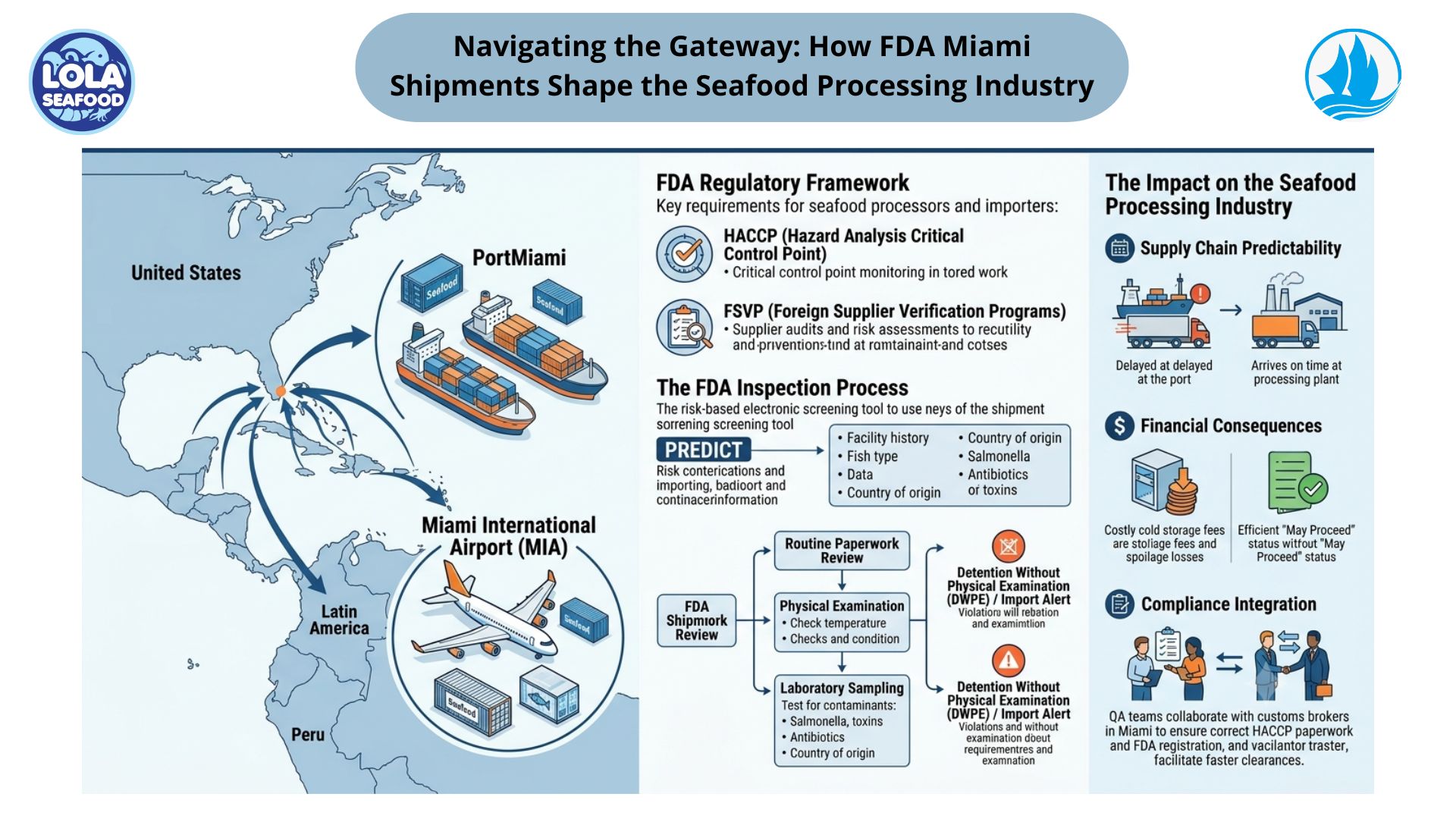
kelolalaut.com While Miami is globally recognized as the premier entry point for imports into the United States, it is equally a powerhouse for exports. Positioned at the crossroads of global commerce, Miami International Airport (MIA) and PortMiami handle billions of dollars in outbound commodities annually. Among the most lucrative sectors driving this economic engine are products regulated by the U.S. Food and Drug Administration (FDA)—ranging from specialized food items and cosmetics to high-value pharmaceuticals and medical devices. For exporters, leveraging Miami’s unique infrastructure to ship FDA-compliant goods represents a massive opportunity to capture premium profit margins in international markets.
The Premium Value of "FDA-Compliant" Goods
In international trade, the FDA stamp of approval acts as a global gold standard of quality assurance. Countries in Latin America, Europe, and Asia often view compliance with U.S. FDA standards as a benchmark for safety and efficacy. Consequently, products that have cleared FDA scrutiny or are manufactured under FDA-regulated guidelines command a significantly higher market price abroad.
[FDA Regulatory Compliance] ➔ [Higher Global Trust] ➔ [Premium Pricing] ➔ [Increased Profit Margin]
Exporters utilizing Miami as their transit hub are not just shipping commodities; they are exporting trust. This trust allows businesses to target affluent consumer segments globally, translating directly into higher export values and healthier bottom lines for manufacturers and distributors.
Key Sectors Driving Export Profitability in Miami
Miami’s export landscape for FDA-regulated goods is diverse, but three sectors stand out for their high-profit potential:
1. Pharmaceuticals and Biomedical Products
Miami has evolved into a major life sciences hub. The export of vaccines, specialized medicines, and medical equipment requires precise climate control and rapid transit. Because Miami International Airport features the highest number of IATA CEIV Pharma-certified logistics partners in the US, it minimizes the risk of product degradation. High-value biopharmaceuticals maintain their efficacy, ensuring that exporters can sell at peak market value without losing inventory to temperature excursions.
2. High-End Processed Foods and Dietary Supplements
The global demand for American-made dietary supplements, functional foods, and vitamins is booming. These products fall strictly under FDA food facility registration laws. Exporting these goods through Miami allows manufacturers to tap into the booming Latin American and Caribbean wellness markets, where consumers are willing to pay a premium for authenticated, FDA-compliant health products.
3. Gourmet and Re-Exported Seafood
Miami also thrives on a unique "re-export" economy. High-grade seafood enters Miami, undergoes further processing or specialized packaging in FDA-approved local facilities, and is then exported to international luxury markets. This value-added process exponentially increases the net export value of the product.
Financial Metrics: The Cost of Compliance vs. Profit Yield
Navigating FDA regulations for exports—such as obtaining a Certificate of Exportability or a Certificate to Foreign Government (CFG)—involves upfront legal and administrative costs. However, the return on investment (ROI) justifies the expense.
|
Product Category |
Average Domestic Margin |
International Margin (Via Miami Hub) |
Primary Profit Catalyst |
|
Pharmaceuticals |
Moderate (High Competition) |
High (Premium Markets) |
Strict cold-chain reliability at MIA |
|
Dietary Supplements |
Standard |
Elevated |
"Made in USA" / FDA Registered status |
|
Processed Gourmet Food |
Low to Moderate |
High |
Proximity to luxury Caribbean/LATAM resorts |
By centralizing operations in Miami, exporters can consolidate shipments, reducing freight forwarding costs per unit and further widening their profit margins.
Mitigating Risks to Protect Export Revenues
In the export business, time is money. A shipment delayed at the port due to incorrect export documentation or improper temperature control can instantly wipe out profit margins. To safeguard the value of their exports, successful Miami trade entities employ several strategies:
- Utilizing Free Trade Zones (FTZs): Miami boasts extensive FTZ space. Exporters can store FDA-regulated goods, handle packaging, or conduct sorting without paying customs duties until the product leaves for its final international destination, vastly improving cash flow.
- Proactive Document Verification: Ensuring that foreign import permits align perfectly with FDA export certificates prevents costly bottlenecks at destination ports.
.jpg)
.jpg)
.jpg)

.jpg)