The Global Titan of the Sea: A Deep Dive into the Versatility of Tuna Products
By. Monica - 14 May 2026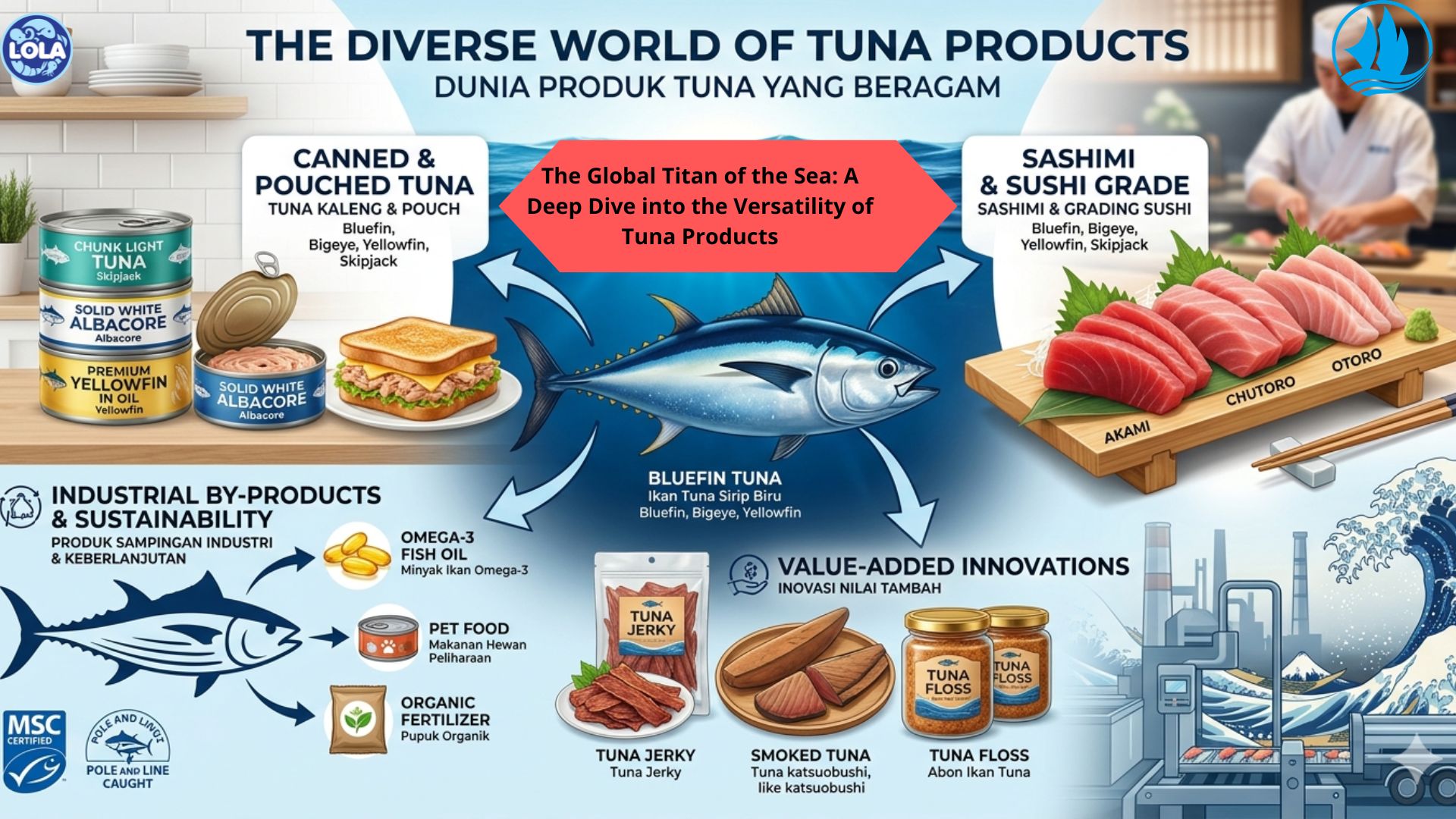
kelolalaut.com While the Spanish Mackerel may be the "gold standard" for Southeast Asian street food, Tuna is the undisputed heavyweight champion of the global seafood industry. Often referred to as the "Chicken of the Sea" due to its mild flavor and widespread popularity, tuna is one of the most commercially valuable fish on the planet.
From the high-stakes fish auctions of Tokyo to the humble pantry shelves of a college dorm, tuna products vary wildly in price, preparation, and prestige. Let’s explore the diverse world of tuna and why this migratory powerhouse remains a staple in diets worldwide.
1. The Crown Jewel: Sashimi and Sushi Grade Tuna
At the top of the pyramid sits fresh, raw tuna. Not all tuna is destined for a tin; the highest-quality catches—primarily Bluefin, Bigeye, and Yellowfin—are reserved for the sashimi market.
- The Cuts: In Japanese culinary tradition, the fish is divided into specific sections based on fat content. Akami is the lean, bright red meat; Chutoro is the medium-fatty belly; and Otoro is the ultra-fatty, melt-in-your-mouth underbelly that commands premium prices.
- Super-Freezing Technology: To maintain "freshness" across oceans, the industry uses "super-freezers" that keep the fish at -60°C. This stops all biological decay, ensuring that a steak served in New York tastes exactly like it was just pulled from the Pacific.
2. The Pantry Hero: Canned and Pouched Tuna
For the majority of the world, "tuna" means a convenient metal can or a vacuum-sealed pouch. This product revolutionized protein consumption in the 20th century.
|
Tuna Type |
Common Product Name |
Characteristics |
|
Skipjack |
Chunk Light Tuna |
Darker meat, stronger flavor, most sustainable. |
|
Albacore |
Solid White Tuna |
Mild flavor, firm texture, higher mercury levels. |
|
Yellowfin |
Premium Canned |
Often packed in olive oil; a middle ground in quality. |
Canned tuna is a master of adaptation. Whether it’s mixed with mayo for a classic sandwich, tossed into a Mediterranean salad, or baked into a cheesy casserole, its shelf-stability makes it an essential global commodity.
3. Value-Added and Smoked Innovations
As consumer tastes evolve, the industry has moved beyond just raw or canned options. Innovative processing has led to a surge in "value-added" tuna products:
- Tuna Jerky: A high-protein, low-fat alternative to beef jerky. It is marinated in soy sauce, ginger, or pepper and dehydrated, making it a favorite for hikers and fitness enthusiasts.
- Smoked Tuna: Particularly popular in Europe and the Maldives (Maldive Fish), tuna is cured and smoked to create a hard, flavorful block that can be shaved into dishes or eaten as a gourmet appetizer.
- Tuna Floss (Abon Ikan): Similar to the mackerel version, tuna is shredded and cooked with spices until dry and crispy. It’s a beloved topping for rice and porridge across Asia.
4. Beyond the Fillet: Industrial By-products
Tuna is a "zero-waste" fish in modern industrial processing. Parts of the fish that aren't suitable for human consumption are repurposed into high-value secondary products:
- Omega-3 Fish Oil: Tuna heads and livers are processed to extract high concentrations of EPA and DHA for health supplements.
- Pet Food: The "dark meat" (rich in blood and minerals) is frequently used in premium cat and dog foods.
- Fertilizer: Leftover bones and scales are ground into organic fish emulsion fertilizer, rich in nitrogen and phosphorus.
Nutritional Powerhouse: Why We Eat It
Tuna isn't just versatile; it’s a biological marvel of nutrition. It is one of the densest sources of complete protein, containing all essential amino acids.
- Heart Health: The high Omega-3 content helps reduce blood pressure and cholesterol.
- Mental Clarity: DHA is a primary structural component of the human brain.
- Metabolic Support: It is loaded with Selenium, a powerful antioxidant that protects the body from oxidative stress.
The Sustainability Challenge
We cannot discuss tuna without addressing the ethics of the industry. Because tuna are migratory and often cross international borders, managing their populations is a global challenge.
Look for the MSC (Marine Stewardship Council) blue label or "Pole and Line Caught" certifications. These indicate that the tuna was harvested using methods that minimize "bycatch" (accidentally catching dolphins, turtles, or sharks) and ensure that fish stocks aren't depleted beyond recovery.
Conclusion
From the $3 million Bluefin sold at a New Year’s auction to the $1 can of Skipjack in a grocery basket, tuna is a bridge between luxury and necessity. Its ability to be preserved, transformed, and utilized in its entirety makes it one of the most successful food products in human history.
Whether you're searing a peppered steak or just making a quick tuna melt, you're participating in a massive, global culinary tradition that spans every ocean on Earth.
Since tuna is such a versatile ingredient, do you find yourself reaching for the premium fresh steaks for a special dinner, or are you more of a "reliable canned tuna for lunch" kind of person?
If youre interested in our Whiting Fish Whole Round,Barramundi Fillet Skin On,Catfish Fillet Skinless,Cobia Fillet Skinless,Coral Trout Fillet Skin On,Barramundi Whole Round / Whole Gilled Gutted Scaled,Corvina / Croaker / Jew Fish Whole Round / Whole Gilled Gutted Scaled,Black Pomfret Whole Round,Red / Scarlet Snapper Fillet Portion,Parrotfish Fillet Skinless,Baby Octopus Flower,Bonito Fillet Portion Cut,Catfish Fillet Skinless,Coral Trout Fillet Skinless,Baby Octopus Flower Baby Octopus Whole Cleaned Baby Octopus Whole Round Barramundi Fillet Portion Cut please do not hesitate to contact us through email and/or Whatsapp

.jpg)

.jpg)