The Gold Standard: Navigating the Global Market for Certified Shark Bone Derivatives
By. Ely Kusniawati - 26 Mar 2026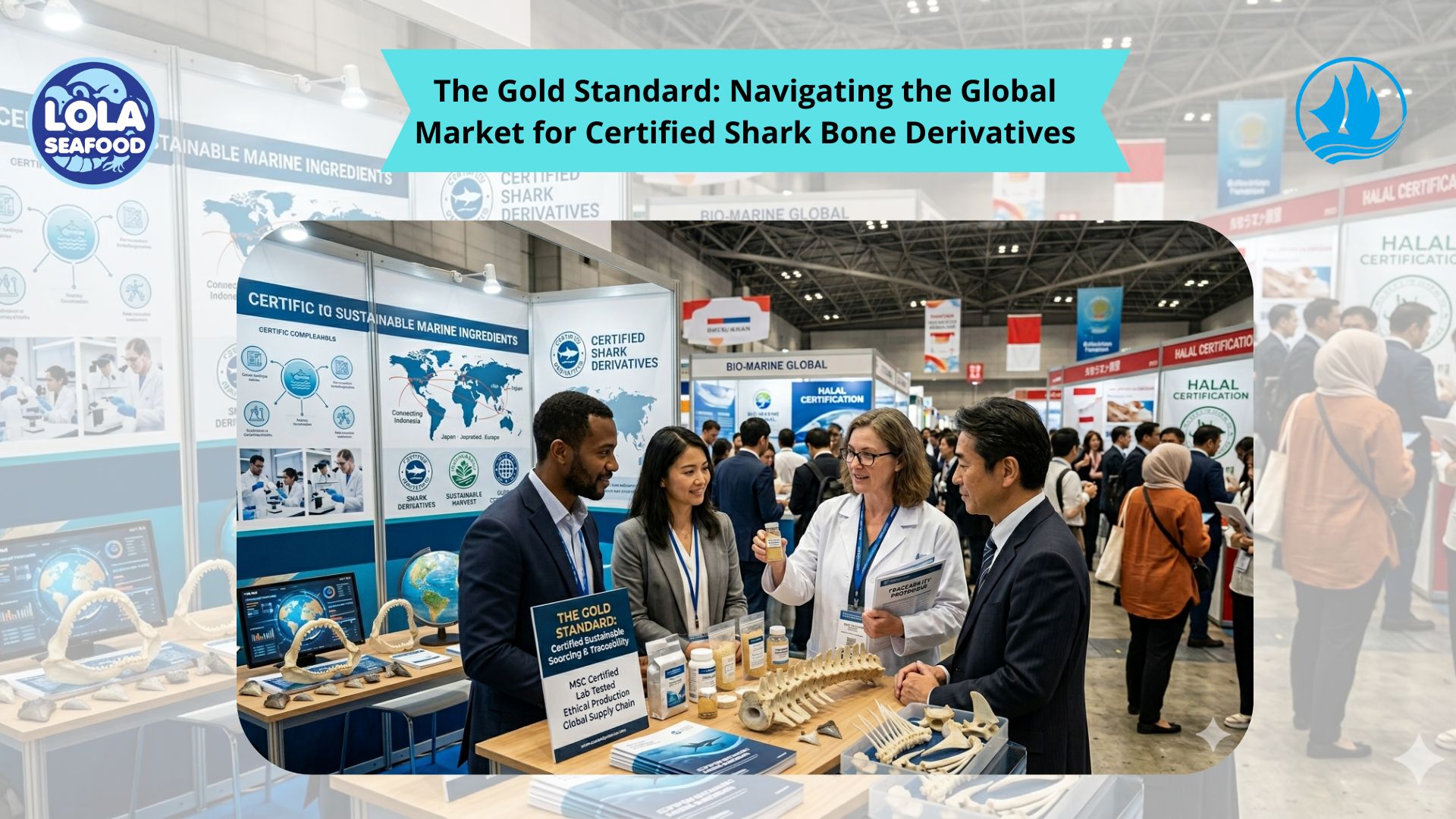
kelolalaut.com In the high-stakes world of marine biotechnology, the difference between a struggling fish processing plant and a multi-million dollar bio-extract empire lies in a single piece of paper: the Certificate of Analysis (CoA). As the global demand for joint health supplements and "clean label" cosmetics surges, the industry has moved away from raw commodity trading toward high-precision chemical manufacturing. To capture the maximum financial return from shark bones, producers must understand that they are no longer just in the fishing business—they are in the biomedical supply chain.
The Currency of Trust: The Certificate of Analysis
When a pharmaceutical giant in Germany or a luxury skincare lab in South Korea looks for shark cartilage, they aren’t looking for "bones." They are looking for specific molecular markers: Chondroitin Sulfate, Type II Collagen, and Glucosamine. A standardized article of shark bone must undergo rigorous laboratory testing to prove its potency.
For instance, Chondroitin Sulfate is the "active ingredient" that dictates the price. Standard bone meal might contain trace amounts, but a professional-grade extract concentrated to 20% purity through enzymatic hydrolysis can command prices that rival silver per kilogram. The CoA acts as the "deed of value," proving to the buyer that the product is biologically active and, more importantly, safe. Without this document, the material is treated as fertilizer; with it, it becomes a specialized pharmaceutical ingredient.
Solving the "Apex Predator" Paradox
The biggest hurdle to profit in this industry is Bioaccumulation. Because sharks are at the top of the food chain, they naturally accumulate heavy metals like mercury and lead over their lifespan. In the past, this made shark bone a "risky" ingredient for human consumption.
Modern industrial processing has turned this challenge into a massive competitive advantage. Standardized processing now includes chelation and molecular filtration steps that strip away heavy metals while leaving the beneficial proteins intact. A producer who can consistently deliver a "Low-Mercury" certified powder—testing at less than 0.1 ppm—can effectively monopolize the high-end Western markets (USA and EU), where safety regulations are the strictest. In this context, purity isn’t just a safety requirement; it is a premium pricing strategy. By investing in the technology to clean the product, you increase its market value by over 1,000%.
Strategic Market Positioning: The Three Pillars of Profit
To achieve the "million-dollar" potential, a business must segment its shark bone output into three distinct value tiers, ensuring that no part of the raw material is wasted:
- The Pharmaceutical Tier (The Top 10%): This involves ultra-fine, micronized powder with high chondroitin content. This is sold to supplement manufacturers for capsules. The margins here are the highest, often exceeding 500% over the cost of raw material acquisition.
- The Cosmetic Tier: This focuses on Soluble Collagen. By using acid-base extraction, processors can turn the "hard" parts of the bone into a liquid collagen serum. This is sold to the "Blue Beauty" movement—a multi-billion dollar trend focusing on sustainably sourced marine ingredients that provide anti-aging benefits.
- The Agricultural Tier (The "Zero Waste" Recovery): Even the sediment that fails the pharmaceutical purity test has value. It is rich in organic calcium and phosphorus. This is sold as high-grade "Marine Bone Meal" for organic orchids or specialty aquaculture feed, ensuring that 100% of the shark’s skeleton is monetized.
The Power of Traceability and Sustainability
In 2026, the financial value of a product is tied to its provenance. The modern fishing industry must leverage transparency as a sales tool. International buyers are terrified of "Illegal, Unreported, and Unregulated" (IUU) fishing.
By providing a "Digital Passport" or blockchain-verified origin alongside the CoA, a producer eliminates the buyer's legal risk. This transparency allows the producer to bypass "middleman" wholesalers and sell directly to major brands, keeping a much larger share of the profit. Being able to prove that your shark bone is a byproduct of a legal, regulated food-fish catch turns an environmental concern into an ESG (Environmental, Social, and Governance) success story. This ethical positioning allows for a "Green Premium," where buyers pay more for the peace of mind that their supply chain is audit-proof.
A Scientific Renaissance
The transformation of shark bone from a discarded byproduct to a certified pharmaceutical ingredient represents a scientific and economic renaissance. It requires a shift in mindset—from "selling fish" to "managing molecules." By adhering to the strict standards of the CoA and investing in purification technology, the fishing industry can unlock a revenue stream that is more stable, more profitable, and more sustainable than traditional meat sales.
If youre interested in our Whiting Fish Whole Round,Barramundi Fillet Skin On,Catfish Fillet Skinless,Cobia Fillet Skinless,Coral Trout Fillet Skin On,Barramundi Whole Round / Whole Gilled Gutted Scaled,Corvina / Croaker / Jew Fish Whole Round / Whole Gilled Gutted Scaled,Black Pomfret Whole Round,Red / Scarlet Snapper Fillet Portion,Parrotfish Fillet Skinless please do not hesitate to contact us through email and/or Whatsapp
.jpg)

.jpg)
.jpg)
.jpg)

.jpg)