Navigating the Blue Economy: Financial Strategies and Capital Investment in the Seafood Industry
By. Wiwik Rasmini - 09 Mar 2026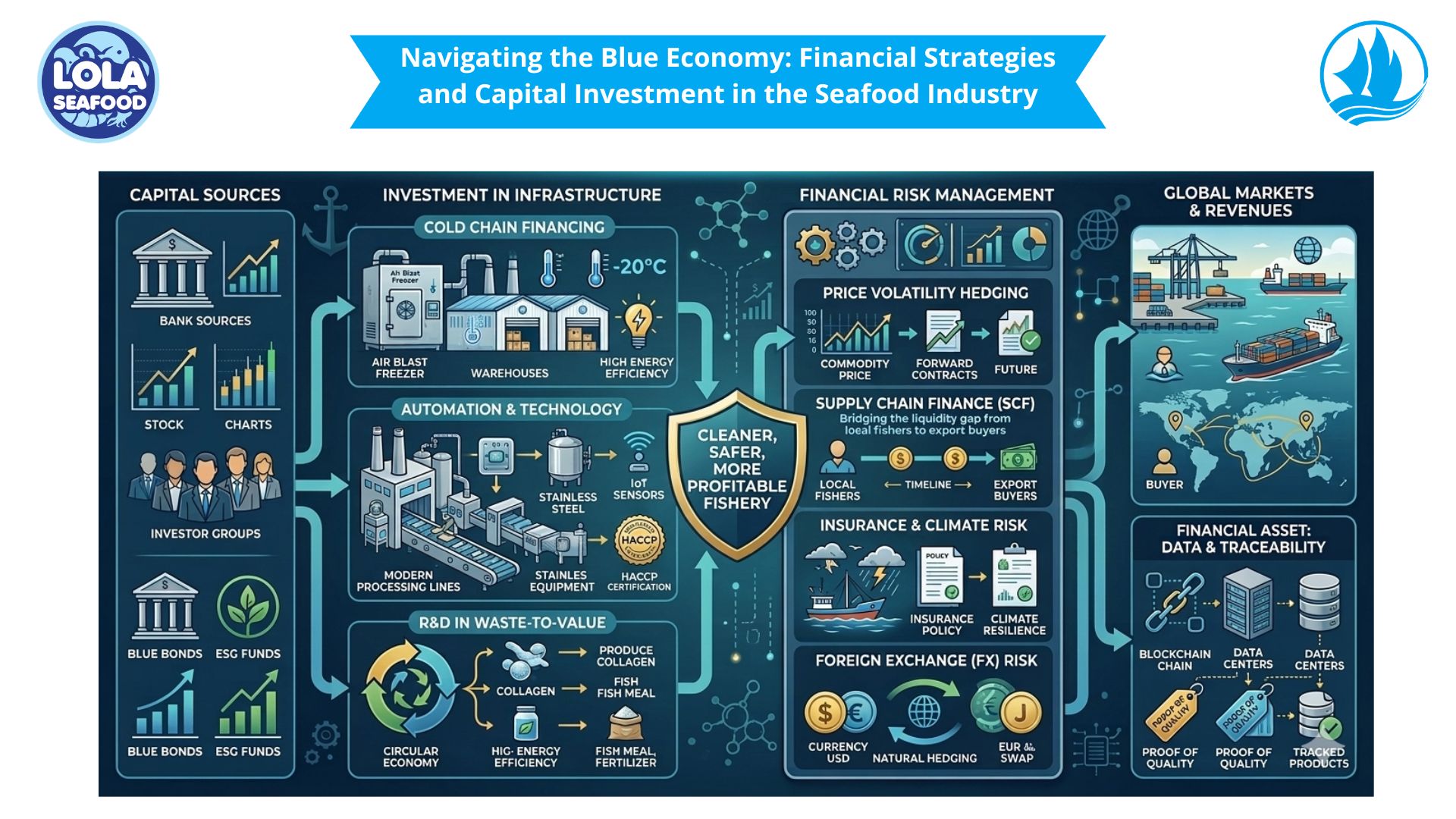
kelolalaut.com The global seafood industry is no longer just a collection of traditional fishing fleets; it has evolved into a high-stakes, capital-intensive sector of the Blue Economy. With the global fish processing market projected to reach significant valuations by 2030, the financial landscape of this industry is undergoing a massive transformation. From securing credit for industrial cold storage to navigating the volatile world of commodity pricing, financial management is now as critical as the catch itself.
1. Capital Intensity: Investing in Infrastructure
Modern seafood processing—especially for high-value species like Red Snapper, Tuna, or Shrimp—requires immense upfront capital. Unlike other food sectors, the "factory" often begins at sea and ends in a sophisticated land-based facility.
- Cold Chain Financing: The backbone of seafood profitability is the cold chain. Maintaining temperatures at -18°C to -25°C requires specialized Air Blast Freezers (ABF) and high-density cold storage units. These assets have high depreciation rates and significant energy costs, requiring structured long-term loans or equipment leasing strategies.
- Automation and PPE Integration: To meet international standards (HACCP/BRC), factories must invest in stainless-steel automation and rigorous hygiene infrastructure. Financing these "non-productive" assets is essential for market access, as they prevent costly recalls and export bans.
2. Risk Management and Commodity Volatility
The seafood industry is uniquely exposed to biological and environmental risks that traditional manufacturing does not face.
- Price Volatility: Fish prices fluctuate based on seasonal yields, fuel costs, and international trade tariffs. Hedging strategies, such as forward contracts with international buyers, are essential to lock in margins before the fish is even processed.
- Insurance and Climate Risk: With rising sea temperatures and unpredictable weather patterns, specialized aquaculture and maritime insurance are becoming mandatory for creditworthiness. Financial institutions now look at "climate resilience" as a key metric for approving industrial fishing loans.
3. Working Capital: The Challenge of the "Dry Standard"
One of the most complex financial hurdles in seafood export is managing working capital during the "Dry Standard" processing phase.
"In the seafood trade, cash flow is often frozen along with the fish."
When a processor buys raw materials from local fishers, they pay in cash. However, after processing, freezing, and shipping the product to markets in Europe or the US, the payment cycle can stretch to 60 or 90 days. This creates a massive "liquidity gap."
- Supply Chain Finance (SCF): Many exporters now use SCF to bridge this gap, allowing them to receive early payment on their invoices from financial institutions, ensuring the factory can continue buying raw materials without interruption.
4. ESG and "Blue Bonds": The Rise of Sustainable Finance
Environmental, Social, and Governance (ESG) criteria are no longer optional for large-scale seafood players. Global investors are increasingly funneling capital into "Blue Bonds"—debt instruments specifically designed to fund sustainable ocean projects.
- Traceability as Collateral: Banks are starting to view robust traceability systems (like blockchain-tracked snapper) as a form of risk mitigation. A product that can be proven "legal, reported, and regulated" (non-IUU) has a much higher recovery value and lower legal risk, leading to better interest rates.
- Waste-to-Value Financing: Investing in plants that convert fish skin to collagen or bones to fertilizer is now seen as an "ESG win," attracting impact investors who want to fund circular economy models within the seafood sector.
5. Managing Foreign Exchange (FX) Risk
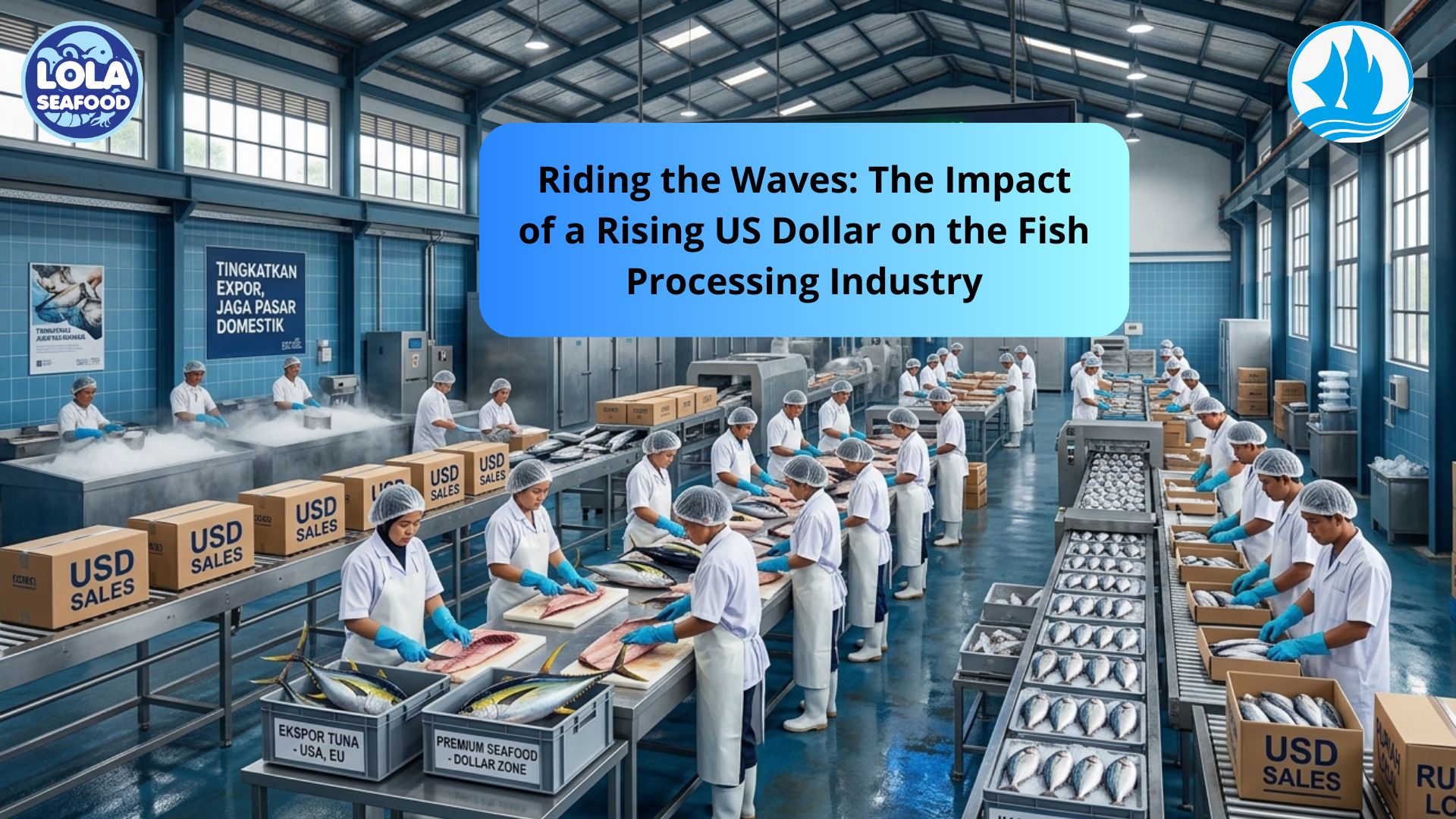
Since seafood is a global commodity primarily traded in USD, but raw materials and labor are often paid in local currencies (such as IDR, PHP, or VND), currency fluctuation is a silent profit killer.
- Natural Hedging: Savvy processors try to match their debt currency with their revenue currency. If you sell in USD, carrying a portion of your Capex debt in USD can act as a natural hedge.
- Derivative Instruments: Utilizing "Currency Swaps" or "Vanilla Options" helps protect the bottom line against sudden devaluations of local currencies against the dollar.
The Future is Data-Driven
The most successful seafood companies of the next decade will be those that treat data as a financial asset. By integrating IoT sensors in cold storage and real-time logistics tracking, companies can provide "Proof of Quality" to lenders, unlocking lower-cost capital.
In the blue economy, financial health is measured by more than just a balance sheet; it is measured by the ability to maintain the integrity of the product from the deep sea to the dinner plate. Those who master the flow of capital with the same precision they master the flow of fish will dominate the global market.
If youre interested in our Whiting Fish Whole Round,Barramundi Fillet Skin On,Catfish Fillet Skinless,Cobia Fillet Skinless,Coral Trout Fillet Skin On,Barramundi Whole Round / Whole Gilled Gutted Scaled,Corvina / Croaker / Jew Fish Whole Round / Whole Gilled Gutted Scaled,Black Pomfret Whole Round,Red / Scarlet Snapper Fillet Portion,Parrotfish Fillet Skinless please do not hesitate to contact us through email and/or Whatsapp

.jpg)
.jpg)
.jpg)