Chill and Clean: The Synergy of Chlorine and Ice in the Fishing Industry
By. Puji Widyastuti - 26 Feb 2026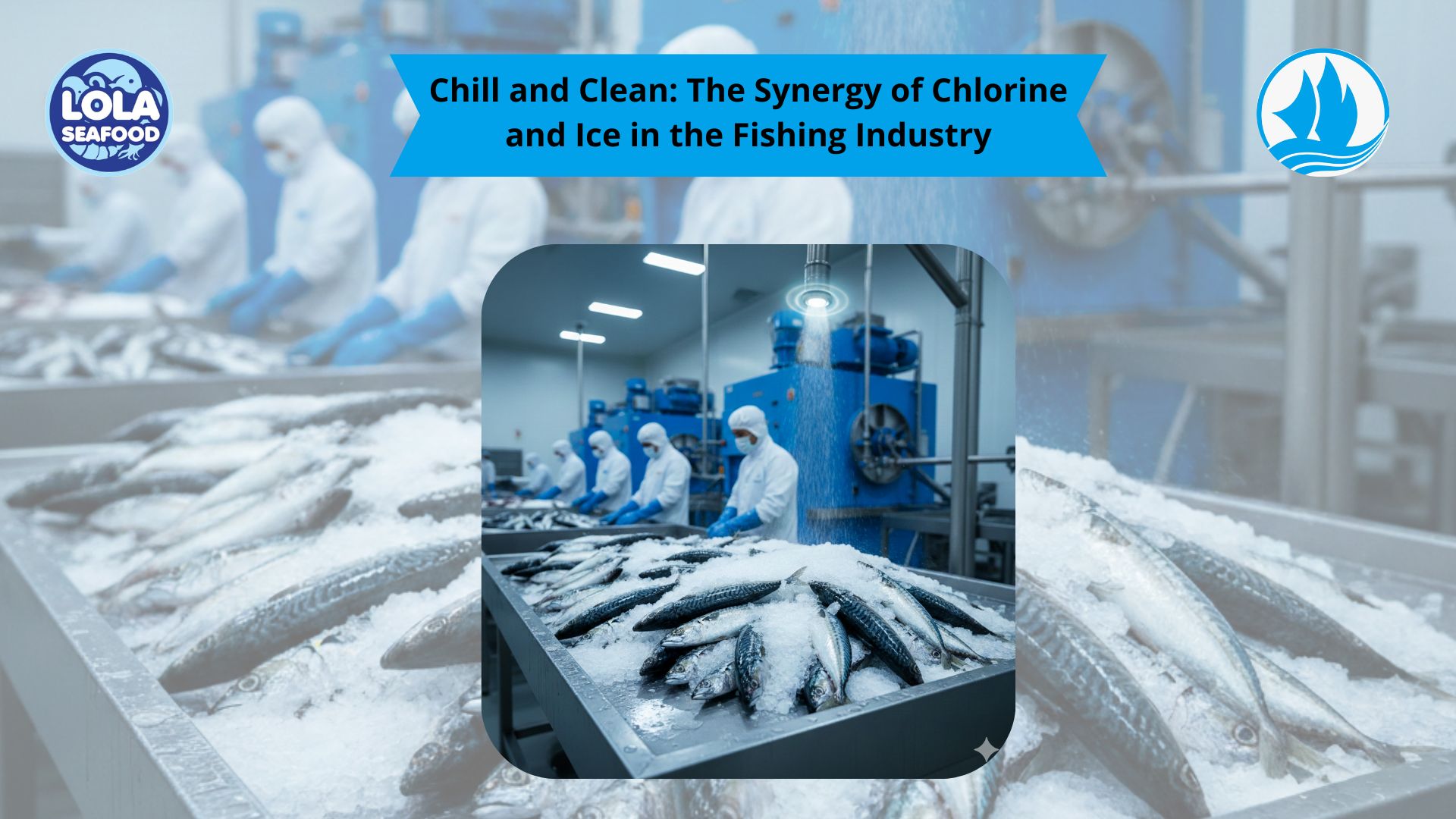
kelolalaut.com The fishing industry is a relentless race against time. The moment a fish is pulled from the water, biological degradation begins. Without immediate and proper intervention, this high-value commodity can turn into waste within hours. Amidst the rise of high-tech preservation methods, two fundamental elements remains the backbone of global seafood safety: Chlorine as a sanitizing agent and Ice as the primary temperature regulator.
The synergy between these two creates the hygienic standard necessary for seafood to cross continents while maintaining peak freshness.
1. Chlorine: The First Line of Defense Against Pathogens
Chlorine, typically utilized in the form of sodium hypochlorite, is far more than just a bleach. In the seafood industry, it serves as a primary sanitizing agent used to break the chain of microbial contamination.
Practical Applications
- Equipment Sanitation: Fishing vessels, crates, processing tables, and filleting knives must be disinfected with chlorine solutions to eliminate resilient bacteria such as Salmonella, Listeria, and Vibrio cholerae.
- Raw Material Washing: Fish are often rinsed with low-concentration chlorinated water (typically 5–10 ppm) to reduce the microbial load on the skin and gills before further processing.
- Process Water Safety: The water used to manufacture ice must undergo chlorination to ensure no bacteria are "trapped" within the ice, which would otherwise contaminate the fish upon contact.
2. Ice: The Guardian of Freshness (The Cold Chain)
While chlorine neutralizes bacteria, ice serves to "deactivate" them and halt enzymatic activity. Fish contain highly active protease enzymes; if the core temperature is not immediately dropped to near 0°C, these enzymes begin to break down the flesh, resulting in a mushy texture and foul odors.
Why Ice Remains Irreplaceable
Even with advanced flash-freezing technology, ice (specifically flake ice) offers unique advantages:
- Rapid Heat Transfer: Melting ice absorbs heat from the fish’s body far more efficiently than the cold air in a standard refrigerator.
- Moisture Retention: Ice prevents dehydration of the fish skin, maintaining a "glossy" and fresh visual appeal that is vital for market value.
- Cost-Effectiveness: It is relatively inexpensive to produce and easy to distribute, even for artisanal or small-scale fishers.
3. Technical Dynamics: The Science of Chilling
The utilization of ice is an exact science. In modern industrial settings, the CSW (Chilled Sea Water) method is often preferred.
In this method, ice is mixed with seawater and a controlled dose of chlorine. This creates an "ice slurry" that fully envelops the fish. Because of the salt content, the water temperature can drop to approximately -1°C without fully freezing the tissue, which is the optimal "sweet spot" for maintaining firm texture and preventing cellular damage.
4. Challenges and Regulatory Standards
Despite their benefits, the use of chlorine and ice is governed by strict international regulations, such as those from the FAO and the FDA.
|
Element |
Risk of Misuse |
Industrial Solution |
|
Chlorine |
Chemical residues or pungent odors in the meat. |
Post-disinfection rinsing with potable water and strict ppm monitoring. |
|
Ice |
Cross-contamination if made from non-potable water. |
Water source certification and dedicated on-site ice plants at processing facilities. |
5. Economic Impact: Reducing Post-Harvest Loss
In many developing maritime nations, post-harvest losses can reach staggering levels of 20–30%. The strategic application of chlorine and the widespread availability of ice at landing sites are the keys to mitigating these losses.
By maintaining a rigorous Cold Chain from the vessel to the consumer’s table, the market value of the catch increases, export opportunities expand, and most importantly, public health is protected from foodborne illnesses.
If youre interested in our Whiting Fish Whole Round,Barramundi Fillet Skin On,Catfish Fillet Skinless,Cobia Fillet Skinless,Coral Trout Fillet Skin On,Barramundi Whole Round / Whole Gilled Gutted Scaled,Corvina / Croaker / Jew Fish Whole Round / Whole Gilled Gutted Scaled,Black Pomfret Whole Round,Red / Scarlet Snapper Fillet Portion,Parrotfish Fillet Skinless please do not hesitate to contact us through email and/or Whatsapp
.jpg)
.jpg)