From Ocean to Table: The Culinary Journey, Sustainability, and Ecology of Grouper Fish
By. Fajar - 19 May 2026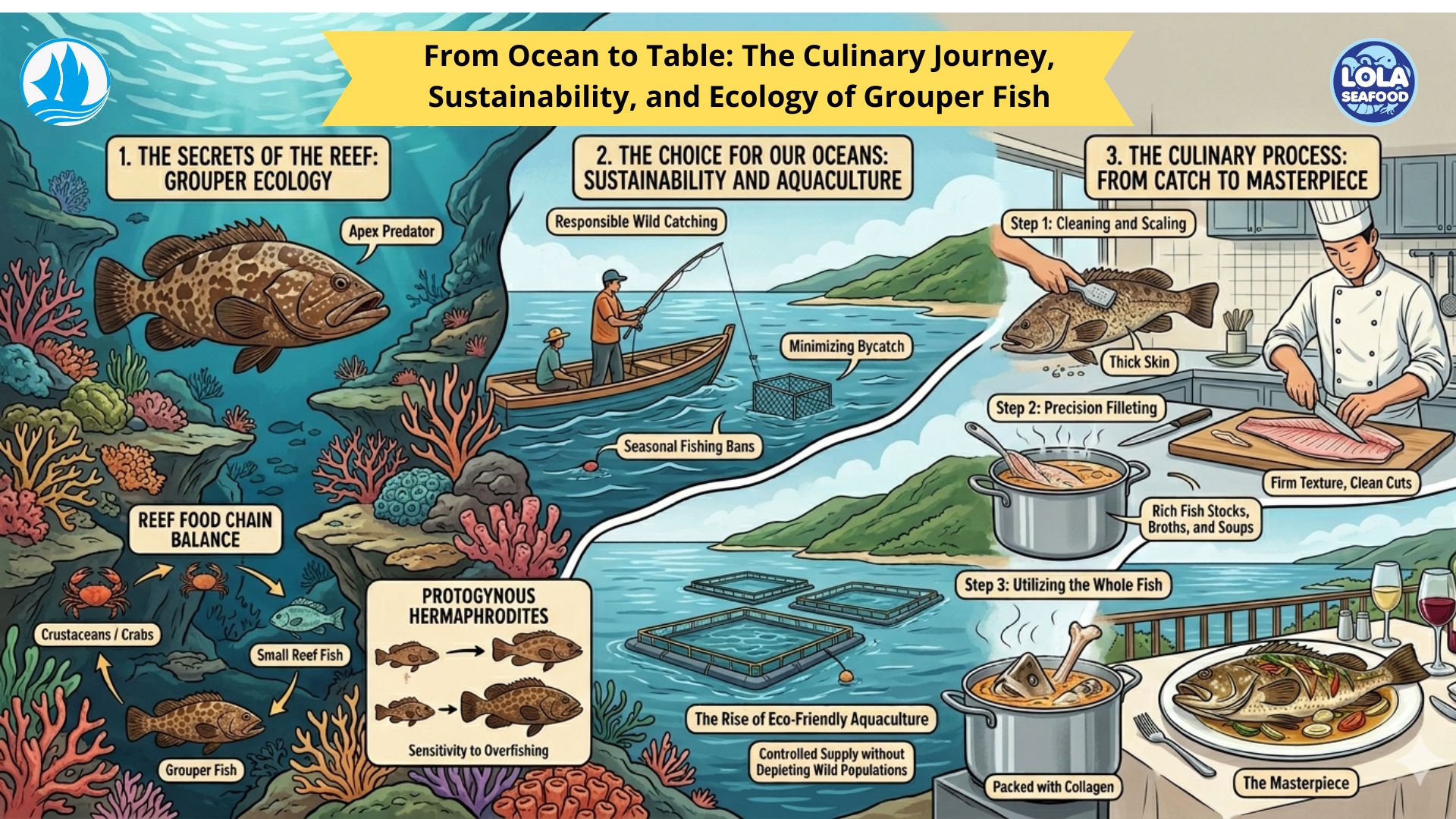
kelolalaut.com When we enjoy a beautifully prepared seafood dish at a coastal restaurant, we rarely think about the complex journey that the fish took to reach our plates. Grouper fish—or ikan kerapu—is a perfect example of a marine species whose story spans from the mysterious depths of coral reefs to the bustling environments of commercial kitchens and local markets.
Understanding the ecology of grouper, the sustainable practices required to harvest it, and the culinary craftsmanship involved in its preparation elevates it from a simple meal to a deeply appreciated culinary experience.
1. The Secrets of the Reef: Grouper Ecology
Groupers belong to the family Serranidae and are primarily found in tropical and subtropical waters around the globe. They are robust, bottom-dwelling fish that inhabit coral reefs, rocky ledges, and artificial structures. Unlike fish that swim in large schools across the open ocean, groupers are solitary and territorial creatures.
Apex Predators of the Reef Ecosystem
In their natural habitat, groupers play a vital role as apex predators. They use their large mouths and powerful jaws to create suction, drawing in prey such as crabs, lobsters, octopuses, and smaller fish. By controlling the population of these species, groupers maintain the delicate balance of the coral reef ecosystem.
[ Reef Food Chain Balance ]
|
( Grouper Fish )
|
+------------------+------------------+
| |
( Crustaceans / Crabs ) ( Small Reef Fish )
An interesting biological fact about many grouper species is that they are protogynous hermaphrodites. They begin their adult lives as females and, as they grow larger and older, the dominant individuals transform into males. This unique reproductive cycle makes their populations particularly sensitive to overfishing, as removing the largest fish can deplete the number of males available for breeding.
2. The Choice for Our Oceans: Sustainability and Aquaculture
Because grouper is highly valued for its firm texture and delicious taste, wild populations have faced significant pressure from commercial fishing. Fortunately, the global fishing community and marine biologists have made great strides in developing sustainable sourcing methods to protect these magnificent fish.
- Responsible Wild Catching: Sustainable wild-caught grouper relies on selective fishing gear, such as handlines and traps, which minimize bycatch (unintentionally catching other species) and prevent damage to the surrounding coral reefs. Regulations regarding catch sizes and seasonal fishing bans during spawning periods are also crucial.
- The Rise of Eco-Friendly Aquaculture: In regions like Southeast Asia, grouper farming—or aquaculture—has become a thriving and sustainable alternative. By raising grouper in controlled floating sea cages or land-based recirculating aquaculture systems (RAS), farmers can provide a consistent supply of premium fish without depleting wild reef populations.
Choosing sustainably sourced or responsibly farmed grouper ensures that future generations can continue to enjoy both a healthy marine environment and a fantastic source of seafood.
3. The Culinary Process: From Catch to Masterpiece
Processing a whole grouper requires skill and respect for the ingredient. Because the fish has a sturdy bone structure and thick skin, chefs treat it with specialized techniques to maximize its yield and preserve its quality.
Step 1: Cleaning and Scaling
The process begins by carefully removing the sharp dorsal fins and scaling the fish. Because grouper scales are tightly embedded in their thick skin, a sturdy scaler is required to achieve a smooth surface, especially if the fish is to be cooked whole.
Step 2: Precision Filleting
For dishes that require fillets, a chef uses a flexible boning knife to slice closely along the spine. Grouper meat is prized for its high yield; the flesh is thick and firm, allowing for clean, beautiful cuts that do not tear easily.
Step 3: Utilizing the Whole Fish
In sustainable culinary practices, nothing goes to waste. The head and bones of the grouper are packed with collagen and deep seafood flavor. Chefs frequently use these remnants to simmer rich, velvety fish stocks, broths, and traditional seafood soups.
A Journey Worth Celebrating
Every bite of grouper represents a fascinating intersection of marine biology, environmental stewardship, and culinary art. From its role as a guardian of the coral reefs to its transition through the hands of responsible fishermen and skilled chefs, the grouper is a true masterpiece of nature. By choosing sustainably harvested grouper and understanding the care that goes into its preparation, we can enjoy a world-class dining experience while honoring the incredible oceans that sustain us.
If youre interested in our Whiting Fish Whole Round,Barramundi Fillet Skin On,Catfish Fillet Skinless,Cobia Fillet Skinless,Coral Trout Fillet Skin On,Barramundi Whole Round / Whole Gilled Gutted Scaled,Corvina / Croaker / Jew Fish Whole Round / Whole Gilled Gutted Scaled,Black Pomfret Whole Round,Red / Scarlet Snapper Fillet Portion,Parrotfish Fillet Skinless,Baby Octopus Flower,Bonito Fillet Portion Cut,Catfish Fillet Skinless,Coral Trout Fillet Skinless,Baby Octopus Flower Baby Octopus Whole Cleaned Baby Octopus Whole Round Barramundi Fillet Portion Cut please do not hesitate to contact us through email and/or Whatsappp
.jpg)
 Statement The Financial Heartbeat of a Business.jpg)
.jpg)
 Statement The Financial Heartbeat of a Business (1).jpg)